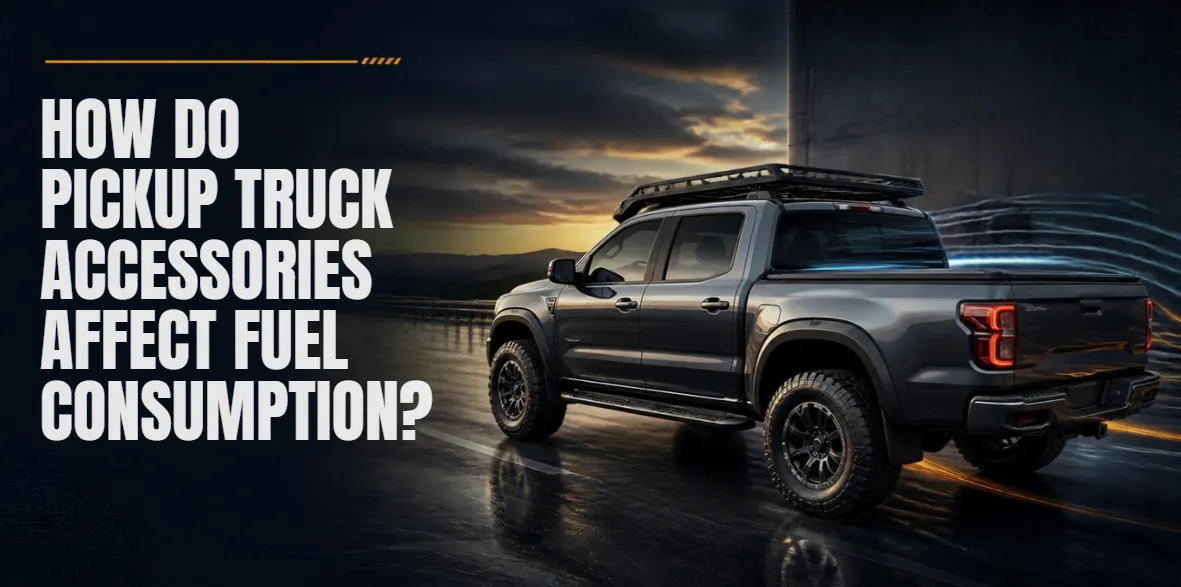

Pickup trucks are built to handle everything from daily commuting to towing, hauling, and off-road adventures. But once you start adding aftermarket accessories, those upgrades can influence more than just your truck’s appearance and capability. Added weight, changes in aerodynamics, larger wheels and tires, and other modifications can affect how much fuel your truck uses. Some accessories may have only a minor effect, while several upgrades combined can make a noticeable difference over time. Understanding how each modification affects fuel consumption can help you build a truck that meets your needs without unnecessarily increasing operating costs.
How Does Aerodynamics Influence Fuel Economy?
Aerodynamics becomes increasingly important at higher speeds. The engine must work against air resistance to keep the truck moving. Accessories that change the truck's original shape can increase that resistance and require additional energy.
Roof racks, bed racks, brush guards, and oversized accessories can extend above or outside the truck's original body lines. These components can disrupt the airflow around the vehicle and potentially increase aerodynamic drag. The effect can be especially noticeable during extended highway driving, where air resistance accounts for a significant portion of the energy required to maintain speed.
The design and placement of an accessory also matter. A streamlined component that closely follows the truck's body may create less drag than a bulky accessory that catches more air. Drivers who spend considerable time on the highway may therefore benefit from considering aerodynamic design when selecting aftermarket equipment.
Do Tonneau Covers Improve Fuel Economy?
A truck bed creates an area where airflow can become turbulent as air moves over the vehicle. Tonneau covers close off the bed and can change the way air travels across the rear of the truck. As a result, some covers may reduce aerodynamic drag under certain driving conditions, particularly at highway speeds.
However, a tonneau cover should not be viewed as a guaranteed fuel-saving modification. Any potential improvement can vary depending on the truck's design, the type of cover, driving speed, weather, and other factors. The difference may also be small enough that everyday driving conditions make it difficult to notice.
There are several types of tonneau covers available, including soft, hard, folding, and retractable designs. Each offers different advantages in terms of convenience, security, durability, and bed access. Rather than choosing a cover solely for potential fuel savings, consider how you plan to use the truck bed.
For many owners, the primary benefits are protecting cargo from weather and keeping items more secure. Any potential aerodynamic benefit can simply be an added advantage. Choosing a cover that fits properly and meets your practical needs can provide useful functionality without unnecessarily changing the truck's profile.
How Can Wheels and Tires Affect Fuel Consumption?
The wheels and tires installed on a pickup can also influence fuel consumption. Wheel weight, tire size, tread design, and overall fitment all play a role. Heavier wheels increase the amount of rotating mass the engine has to accelerate, which can affect efficiency, particularly during repeated acceleration.
Larger wheel-and-tire combinations can also add weight. Depending on the specific setup, they may increase rolling resistance and require more energy to keep the truck moving. This is one reason why an oversized wheel and tire package can affect fuel economy even when the truck's engine and drivetrain remain completely unchanged.
That does not mean larger wheels are always a poor choice. Many truck owners choose them for looks, handling, or additional tire options. The key is choosing a properly sized combination that matches the truck's intended use.
Drivers should also consider load capacity and fitment rather than focusing solely on appearance. A wheel and tire package that is excessively heavy or oversized for everyday driving may provide little practical benefit while increasing the demands placed on the vehicle.
Lift Kits and Larger Tires: More Than Just Appearance
Lifting a pickup truck can dramatically change its appearance and improve ground clearance for certain types of off-road driving. However, a lifted truck with larger tires can also consume more fuel than a stock configuration.
Larger tires can increase rolling resistance and rotating mass, while a taller suspension can alter the truck's aerodynamic profile. Raising the vehicle can expose more of the underbody to airflow, potentially increasing aerodynamic drag. When combined with larger wheels and tires, these changes can add up.
Tire tread design also matters. Aggressive off-road and mud-terrain tires generally have deeper, more pronounced tread patterns than highway-oriented tires. That design provides useful traction on loose surfaces, but it can also create greater rolling resistance and road noise during normal pavement driving.
The actual effect varies from truck to truck. Tire size, tread design, wheel weight, suspension setup, vehicle weight, and driving conditions all contribute to the result. If a truck is regularly used off-road, the additional fuel consumption may be an acceptable trade-off for improved capability. For a truck that primarily sees highway miles, however, a more moderate setup may make more sense.
What Other Accessories May Increase Fuel Use?
Wheels, tires, and tonneau covers are not the only modifications that can affect fuel consumption. Other popular truck accessories can add weight or increase aerodynamic drag.
Examples include grille guards, running boards, bed racks, roof racks, winches, and heavy-duty bumpers. Some accessories sit directly in the airflow, which can increase resistance at higher speeds. Others primarily affect fuel consumption because of their weight.
Towing and hauling equipment also deserves consideration. A trailer, loaded cargo, or heavy equipment adds weight that the engine must move. Even if the accessories are aerodynamically efficient, the added load can still increase fuel consumption.
This does not mean every accessory is a problem. A grille guard may provide useful protection, while a bed rack may be essential for carrying equipment. The goal is to understand the trade-off and decide whether an accessory's functionality justifies its effect on weight and aerodynamics.
How to Choose Accessories Without Hurting MPG Too Much?
The best way to manage the fuel-economy impact of aftermarket accessories is to prioritize function. Before buying an upgrade, consider whether it solves a real problem or supports how you use your truck.
Weight should also factor into the decision. If two accessories provide similar functionality, a lighter option may be preferable for a truck that spends most of its time on the road. Drivers who frequently travel at highway speeds should also consider aerodynamic designs that do not unnecessarily disrupt airflow.
Wheel and tire selection deserves the same attention. Instead of automatically choosing the largest available combination, consider the truck's intended use, load requirements, driving conditions, and overall weight. A properly matched setup can provide the desired appearance and performance without adding more mass than necessary.
Also avoid accessories that add little practical value while adding substantial weight or wind resistance. A truck does not need every available modification to be useful or capable.
Finally, proper maintenance remains important. Maintaining the correct tire pressure, keeping the engine properly serviced, and removing unnecessary cargo can help the truck operate efficiently. Accessories are only one part of the overall fuel-consumption equation.
Build the Truck You Love While Keeping Fuel Costs in Check
The right accessories can make a pickup more useful, capable, and comfortable without making fuel economy an afterthought. The key is to consider how each upgrade affects weight, airflow, rolling resistance, and everyday driving. By choosing modifications that provide genuine value and match your truck's purpose, you can enjoy a personalized setup while keeping unnecessary fuel costs under control. Take a closer look at your current setup, prioritize the upgrades you actually need, and choose accessories that help your truck work smarter for the way you drive.



















Sign in to leave a comment.