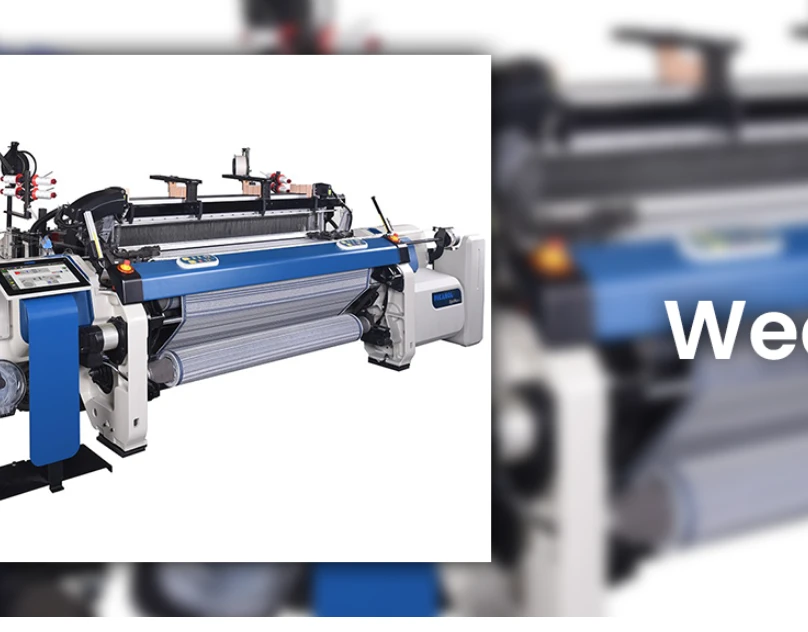

As the manufacturing landscape evolves, the textile industry is embracing the transformative potential of Industry 4.0 technologies to enhance efficiency, productivity, and quality. Piotex Ventures, a frontrunner in textile machinery innovation, is at the forefront of this digital revolution, driving the integration of Industry 4.0 technologies into textile weaving machines.
Types of Weaving Machines:
Weaving machines encompass various types, each with unique capabilities and applications:
Computerized Jacquard Looms: These advanced weaving machines use electronic Jacquard heads to control individual warp threads, enabling intricate patterns and designs. Integration with Industry 4.0 technologies enhances the efficiency and flexibility of Jacquard looms, allowing for real-time pattern adjustments and remote monitoring of production parameters.
Shuttleless Weaving Machines: Shuttleless or modern weaving machines, such as rapier looms, air jet looms, and projectile looms, offer high-speed weaving capabilities with minimal manual intervention. Integration with Industry 4.0 technologies enables predictive maintenance, energy optimization, and data-driven process optimization to maximize productivity and minimize downtime.
Smart Textile Machines: Emerging smart textile machines leverage sensor technology, IoT connectivity, and data analytics to monitor fabric quality, detect defects, and optimize production parameters in real-time. These intelligent systems enhance product consistency and enable proactive quality control throughout the weaving process.
Benefits of Integration:
The integration of Industry 4.0 technologies into weaving machines offers several benefits for textile manufacturers:
Increased Productivity: Automation, predictive analytics, and machine learning algorithms optimize production schedules, minimize downtime, and maximize throughput in weaving operations. Real-time monitoring and control capabilities enable adaptive manufacturing processes that respond dynamically to changing demand and production conditions.
Improved Quality Control: Advanced sensors, vision systems, and AI algorithms detect defects, irregularities, and quality deviations during the weaving process. Early identification of issues allows for immediate corrective action, reducing material waste, and ensuring consistent product quality.
Enhanced Sustainability: Industry 4.0 technologies facilitate energy-efficient operation, resource optimization, and waste reduction in textile weaving processes. Smart energy management systems, eco-friendly materials, and circular production models contribute to a more sustainable and environmentally friendly textile industry.
Remote Monitoring and Management: IoT connectivity and cloud-based platforms enable remote monitoring, diagnostics, and control of weaving machines from anywhere in the world. Manufacturers can access real-time production data, perform predictive maintenance, and optimize process parameters remotely, improving operational efficiency and flexibility.
Seamless Integration with Supply Chain: Industry 4.0 technologies facilitate seamless integration of weaving machines with upstream and downstream processes in the textile supply chain. Interoperability with ERP systems, MES platforms, and logistics networks enables end-to-end visibility, traceability, and collaboration across the entire value chain.
FAQs:
Q1: How does predictive maintenance improve the reliability of weaving machines?
_ Predictive maintenance uses sensor data, machine learning algorithms, and historical performance data to predict equipment failures before they occur. By identifying potential issues early, predictive maintenance minimizes unplanned downtime, extends machine lifespan, and improves overall reliability.
Q2: What role does data analytics play in optimizing weaving processes?
_ Data analytics processes large volumes of production data to identify patterns, trends, and optimization opportunities in weaving processes. By analyzing factors such as machine settings, material properties, and environmental conditions, data analytics enables continuous process improvement and performance optimization.
Q3: How can weaving machines contribute to agile manufacturing practices?
_ Weaving machines equipped with Industry 4.0 technologies offer flexibility, adaptability, and responsiveness to changing market demands. Agile manufacturing practices, such as just-in-time production, mass customization, and rapid prototyping, are facilitated by smart, interconnected weaving systems that can quickly adjust production parameters and configurations.
Q4: What are the cybersecurity implications of integrating weaving machines with Industry 4.0 technologies?
_The integration of weaving machines with IoT devices, cloud services, and networked systems introduces cybersecurity risks, including data breaches, malware attacks, and unauthorized access. Manufacturers must implement robust cybersecurity measures, such as encryption, access controls, and intrusion detection systems, to safeguard sensitive production data and prevent cybersecurity threats.
Q5: How does Piotex Ventures support textile manufacturers in adopting Industry 4.0 technologies?
_Piotex Ventures offers a comprehensive range of Industry 4.0-enabled weaving machines, software solutions, and consultancy services to help textile manufacturers embrace digital transformation. From smart looms and predictive maintenance systems to IoT platforms and data analytics tools, Piotex Ventures provides tailored solutions that empower manufacturers to optimize production processes, enhance quality control, and achieve sustainable growth.
Conclusion:
The integration of Industry 4.0 technologies into weaving machines marks a significant milestone in the evolution of the textile industry. Piotex Ventures is leading the charge in this digital transformation, enabling textile manufacturers to unlock new levels of productivity, efficiency, and innovation. By embracing smart, interconnected weaving systems, manufacturers can optimize production processes, improve quality control, and achieve sustainable growth in the fast-paced world of modern textile manufacturing. As Industry 4.0 continues to reshape the textile industry, Piotex Ventures remains committed to driving innovation and empowering manufacturers to thrive in the digital age.










Sign in to leave a comment.