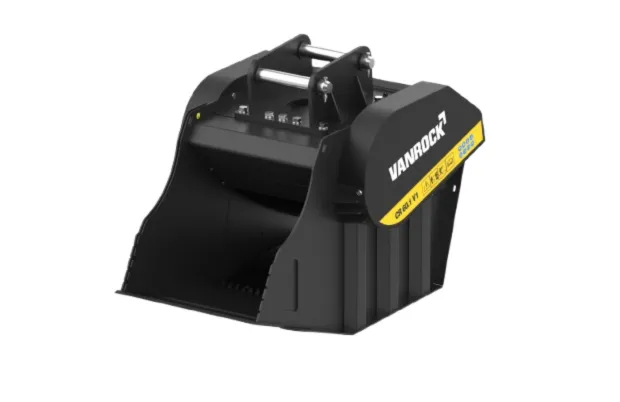

Anyone who's managed a demolition site knows the headache of dealing with piles of concrete, brick, and asphalt. The usual fix — hauling it all to an off-site crushing facility — eats up time and money that could go elsewhere. A hydraulic crusher bucket sidesteps that problem entirely by turning your excavator into a crushing machine right where the debris sits.
The attachment itself is straightforward: it bolts onto an excavator and uses the machine's own hydraulic power to break down tough materials into aggregate you can actually reuse. Demolition crews, road builders, and recycling operations have leaned into these for exactly that reason — there's no need to wait on a second machine or a trip to a processing plant.
That's really the core advantage. Debris gets crushed the moment it's pulled from the ground, instead of sitting around waiting for transport. Fewer trucks, fewer delays, fewer hands touching the material before it's usable again.
What can it actually handle? Concrete (reinforced or not), brick, natural stone, asphalt — the usual suspects on any demolition or excavation job. Once crushed, that material becomes backfill, road base, or landscaping aggregate. It's a nice trick: waste that would've gone to a landfill turns into something you'd otherwise have to buy.
Build quality matters more than people expect. The better units are built from high-strength steel with wear-resistant jaws and reinforced frames — because crushing concrete all day is hard on equipment, and a flimsy attachment won't last a season. That said, durability isn't just about the steel; it's also about how well the hydraulics hold up under repeated stress.
These buckets aren't limited to demolition, either. Quarries, mining operations, road crews, and municipal projects all use them for the same basic reason: one attachment replaces what used to require a separate crusher entirely. That consolidation is where the real cost savings show up — less fuel burned, fewer machines to maintain, fewer people needed to run the job.
Picking the right one isn't a one-size-fits-all decision. It comes down to your excavator's size, what materials you're crushing most often, how much output you need, and the specifics of the job. Jaw size and hydraulic flow requirements are worth getting right upfront — mismatch those, and you'll wear out the attachment (or the excavator) faster than you should.
Maintenance is the boring part nobody wants to think about until something breaks. Check the hoses, the wear plates, the jaw components — regularly, not just when something sounds off. It's cheaper to catch a worn part early than to replace a whole assembly after it fails mid-job.
Safety, too, is just common sense that's easy to skip when you're in a hurry: inspect before use, keep bystanders clear, follow the manufacturer's guidelines. None of it is complicated, but skipping it is how accidents happen.
The bigger picture is that construction is increasingly leaning toward on-site recycling — it's cheaper, faster, and doesn't involve hauling waste across town. A good hydraulic crusher bucket fits right into that shift. It's not a flashy piece of equipment, but for contractors trying to cut costs and speed up a job, it's become one of the more practical investments out there.

























Sign in to leave a comment.