
When teams start a project management journey, they frequently look for approaches that promote efficiency and flexibility in addition to streamlining procedures. Let me introduce you to Kanban, the dynamic approach that is completely changing the way Agile project management is done. This guide explores the transformative power of Kanban and how Agile approaches are affected by it.
The way teams approach and carry out their projects is redefined by Kanban's integration with Agile project management, which does everything from visualising workflow to encouraging continuous improvement. Come learn the subtleties of how Agile project management is transformed by Kanban, opening the door to increased success, productivity, and teamwork.
In order to understand how Kanban affects Agile project management, it is necessary to analyse the main elements of Kanban and how they affect Agile approaches.
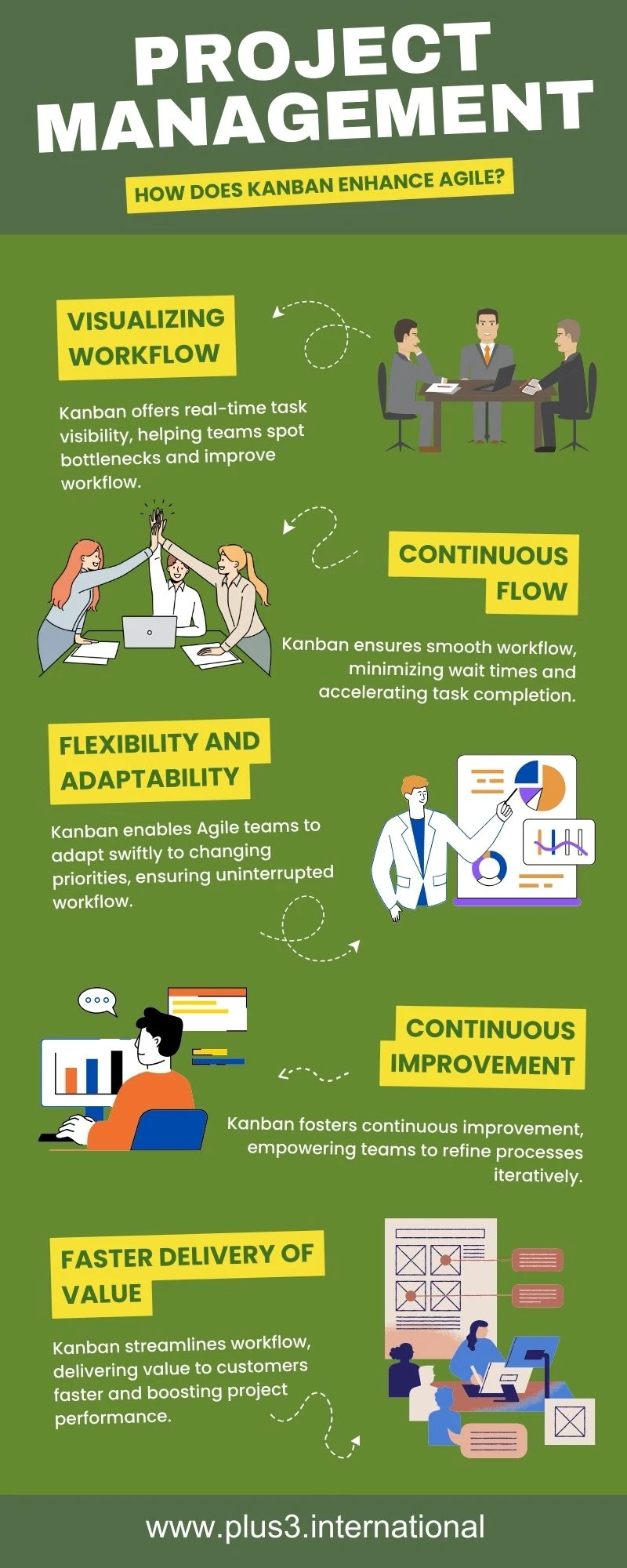
Visualising Workflow:One of Kanban's most distinctive features is its capacity to show workflow. Using a Kanban board to visualise project tasks gives teams a clear, up-to-date picture of their progress, which facilitates improved communication and decision-making.
Reducing Work in Progress (WIP):The Kanban methodology promotes a reduction in the quantity of tasks that are ongoing at any one moment. This limitation helps teams avoid overload and increase flow efficiency by ensuring that they concentrate on finishing current work before taking on new ones.
Constant Flow:Kanban encourages work items to move through the project pipeline continuously. Kanban promotes a more efficient and predictable project delivery process by cutting down on idle time and job wait times.
Flexibility and Adaptability:Agile approaches place a strong emphasis on flexibility in response to shifting priorities and objectives. Teams can adapt quickly to changing project dynamics thanks to the flexible nature of the Kanban methodology, which allows for adjustments without interfering with ongoing work.
Continuous Improvement:By pushing teams to evaluate their procedures and pinpoint opportunities for improvement, Kanban promotes a culture of continuous improvement. Agile methods are continuously improved and optimised by Kanban through frequent retrospectives and small adjustments.
Finally, a major development in project management techniques is the incorporation of Kanban into Agile methodology. Teams may elevate their Agile project management to new levels by implementing Kanban's visual methodology, flow optimisation strategies, and continuous improvement notion.
Agile teams may more easily visualise their workflow, respond to shifting requirements, and produce value more regularly and effectively with the help of Kanban. Project results and stakeholder satisfaction are increased when Kanban concepts and practices are put into reality because they improve collaboration, streamline procedures, and cut down on waste.
Plus3 International is a great resource for managing Agile transformation and achieving project success if you need further advice or experience. As organisations traverse the challenges of modern project management, Kanban is an effective tool for promoting Agile transformation and project success. In today's changing business environment, teams may overcome problems, capture opportunities, and achieve extraordinary results by leveraging Kanban's transformative power.












Sign in to leave a comment.