

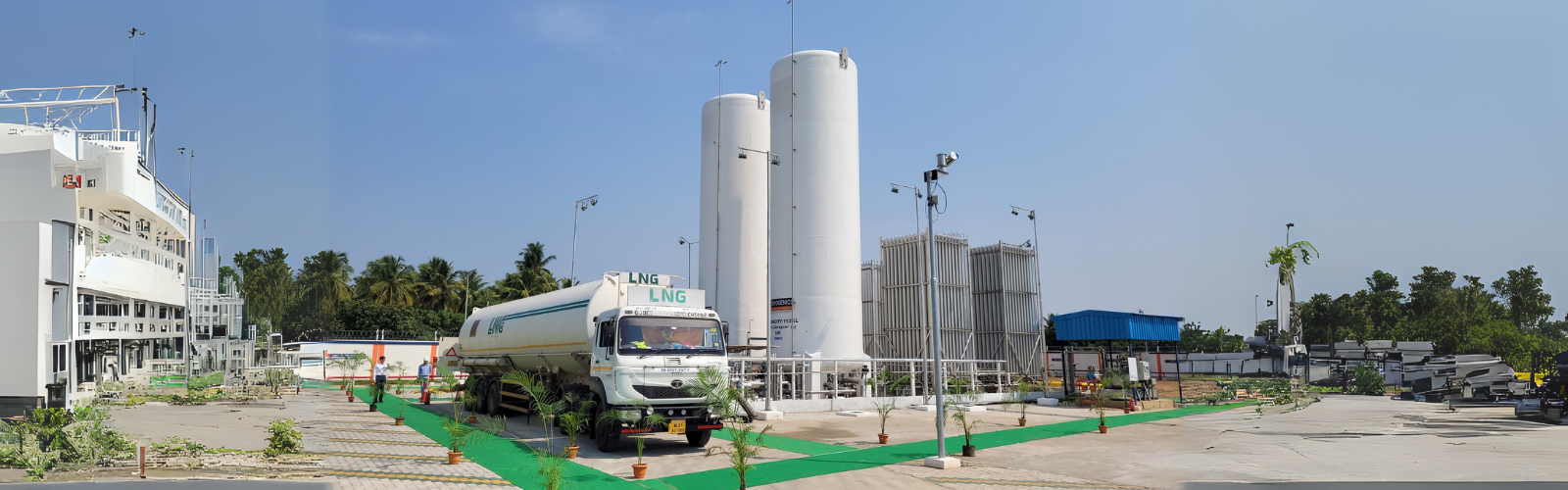
Liquefied Natural Gas (LNG) is natural gas that has been cooled to approximately -162°C, converting it from a gas into a liquid. This significantly reduces its volume, making LNG easier and more economical to store and transport over long distances. However, before LNG can be supplied to industries, power plants, commercial facilities, or city gas distribution networks, it needs to be converted back into its gaseous form. This process is known as LNG regasification.
LNG regasification is a critical part of the LNG supply chain, connecting LNG transportation and storage infrastructure with the natural gas distribution network.
What Is LNG Regasification?
LNG regasification is the process of converting liquefied natural gas back into its gaseous state by adding heat. The LNG is first pumped to the required pressure and then passed through a vaporizer, where heat is transferred to the LNG. As the temperature rises, the LNG changes from liquid to gas.
Once vaporized, the natural gas is conditioned, metered and supplied through pipelines to end users.
A typical LNG regasification flow can be represented as:
LNG Carrier → Storage Tank → LNG Pump → Vaporizer → Gas Conditioning → Metering → Pipeline
How Does the LNG Regasification Process Work?
1. LNG Unloading and Storage
LNG is transported to an import or regasification terminal in specially designed cryogenic carriers. At the terminal, unloading systems transfer the LNG through insulated cryogenic pipelines into storage tanks.
These LNG storage tanks are designed to maintain the extremely low temperature required to keep natural gas in its liquid state while minimising heat transfer from the surroundings.
2. LNG Pumping
LNG is withdrawn from the storage tanks using cryogenic pumps. Depending on the terminal design, low-pressure pumps initially move the LNG from storage, while high-pressure pumps increase its pressure before vaporization.
Increasing the LNG pressure before vaporization allows the resulting natural gas to meet the pressure requirements of the downstream transmission or distribution network.
3. Vaporization or Regasification
This is the core stage of the LNG regasification process.
The high-pressure LNG enters an LNG vaporizer, where heat is transferred to the LNG. The added heat causes the liquid to boil and transform into natural gas.
Several vaporization technologies can be used depending on the application, capacity, location and available heat source.
Open Rack Vaporizers (ORV):
ORVs commonly use seawater as the heat source. LNG flows through tubes while seawater passes over the external surfaces, transferring heat to the LNG and converting it into gas.
Submerged Combustion Vaporizers (SCV):
SCVs use heat generated by gas combustion to warm a water bath surrounding the LNG heat-transfer tubes. They can provide rapid response and operational flexibility when gas demand changes.
Ambient Air Vaporizers (AAV):
Ambient air vaporizers use heat naturally available in the surrounding air. They can be useful for smaller-scale and distributed LNG applications, although their performance can be influenced by ambient temperature and weather conditions.
4. Gas Heating and Conditioning
After vaporization, the natural gas may require additional heating or conditioning to meet downstream pipeline requirements.
Parameters such as temperature, pressure, flow and gas quality are controlled before the gas is introduced into the transmission system. Depending on the facility and applicable regulations, odorization may also be performed to facilitate leak detection.
5. Metering and Pipeline Distribution
Before entering the natural gas network, the regasified LNG passes through metering and monitoring systems. These systems help measure parameters such as flow, pressure and temperature while ensuring that the gas meets the required specifications.
The gas is then sent through pipelines to power plants, industrial facilities, commercial users and city gas distribution networks.
Why Is LNG Regasification Important?
LNG regasification enables natural gas to be transported globally in liquid form and then converted back into usable gas close to the point of consumption. This makes LNG an important option for regions without direct pipeline access to natural gas-producing areas.
A reliable regasification system can help provide:
- Efficient conversion of LNG into usable natural gas
- Flexible natural gas supply
- Reliable fuel for industries and power generation
- Access to natural gas in remote or pipeline-constrained locations
- Integration of LNG with city gas and industrial networks
Regasification facilities can be developed as large onshore LNG terminals, floating storage and regasification units (FSRUs), satellite LNG stations, or mobile regasification systems, depending on capacity and application requirements.
INOXCVA: LNG Regasification Solutions
INOXCVA provides solutions across the LNG and LCNG value chain, including LNG storage tanks, vaporizers, skids, LNG transportation and distribution systems, complete CGD packages, mobile regasification systems and LNG infrastructure.
With the right combination of storage, pumping, vaporization, pressure management and distribution equipment, LNG can be efficiently transformed from a cryogenic liquid into a dependable source of natural gas.
Conclusion
LNG regasification is the essential process that converts liquefied natural gas at cryogenic temperatures into usable natural gas. From LNG storage and high-pressure pumping to vaporization, conditioning and pipeline distribution, every stage is designed to ensure safe, efficient and reliable gas delivery.
As LNG infrastructure continues to expand, efficient LNG regasification systems and vaporizers will remain important for supporting industrial, power, commercial and transportation applications worldwide.















Sign in to leave a comment.