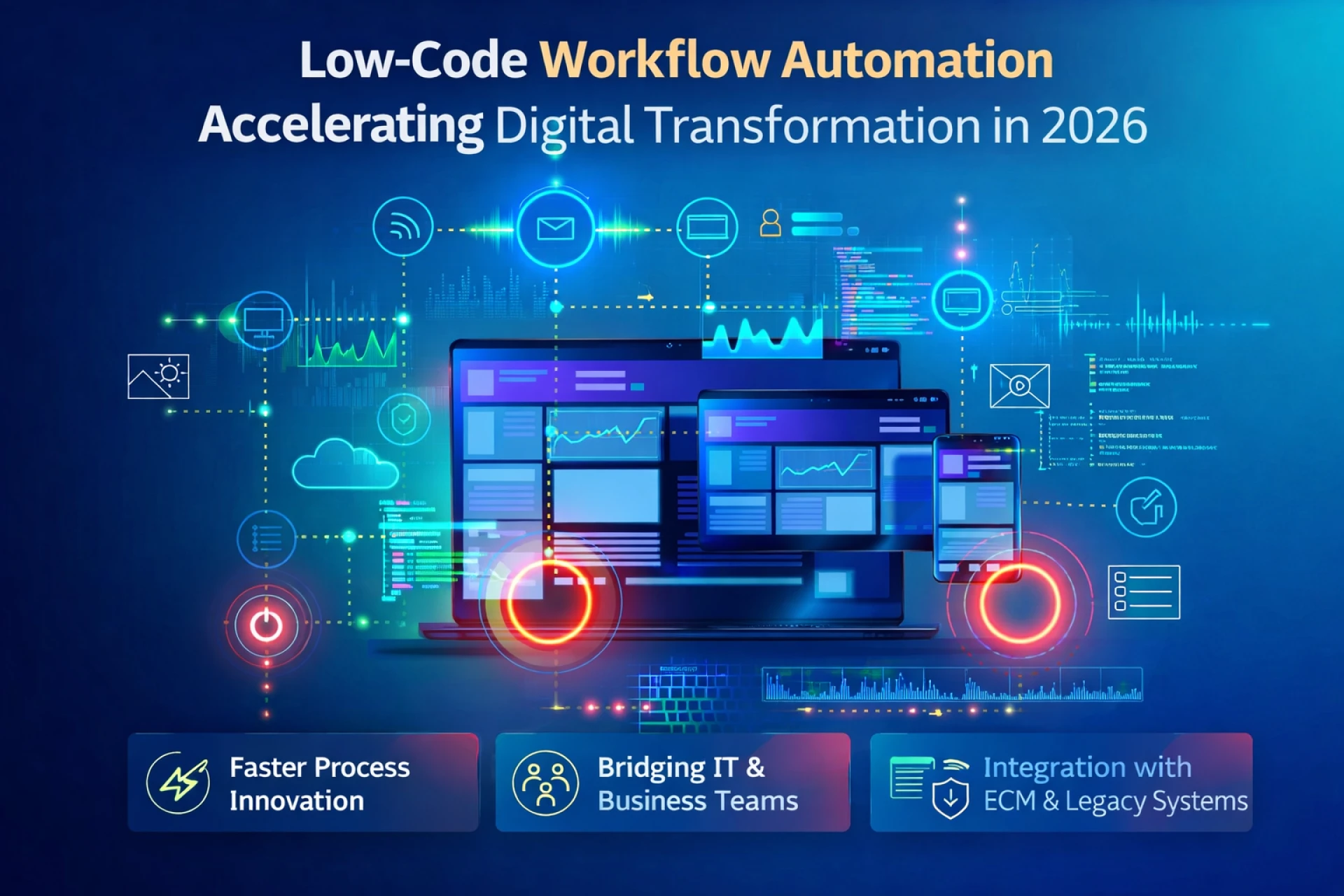

Digital transformation across Asia is no longer driven only by ambitious innovation teams or large IT budgets. In 2026, it is being shaped by a practical need: doing more with fewer resources, making faster decisions, and building systems that adapt as businesses evolve. Organizations across manufacturing, logistics, healthcare, and financial services are moving away from rigid, code-heavy platforms toward flexible automation models that empower both IT and business users.
At the center of this shift is low code workflow automation—a strategy that blends speed, governance, and scalability to modernize operations without overwhelming technical teams.

Why Traditional Automation Is No Longer Enough
For years, enterprises relied on custom-coded systems or off-the-shelf tools to automate processes. While effective initially, these systems often became bottlenecks over time.
Common challenges include:
- Long development cycles for even minor workflow changes
- Heavy dependence on specialized developers
- Limited visibility across departments
- Poor integration with legacy and modern systems
In manufacturing-heavy Asian markets, where regulatory changes, supplier networks, and customer demands shift quickly, such rigidity can directly impact productivity and compliance.
Low-code platforms address these pain points by enabling workflows to be designed visually, modified quickly, and deployed without extensive redevelopment.
The Role of Low-Code Workflow Automation in 2026
Faster Process Innovation Without Compromising Control
Low-code workflow automation enables organizations to digitize and refine processes in weeks rather than months. Business analysts and operations teams can collaborate with IT to design workflows using visual models, while IT retains governance over security, integrations, and performance.
This balance is critical in regulated industries, where speed must not come at the cost of compliance.
Bridging IT and Business Teams
One of the most overlooked benefits of low-code platforms is collaboration. Instead of IT acting as a bottleneck, it becomes an enabler. Business teams define logic and rules, while IT ensures scalability and system integrity.
This shared ownership leads to:
- Fewer misaligned requirements
- Faster deployment cycles
- Higher adoption rates
Document Management as the Foundation of Automation
Why Content Still Drives Enterprise Workflows
Despite advances in analytics and AI, most enterprise processes still revolve around documents—contracts, invoices, forms, compliance records, and technical drawings. Without structured access to this information, automation remains incomplete.
This is where ECM software (Enterprise Content Management) becomes essential. A robust ECM system ensures that documents are:
- Securely stored
- Easily searchable
- Version-controlled
- Integrated into workflows
When combined with low-code automation, ECM software transforms static documents into active participants in business processes.
Intelligent Data Capture: From Paper to Process
Many Asian enterprises still manage hybrid environments, where paper and digital documents coexist. Manual data entry from invoices, delivery notes, or inspection reports slows down operations and increases error rates.
Modern intelligent data capture tools, supported by technologies like OCR and machine learning, automatically extract data and feed it into workflows. For organizations building custom applications, tools such as a Windows data extraction SDK play a key role in embedding accurate data capture directly into enterprise systems.
Manufacturing Insights: Real-World Impact
Streamlining Production and Quality Workflows
In manufacturing, delays often occur not on the shop floor but in approvals, documentation, and coordination between departments. Low-code workflow automation helps manufacturers:
- Digitize quality inspections and approvals
- Automate supplier document validation
- Track production deviations in real time
By integrating document management and data capture, manufacturers gain end-to-end visibility—from raw material intake to final shipment.
Improving Compliance and Audit Readiness
Asian manufacturers operate under diverse regulatory frameworks, from export controls to environmental standards. Automated workflows ensure that compliance documents are collected, validated, and stored systematically, reducing audit risks and manual follow-ups.
Integration Without Disruption
Working With Legacy Systems
A common concern is whether new automation platforms can coexist with older ERP or custom-built systems. Modern low-code platforms are designed with integration in mind, offering APIs and connectors that allow workflows to span across legacy and cloud systems.
This means organizations can modernize incrementally, avoiding costly rip-and-replace strategies.
Scaling Automation Across Departments
What starts as a single automated process—such as invoice approvals—often expands across departments. Low-code platforms support this growth by allowing reusable components, standardized templates, and centralized monitoring.
Security, Governance, and Long-Term Value
Built for Enterprise-Grade Requirements
Automation without security is a liability. Enterprise-focused platforms incorporate role-based access, audit trails, and compliance controls by design. This is particularly important in sectors handling sensitive customer or operational data.
Reducing Total Cost of Ownership
While initial automation projects may focus on speed, long-term value comes from maintainability. Low-code solutions reduce dependency on niche skills, making it easier to update workflows as business needs evolve—an important consideration in rapidly changing Asian markets.
Frequently Asked Questions (FAQ)
What types of processes benefit most from low-code workflow automation?
Repetitive processes, document-heavy, and involve multiple approvals—such as procurement, compliance, HR onboarding, and quality management—see the fastest returns.
Is low-code automation suitable for large enterprises?
Yes. Modern platforms are designed to support enterprise-scale deployments with strong governance, security, and integration capabilities.
How does ECM software support automation initiatives?
ECM software ensures that documents and content are structured, searchable, and accessible within workflows, enabling true end-to-end process automation.
Can intelligent data capture replace manual verification completely?
While automation significantly reduces manual effort, human validation may still be required for exceptions or high-risk documents. The goal is to minimize, not eliminate, human involvement.
Choosing the Right Technology Partner for Sustainable Transformation
As low-code workflow automation becomes a core pillar of digital transformation in 2026, success depends not just on tools but on experience. Organizations benefit most when working with partners who understand enterprise content, intelligent data capture, and real-world operational challenges. Companies like Extrieve Technologies bring this practical perspective, helping enterprises implement scalable automation strategies that align with long-term business goals. To learn more about how experienced partners approach document-centric automation and workflow modernization, visit https://www.extrieve.com/.
In a region as diverse and fast-moving as Asia, thoughtful automation—built on strong content foundations and adaptable workflows—remains one of the most effective ways to achieve efficient, high-quality, and future-ready operations.



















Sign in to leave a comment.