
In the mobile-first era, businesses constantly seek strategies to expand their reach and foster deeper customer connections. While native apps, built specifically for iOS or Android, offer a seamless user experience, their development can be time-consuming and expensive. This is where hybrid app development steps in, offering a compelling alternative.
Hybrid apps combine the ease and cost-effectiveness of web development with the functionality and performance of native apps. They are web applications wrapped in a native app container, allowing them to access certain device features like the camera or GPS. According to a recent report by Markets and Markets, the global hybrid app development market is expected to reach a staggering $187.3 billion 2 by 2027, highlighting the growing popularity of this approach.
But with many hybrid app development frameworks available, choosing the right one for your project can feel overwhelming. The guide will provide the knowledge and steps to choose the perfect framework for your hybrid app requirements.
Understanding Your Needs: The Foundation for Success
Before diving into the world of frameworks, take a moment to define your app\'s concept and goals clearly. What problem are you solving, or what need are you fulfilling? Who is your target audience? Knowing these aspects will guide your framework selection. For instance, if your app requires complex offline functionality or access to specific device features, a framework with strong native code integration capabilities might be ideal.
Popular Hybrid App Development Frameworks: A Closer Look
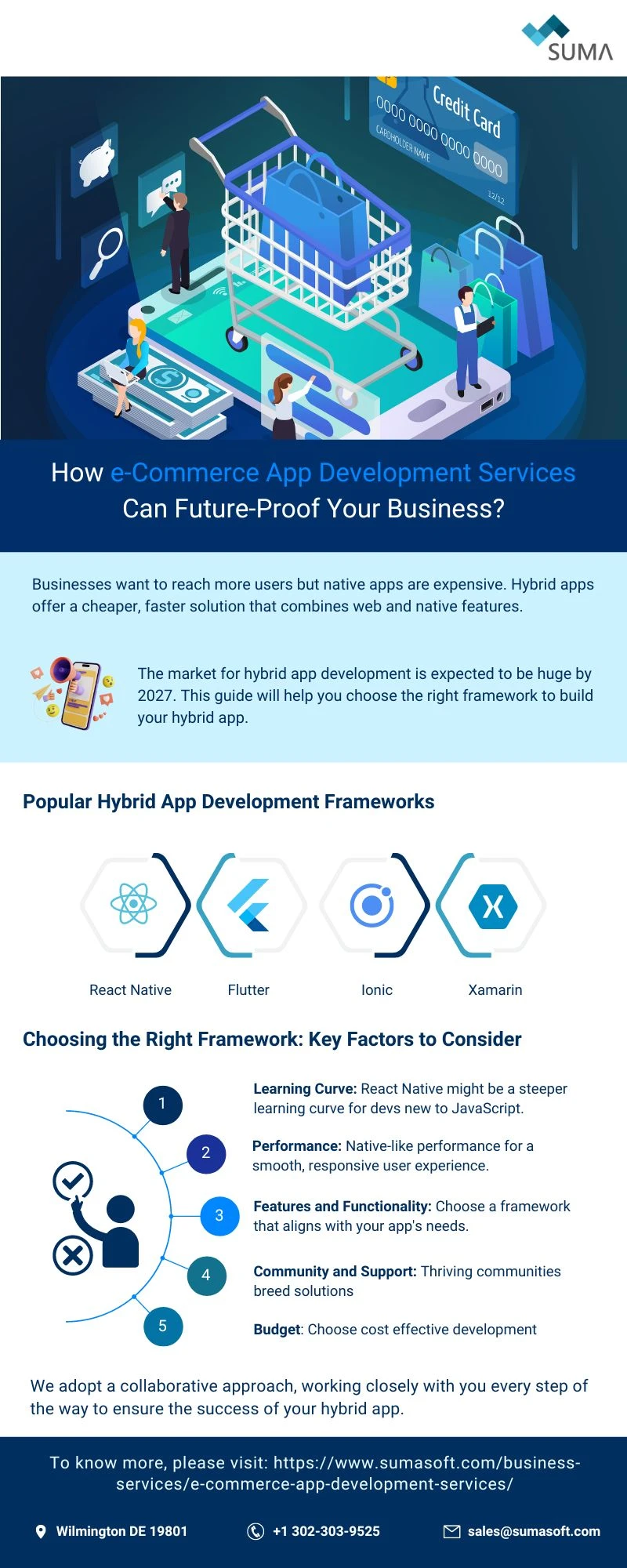
Now, let\'s explore some of the most popular hybrid app development frameworks and their key features:
- React Native: Developed by Facebook, React Native is a widely used framework that leverages JavaScript for code development. It allows you to build apps with native-like performance and a familiar development environment for web developers. React Native is a strong choice for feature-rich apps focusing on user experience.
- Flutter: Developed by Google, Flutter uses the Dart programming language to create beautiful and visually appealing apps. It boasts a comprehensive library of pre-built widgets and an innovative hot reload function. Flutter is well-suited for apps with a strong focus on design and animation.
- Ionic: Ionic is a popular framework based on web technologies like HTML, CSS, and JavaScript. It offers many pre-built UI components and integrates seamlessly with Angular, a popular web development framework. Ionic is a good option for more superficial apps focusing on quick development and cross-platform compatibility.
- Xamarin: Owned by Microsoft, Xamarin allows developers to use C# for hybrid app development. This framework offers tight integration with Microsoft tools and services. Xamarin is a solid choice for businesses already invested in the Microsoft ecosystem or requiring complex native functionalities.
Choosing the Right Framework: Key Factors to Consider
Here are some crucial factors to weigh in when selecting a hybrid app development framework:
- Learning Curve: Consider the technical expertise of your development team. Learning frameworks like React Native can present a more significant challenge for developers new to JavaScript and its libraries.
- Performance: Evaluate how important native-like performance is for your app. Frameworks with strong native code integration capabilities, like Xamarin, can deliver a more responsive user experience.
- Features and Functionality: Make sure your chosen framework offers the features and functionalities necessary for your app. Some frameworks, like Flutter\'s animation capabilities or Ionic\'s pre-built UI components, excel in specific areas.
- Community and Support: Thriving communities can be a treasure trove of solutions and clever hacks. Popular frameworks like React Native and Ionic often benefit from extensive community support.
- Budget: While hybrid development offers cost advantages over native app development, there are still factors to consider. Some frameworks require additional licensing fees or have steeper learning curves that extend development time.
Suma Soft Hybrid App Development Services: Your Guide Through the Maze
Suma Soft understands the complexities of hybrid app development. Let our development experts guide you through the world of frameworks. They\'ll help you find the perfect fit for your project\'s unique needs. We offer a comprehensive range of hybrid app development services, including:
- Framework selection and consultation
- App design and development
- Integration with native features
- Quality assurance and testing
- Deployment and ongoing support
We adopt a collaborative approach, working closely with you every step of the way to ensure the success of your hybrid app.
To know more, please visit us: https://www.sumasoft.com/business-services/e-commerce-app-development-services/










Sign in to leave a comment.