How Efficient Material Handling Improves Corrugated Board Manufacturing

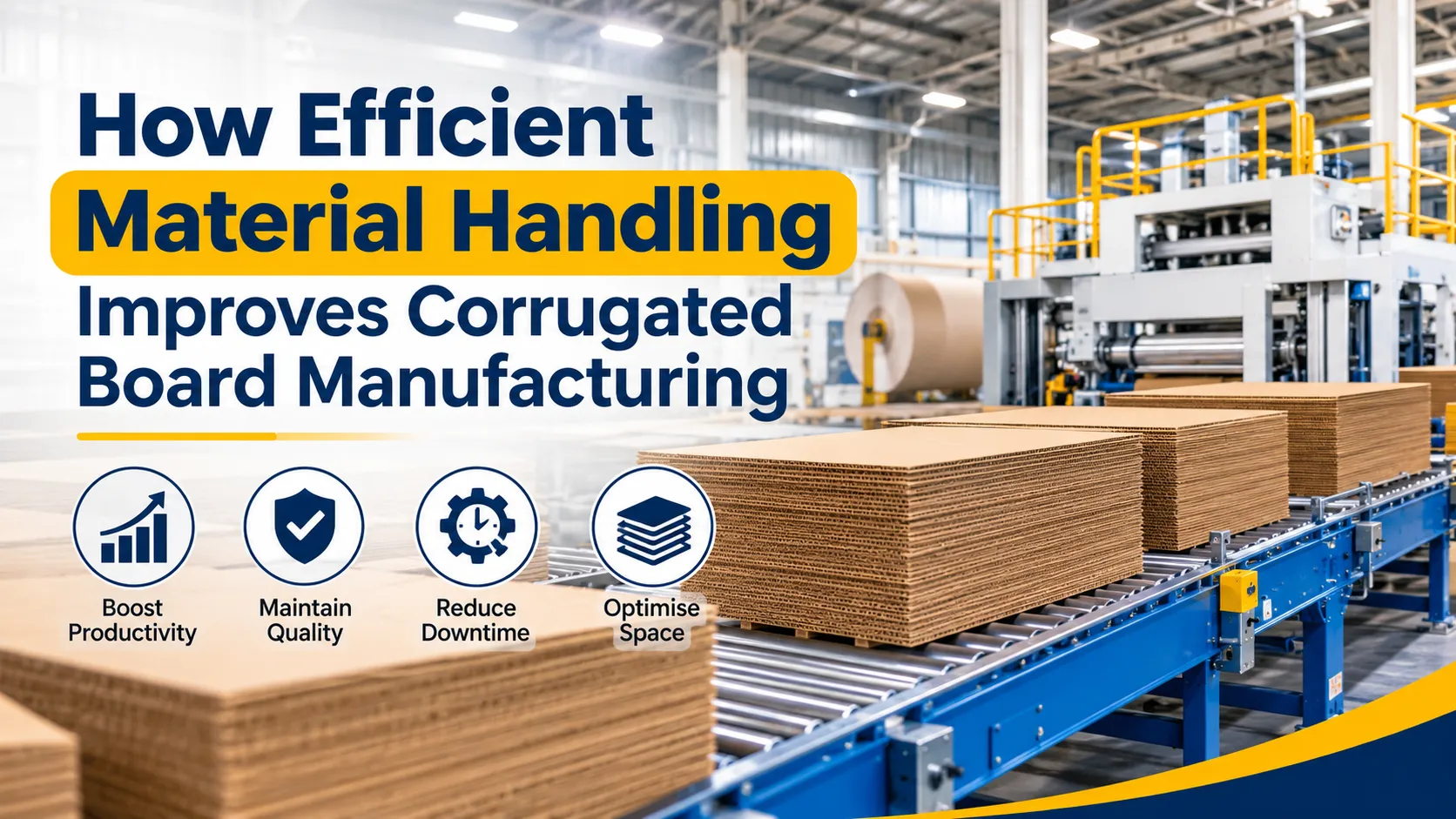
Corrugated board manufacturing involves several interconnected production activities. From handling raw paper reels to moving finished sheets between machines, every stage requires proper material management. Choosing the right Corrugating Machinery and material handling arrangements helps manufacturers maintain an organised production process.
In many manufacturing facilities, delays occur not because of machine performance but because materials are not transferred between production sections at the right time. Sheets may accumulate near machines, workers may spend additional time moving materials, and improper handling can affect board quality.
Efficient material handling helps address these challenges. By organising how materials move throughout the factory, manufacturers can improve production flow, reduce unnecessary handling and make better use of available resources.
What Is Material Handling in Corrugated Board Manufacturing?
Material handling refers to the movement, storage and management of materials within a manufacturing facility.
In a corrugated board plant, this includes handling paper reels, transferring corrugated sheets, moving stacked boards and supplying materials to different converting machines.
A typical material handling arrangement may involve:
- Paper reel handling equipment.
- Conveyor systems.
- Roller conveyors.
- Board transfer units.
- Sheet stacking equipment.
- Forklifts and other material movement equipment.
The purpose is to ensure that materials reach the required production section safely and without unnecessary delays.
A well-organised material handling system also helps manufacturers maintain better control over the movement of materials across the factory.
Why Is Material Handling Important in Corrugated Board Production?
Corrugated board manufacturing requires coordination between several machines and production activities. Any interruption in material movement can affect the next stage of production.
For example, if finished corrugated sheets cannot be transferred away from the corrugator quickly enough, they may accumulate near the delivery section. This can create unnecessary handling work and affect production continuity.
Efficient material handling helps prevent such situations by providing a planned movement system.
Here are some important ways it supports manufacturing operations.
1. Improves Production Flow
A manufacturing plant depends on the smooth movement of materials between different production stages.
When workers need to move sheets manually or wait for materials to become available, production activities may slow down.
Conveyor systems and suitable transfer equipment help maintain a more organised movement of corrugated boards.
They can transfer sheets from the corrugating line towards stacking, storage or further converting operations.
This helps reduce unnecessary movement between production sections and supports a more consistent workflow.
2. Reduces Unnecessary Manual Handling
Manual transportation can become difficult when a plant handles large quantities of corrugated sheets.
Workers may need to lift, carry and reposition boards repeatedly. This requires time and can increase the possibility of handling errors.
Mechanical handling equipment reduces the need for repetitive manual transportation.
For example, conveyors can move sheets between machines, while stacking equipment can organise boards for the next operation.
This allows workers to focus more on machine operation, inspection and production supervision.
3. Helps Protect Corrugated Board Quality
Corrugated boards need proper handling to maintain their physical condition.
Rough transportation, improper stacking and repeated lifting can damage sheet edges, create bends or affect the surface.
These problems may become more noticeable during printing, slotting, die-cutting and other converting operations.
A suitable material handling arrangement helps control how sheets are transferred and stored.
Proper conveyor alignment, suitable transfer points and organised stacking practices can reduce unnecessary physical contact and handling damage.
4. Makes Better Use of Factory Space
Factory space needs to accommodate machines, raw materials, finished boards and movement areas for workers and equipment.
Poor material organisation can create congestion around production sections.
Materials may occupy unnecessary floor space, making it difficult to move between machines or access equipment.
A planned conveyor layout helps establish defined movement paths.
Similarly, organised stacking and storage areas make it easier to manage finished boards without blocking important working spaces.
5. Supports Better Labour Utilisation
When workers spend a significant amount of time moving materials manually, fewer resources may be available for other production activities.
Efficient material handling reduces repetitive transportation work and helps distribute responsibilities more effectively.
For instance, instead of manually transferring every sheet between sections, workers can monitor conveyor operations and focus on quality checks or machine feeding.
This does not remove the need for skilled operators. It helps them use their working time more productively.
6. Helps Reduce Production Bottlenecks
A bottleneck occurs when one production stage cannot handle the output coming from the previous stage.
Material handling problems can contribute to these situations.
For example, a corrugator may produce sheets faster than the next section can receive or stack them.
If the transfer system is not designed for the required output, boards may accumulate and interrupt the production flow.
Manufacturers should therefore consider the capacity of conveyors, transfer equipment and stacking systems when planning their production setup.
The objective is to maintain coordination between connected machines.
Common Material Handling Equipment Used in Corrugated Board Plants
Different types of equipment are used to move materials depending on the production process, factory layout and level of automation.
Conveyor Systems
Conveyors are among the most widely used material handling solutions in manufacturing facilities.
They move corrugated sheets from one production section to another without requiring workers to carry every sheet manually.
Common arrangements include belt conveyors, roller conveyors and transfer conveyors.
The selection depends on sheet dimensions, movement distance and production requirements.
Paper Reel Handling Equipment
Paper reels are among the primary raw materials used in corrugated board production.
They need to be transported, positioned and loaded onto the production line carefully.
Suitable reel handling equipment helps manage heavy paper rolls and supports safer material movement.
The equipment should match reel dimensions, weight and the requirements of the corrugating line.
Sheet Stackers
After corrugated boards are cut, they need to be collected and arranged for further processing or storage.
Sheet stackers help organise boards into manageable batches.
Proper stacking makes it easier to transport materials and prepare them for printing or other converting operations.
Forklifts and Pallet Handling Equipment
Forklifts and pallet handling equipment are commonly used for moving stacked boards and materials within factories.
They help transfer materials between production areas and storage locations.
However, their movement paths should be planned carefully to avoid interference with workers and operating machinery.
How Automation Is Changing Material Handling in Corrugated Board Manufacturing
Automation is changing how manufacturing facilities manage internal material movement.
Instead of depending entirely on manual transportation, factories can use integrated conveyor arrangements and automated handling equipment.
These systems help coordinate the movement of materials between connected production sections.
For example, an automated conveyor may receive corrugated sheets from one machine and transfer them towards a stacking unit.
Sensors and control systems can help manage equipment operation, depending on the design.
Automation can provide several benefits:
- More controlled material movement.
- Reduced repetitive manual handling.
- Better coordination between production sections.
- Improved material organisation.
- Greater suitability for high-volume manufacturing.
However, automation must be planned according to actual production requirements.
Installing additional equipment without considering machine capacity, floor space and material flow may create unnecessary complexity.
Manufacturers should evaluate the complete production arrangement before selecting an automated handling solution.
Factors to Consider When Improving Material Handling Efficiency
Improving material handling does not always require replacing every existing system.
Manufacturers can begin by identifying areas where unnecessary movement, delays or material accumulation occur.
The following factors can help guide improvements.
Factory Layout
Review the distance between machines and the movement paths used by workers and materials.
A suitable layout reduces unnecessary transportation and makes better use of available floor space.
Production Capacity
Understand the number of sheets or materials that need to move through the factory during a production shift.
Handling equipment should support the expected production output without becoming a bottleneck.
Material Dimensions and Weight
Different materials require different handling arrangements.
Paper reels, single-wall boards and heavier multi-wall sheets may have different handling requirements.
Equipment should be selected according to the materials being transported.
Equipment Compatibility
Conveyors, stackers and other handling equipment should work properly with the machines they connect.
Consider machine feeding heights, sheet dimensions, operating speeds and transfer requirements.
Maintenance Requirements
Material handling equipment needs regular inspection to maintain reliable operation.
Check conveyor belts, rollers, motors, transfer units and control systems according to the manufacturer's recommendations.
Preventive maintenance helps identify wear and operating issues before they cause longer interruptions.
The Role of Material Handling in Future-Ready Corrugated Board Plants
As corrugated packaging demand grows, manufacturers need production facilities that can handle increasing material volumes without creating unnecessary operational difficulties.
Machine capacity is only one part of this requirement.
The movement of raw materials, semi-finished boards and finished sheets also needs attention.
A well-planned material handling system helps connect different production stages and supports better coordination across the factory.
Manufacturers planning a new corrugating facility should consider conveyor arrangements, stacking areas, storage locations and machine accessibility during the initial layout stage.
Existing plants can also review their material movement processes to identify opportunities for improvement.
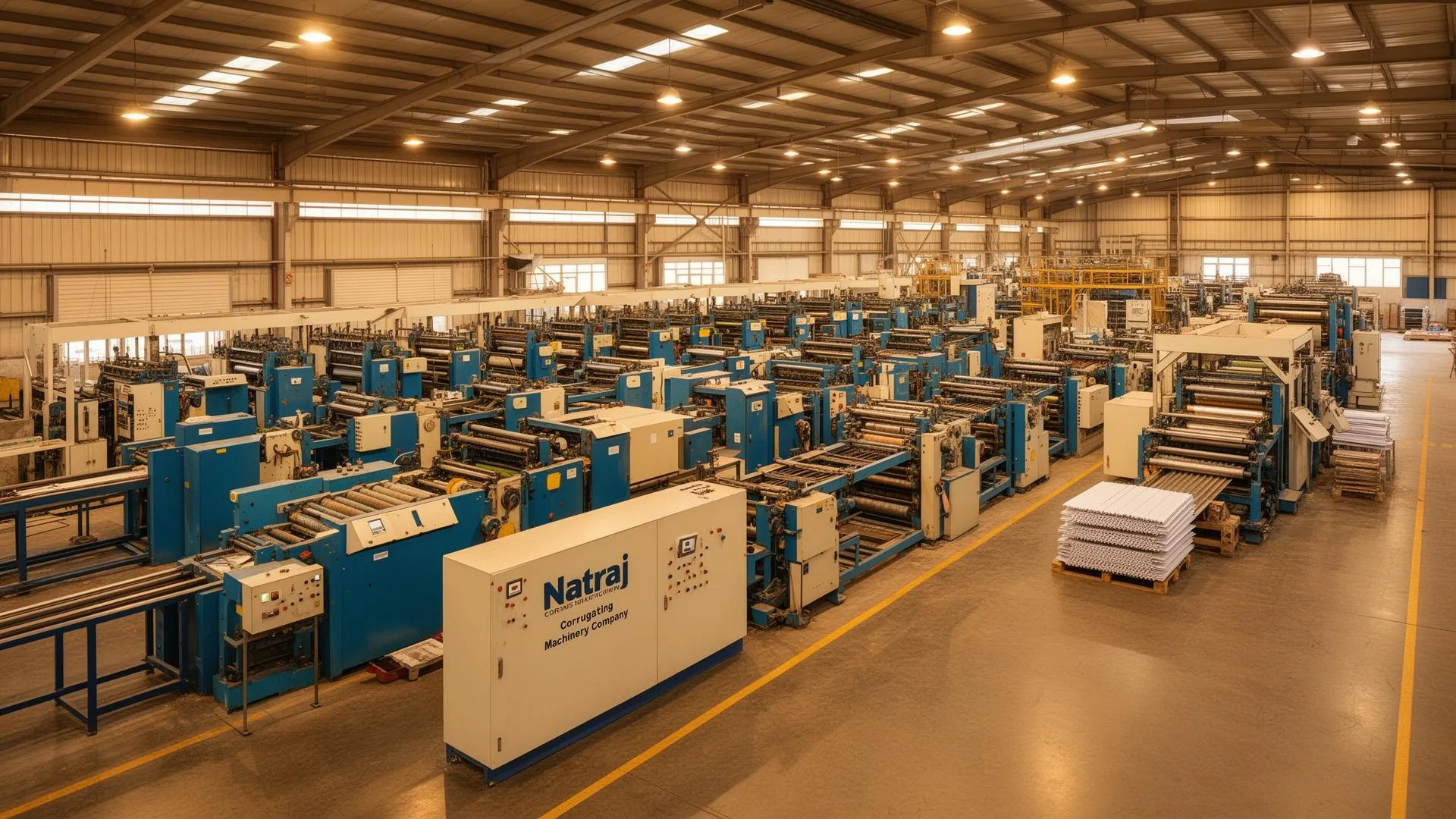
Companies such as Natraj Machines, which provide corrugating machinery and complete plant solutions, can be considered when manufacturers evaluate equipment requirements for their production facilities.
Conclusion
Efficient material handling is an important part of corrugated board manufacturing. It influences how materials move between machines, how finished sheets are organised and how effectively production resources are used.
Conveyor systems, transfer equipment, paper reel handling solutions and sheet stackers can help reduce unnecessary manual movement and improve material organisation.
However, the right solution depends on production capacity, factory layout, board dimensions and the level of automation required.
Manufacturers who plan material handling alongside their machinery and production requirements can build more organised facilities and support a smoother manufacturing process.



Sign in to leave a comment.