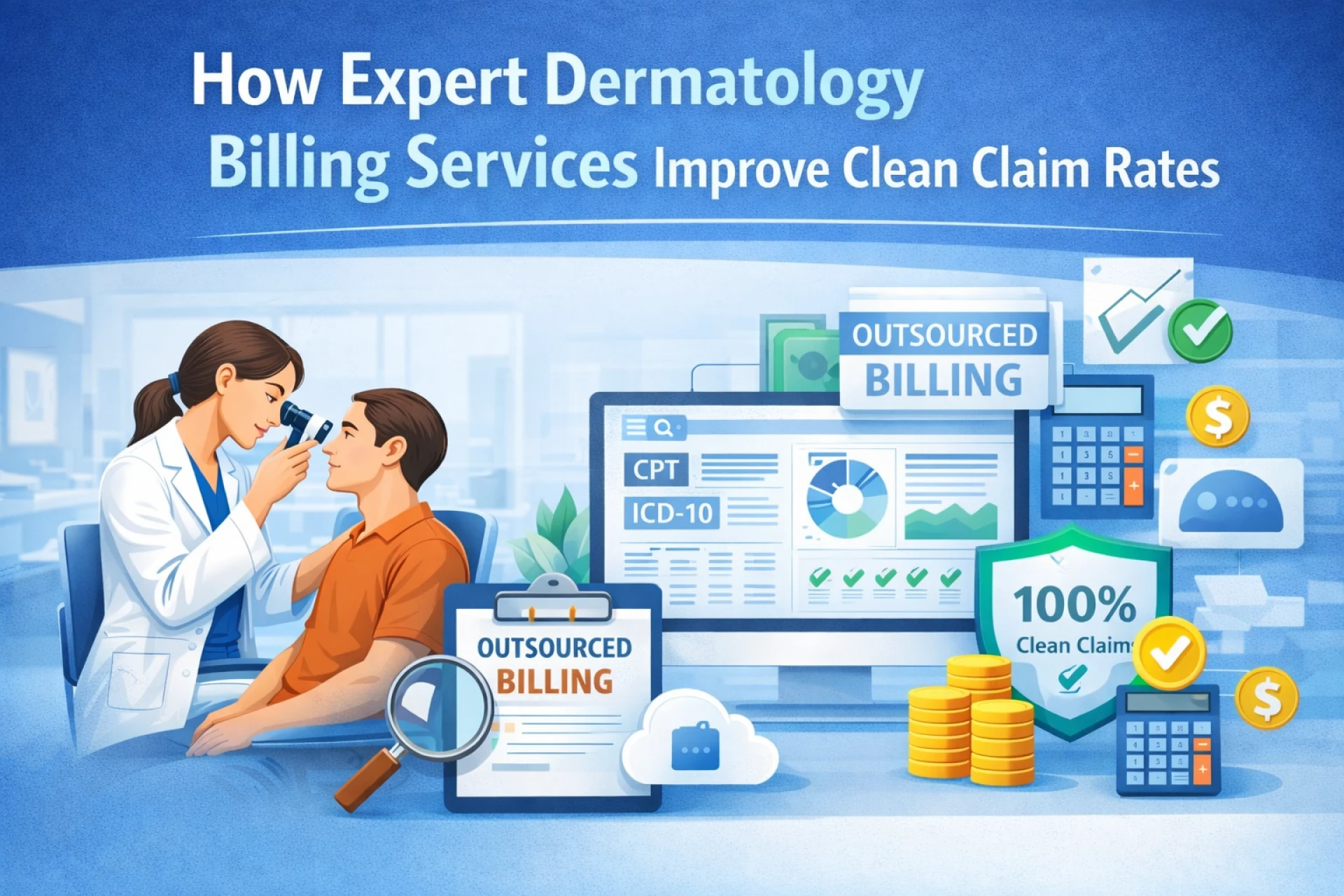

Dermatology clean claim rates are no longer a back-office metric. They are a direct indicator of revenue health. For dermatology clinics in 2026, improving clean claim performance isn’t about working harder or pushing staff faster. It’s about specialization. Clinics that rely on expert dermatology billing services consistently outperform those using generalist or stretched in-house teams, especially when payer scrutiny continues to tighten.
This article explains why clean claims fail in dermatology, and how specialized billing services materially improve first-pass acceptance rates.
What Is a Clean Claim in Dermatology Billing
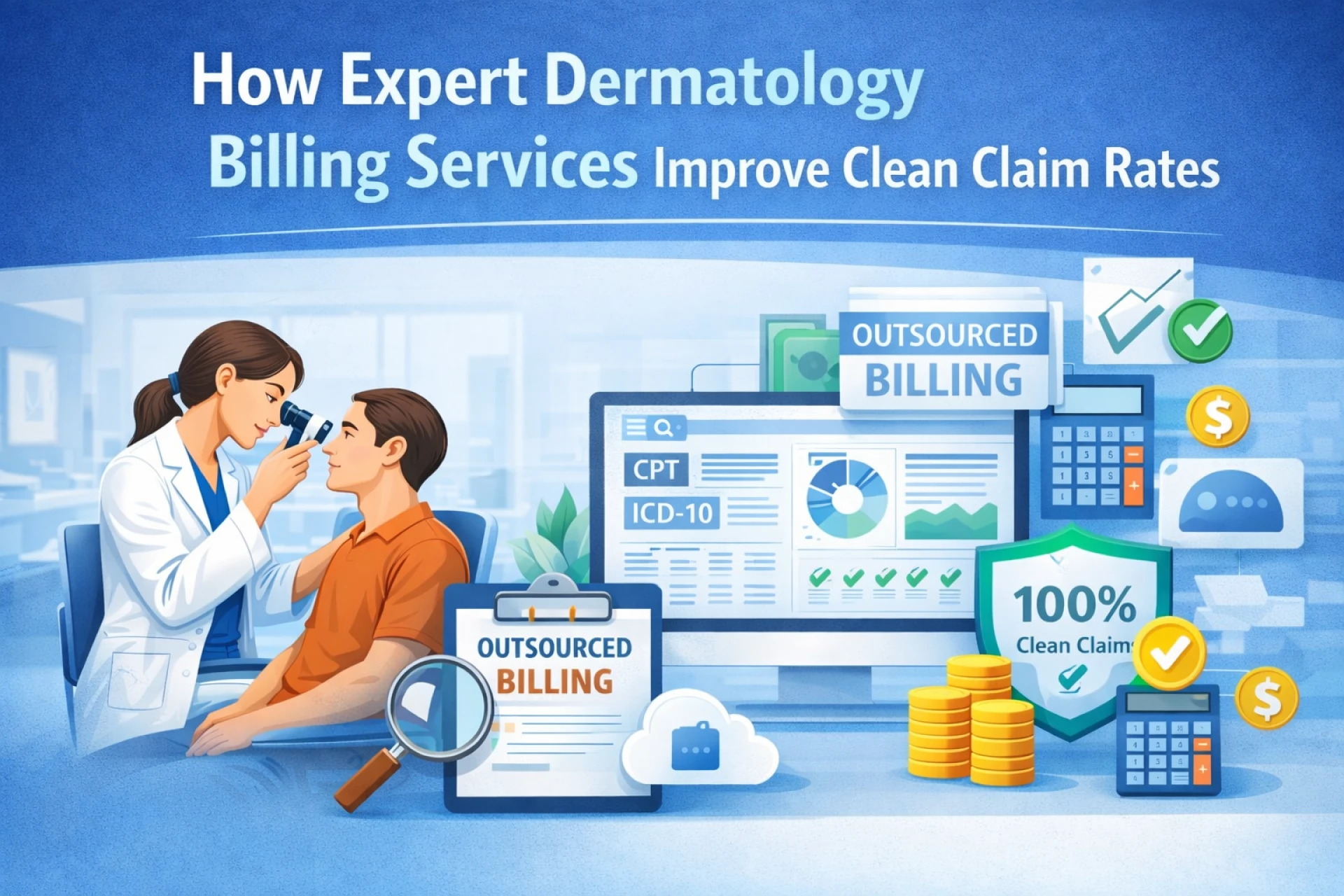
A clean claim in dermatology billing is a claim submitted correctly the first time, accurately coded, properly documented, and fully compliant with payer-specific rules so it is accepted and processed without rejection, delay, or manual correction.
In dermatology, “clean” is more complex than in many specialties. High procedure volume, frequent modifier use, and bundled services create more room for error and more opportunity for revenue leakage.
Why Clean Claim Rates Are Harder to Maintain in Dermatology
Dermatology is uniquely exposed to claim rejections due to:
- Heavy reliance on modifiers (-25, -59, -LT/-RT)
- Multiple procedures performed in a single visit
- Frequent biopsies, excisions, and pathology-related services
- Payer sensitivity around medical necessity documentation
- Procedure-to-diagnosis mismatches flagged by automated edits
Even small inconsistencies can break first-pass acceptance. And once a claim fails, everything downstream slows.
How Expert Dermatology Billing Services Improve Clean Claim Rates
Expert dermatology billing services enhance clean claim rates by applying specialty-specific coding rules, modifier validation, documentation alignment, and payer intelligence prior to claim submission, preventing errors rather than reacting to denials.
Here’s how that plays out in practice.
1. Specialty-Specific Coding Accuracy
General medical billers often miss dermatology nuances. Expert billing teams don’t.
They understand:
- Proper CPT selection for dermatologic procedures
- Bundling and unbundling rules
- When procedures can and cannot be billed together
That precision alone eliminates a significant percentage of preventable rejections.
2. Modifier Validation Before Submission
Most dermatology claim issues trace back to modifier misuse.
Specialized billing services:
- Validate modifier necessity against documentation
- Apply payer-specific modifier rules
- Prevent overuse patterns that trigger audits
This isn’t guesswork. It’s based on real denial data across multiple dermatology clinics.
3. Documentation Alignment With Payer Expectations
Clean claims fail when documentation doesn’t support coding—even if the service was appropriate.
Expert billing teams work upstream to ensure:
- Notes clearly justify medical necessity
- Diagnoses support procedures
- Language aligns with payer policy requirements
This reduces both rejections and future audit exposure.
4. Payer-Specific Rule Intelligence
Dermatology billing rules are not universal. They vary by payer and change frequently.
Outsourced dermatology billing services track:
- CMS updates
- CPT and modifier guidance
- Commercial payer dermatology policies
They adjust workflows before claim submission, not after denials spike.
5. Dermatology-Focused Claim Scrubbing
Generic claim scrubbers catch surface-level errors.
Dermatology-focused billing teams apply specialty logic, flagging:
- Risky code combinations
- Documentation gaps
- Known payer rejection triggers
The result: higher first-pass acceptance and faster reimbursement.
Clean Claim Rate vs. Denial Rate (Why Clinics Confuse the Two)
Low denial rates don’t automatically mean strong billing performance.
A clinic can have:
- Low formal denials
- But high rejection rates, resubmissions, and delays
Clean claim rate measures how often claims are paid the first time. That’s what drives predictable cash flow, lower A/R days, and less staff rework.
Why In-House Billing Teams Struggle to Match These Results
Even strong internal teams face structural disadvantages:
- Limited exposure to payer-wide denial trends
- Staffing turnover that disrupts consistency
- Time constraints that force reactive workflows
- Difficulty staying current with specialty-specific rule changes
Expert billing services operate at scale. That scale is what enables cleaner claims.
What to Look for in a Dermatology Billing Partner Focused on Clean Claims
Not all billing vendors improve clean claim rates.
Dermatology clinics should look for partners who:
- Specialize primarily or exclusively in dermatology
- Report clean claim and first-pass acceptance rates
- Demonstrate modifier and payer rule expertise
- Provide denial analytics and trend reporting
- Proactively prevent errors, not just fix them
If a vendor can’t clearly explain how they improve clean claims, they likely won’t.
Frequently Asked Questions
What is a good clean claim rate for dermatology clinics?
High-performing clinics often achieve clean claim rates above 95% with specialized billing support.
How quickly can clean claim rates improve after outsourcing?
Many clinics see measurable improvement within 60–90 days as workflows and documentation alignment improve.
Does improving clean claim rates reduce staff workload?
Yes. Fewer rejections mean less rework, fewer follow-ups, and less burnout for administrative teams.
Final Takeaway
Clean claim rates are the foundation of reliable dermatology revenue.
In today’s reimbursement environment, achieving consistently high clean claim performance requires specialized expertise, not just effort. Expert dermatology billing services don’t just process claims; they prevent problems before they reach payers.





























Sign in to leave a comment.