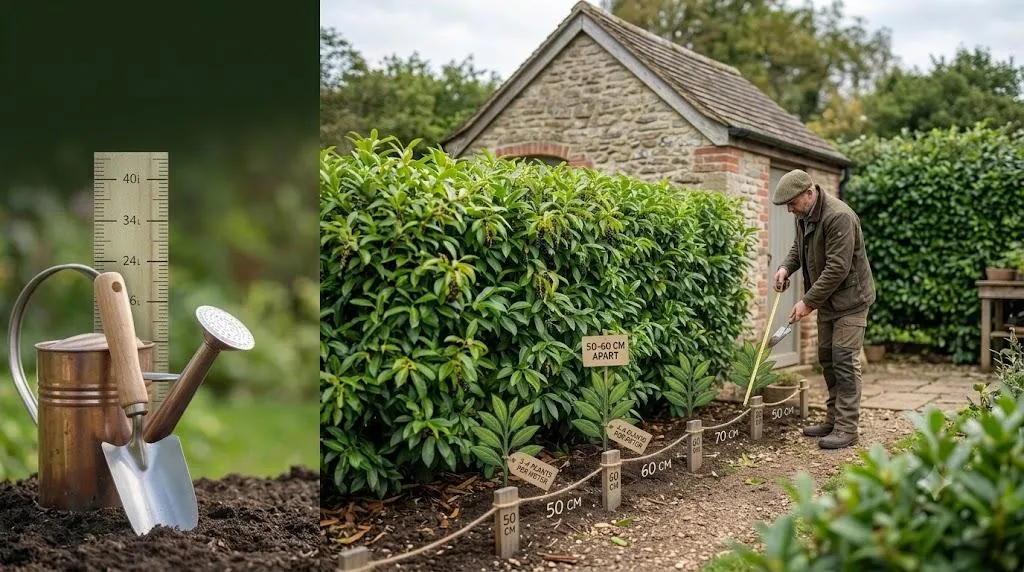

Planting a new hedge is an investment in your garden, and getting the spacing right from the beginning can make a significant difference to how quickly and evenly it establishes. If you are planning to grow Portuguese Laurel (Prunus lusitanica), one of the most common questions is: how far apart should you plant Portuguese Laurel?
The answer depends on several factors, including the size of the plants you are buying, how quickly you want the hedge to fill out and whether you are planting a single or double row. Your available space and the final appearance you want to achieve will also influence the ideal planting distance.
Portuguese Laurel is a popular choice for UK gardens because it is evergreen, attractive and suitable for creating privacy screens and boundaries. With the right spacing and care, a row of healthy plants can eventually develop into a dense, attractive hedge.
How Far Apart Should Portuguese Laurel Be Planted?
As a general guide, Portuguese Laurel plants can be spaced approximately 60 to 90cm apart when creating a single-row hedge.
The exact distance you choose will depend on the size of the plants at the time of planting. Smaller plants may be positioned closer together to help create a dense screen, while larger, more established plants can often be given more space.
If your priority is to create a continuous hedge as quickly as possible, closer spacing may be preferable. However, planting more widely can reduce the number of plants required and allow each plant more room to develop.
Rather than choosing a spacing based solely on the size of the hedge you want immediately, consider how the plants will grow and fill the available space over time.
What is the Best Portuguese Laurel Hedge Spacing?
There is no single spacing that is perfect for every garden. The best Portuguese Laurel Hedge spacing depends on the plant size, growing conditions and the density you want to achieve.
For many UK gardens, a spacing of around 60 to 90cm works well for a single row. This provides enough room for the plants to establish while allowing their branches to eventually grow together and create a continuous screen.
If you are working with smaller plants and are prepared to wait for the hedge to fill out, wider spacing may be suitable. On the other hand, if you want a fuller appearance sooner, closer spacing can help reduce the visible gaps between plants.
The important thing is to avoid assuming that planting as closely as possible will always produce the best result. Plants that are placed too close together may compete more strongly for water, nutrients and space as they mature.
Should You Plant Portuguese Laurel in One Row or Two?
The number of rows you choose can affect the amount of space you need and the density of the finished hedge.
Single-row planting
A single row is often the simplest option for a garden boundary. It requires less space and fewer plants, making it a practical choice where the available planting area is relatively narrow.
With appropriate spacing, a single row of Portuguese Laurel can eventually form an attractive evergreen screen. Regular pruning can help encourage dense, well-branched growth and maintain the desired shape.
For many residential gardens, a single row is sufficient to create a neat boundary or privacy hedge.
Double-row planting
A double row can be considered when a particularly dense hedge is required and there is enough room available.
Plants are arranged in two staggered rows rather than directly opposite each other. This can help create a fuller screen because the plants occupy slightly different positions across the width of the hedge.
However, double-row planting requires more plants and a wider planting area. The additional density may also increase competition between plants for water and nutrients, so good soil preparation and aftercare are particularly important.
Before choosing a double row, consider the space available and how wide you ultimately want the hedge to become.
Does the Size of the Plant Affect Spacing?
Yes. The size of the plants you buy should be considered when deciding how far apart to plant Portuguese Laurel.
If you're comparing different plant sizes for a new hedge, Everything Plants can be a useful place to explore suitable options before deciding how many plants you need.
Smaller plants generally need more time to develop and fill the gaps between them. Planting them at a suitable distance allows their root systems and branches to establish without excessive competition.
Larger plants already have a more developed structure and may require less time to create a continuous screen. Because they take up more physical space when planted, they may also need to be positioned further apart.
Always check the planting recommendations provided for the specific size and type of plants you purchase. These recommendations can be more accurate than applying a standard spacing measurement to every hedge.
How Quickly Will Portuguese Laurel Fill the Gaps?
Portuguese Laurel is generally a moderately fast-growing evergreen hedging plant. Under suitable conditions, established plants may produce approximately 30 to 60cm of growth per year, although growth rates can vary.
Newly planted specimens may initially concentrate their energy on establishing their root systems. This means that the hedge may not appear to grow rapidly during its first season.
The time needed to fill the gaps will depend on factors such as:
- The initial size of the plants
- Spacing between plants
- Soil quality
- Sunlight levels
- Water availability
- Weather conditions
- Pruning and maintenance
Healthy plants grown in suitable conditions are more likely to establish consistently and produce strong growth.
If you are planning a new hedge, it is worth considering how quickly you need privacy. If immediate screening is important, larger plants with closer spacing may be more appropriate. If you have more time to allow the hedge to develop, smaller plants with appropriate spacing can be a practical alternative.
How to Prepare the Ground Before Planting
Correct spacing is only one part of establishing a successful hedge. Preparing the planting area can also help Portuguese Laurel develop healthy roots and consistent growth.
Start by removing weeds and grass from the planting area. These can compete with newly planted hedging plants for moisture and nutrients.
Check the soil before planting. Portuguese Laurel generally performs well in fertile, well-drained soil and can tolerate a range of conditions. However, consistently waterlogged ground should be avoided.
If the soil needs improvement, incorporating suitable organic matter before planting can help create better growing conditions.
Mark out the planting line before you begin. Measuring the distance between each plant will help ensure the hedge is evenly spaced rather than gradually becoming narrower or wider along its length.
How to Plant Portuguese Laurel at the Correct Spacing
Once you have decided on your planting distance, mark the positions where each plant will go.
Dig a hole that is wide enough to accommodate the root system comfortably. Position the plant at approximately the same depth at which it was previously growing.
Backfill around the roots and gently firm the soil. Water thoroughly after planting to settle the soil and help remove large air pockets.
Continue to water regularly while the plants establish, particularly during dry periods. Newly planted hedges are more vulnerable to drought stress until their roots have developed sufficiently.
Adding a layer of mulch around the planting area can help retain moisture and suppress weed growth. Keep the mulch away from direct contact with the stems.
Should You Plant Portuguese Laurel Closer for Privacy?
If privacy is your main objective, it can be tempting to plant Portuguese Laurel as closely together as possible. However, closer does not always mean better.
The plants need sufficient room for their roots and branches to develop. Excessively tight spacing can increase competition for resources and may not necessarily result in a healthier hedge.
Instead, choose a spacing that balances the need for a dense screen with the mature size of the plants. Regular pruning can also encourage bushier growth and help maintain density.
If you are comparing evergreen hedging plants for privacy, consider the natural growth habit of each species rather than focusing solely on how close the plants can be placed.
Common Spacing Mistakes to Avoid
Several mistakes can affect the long-term appearance of a new hedge.
Planting too close together
Overcrowding plants may increase competition for water and nutrients as the hedge matures. It can also make maintenance more difficult.
Planting too far apart
Large gaps between plants may take considerably longer to close, particularly when starting with smaller specimens.
Ignoring the mature size
Always consider how large the plants are likely to become. A hedge that looks perfectly spaced when first planted may become overcrowded if the mature size is not taken into account.
Failing to measure the planting line
Uneven spacing can result in an inconsistent hedge. Measuring the planting area before digging can help create a more uniform result.
Neglecting aftercare
Even correctly spaced plants need suitable care. Regular watering during establishment, weed control and appropriate pruning can all influence how successfully the hedge develops.
Choosing the Right Spacing for Your Garden
The ideal Portuguese Laurel planting distance ultimately depends on your individual circumstances.
For a typical single-row hedge, 60 to 90cm is a useful general guide, but you should consider the size of the plants, your available space and how quickly you want the hedge to become established.
If you are planting a short boundary, you may prefer larger plants at a suitable spacing to achieve a finished appearance sooner. For a longer hedge, smaller plants with appropriate spacing may be a more economical option if you are prepared to wait for them to mature.
The most important thing is to plan for the hedge you want in the future, rather than focusing only on how the plants look on planting day.
Final Thoughts
Getting the spacing right is an important step when planting Portuguese Laurel. For many UK gardens, a distance of around 60 to 90cm between plants can provide a good starting point for a single-row hedge, although the ideal measurement will depend on plant size and your desired outcome.
Taking the time to prepare the soil, measure the planting area and choose an appropriate spacing can help your hedge establish more evenly. With regular watering during the early stages and suitable maintenance as the plants mature, Portuguese Laurel can develop into a dense evergreen boundary that provides privacy and structure throughout the year.
Whether you're establishing a new boundary or replacing an existing hedge, careful planning at the planting stage can make maintenance easier and help your Portuguese Laurel thrive for years to come.




























Sign in to leave a comment.