Prescription insurance cards contain several numbers that help pharmacies process medication claims correctly. Among the most important are the RX BIN, PCN, and Group numbers. Although these codes may look confusing, each one serves a specific purpose in routing prescription claims to the correct insurance provider or pharmacy benefit manager.
Knowing where to find these numbers can help patients avoid delays at the pharmacy, verify prescription benefits, and provide accurate information when speaking with healthcare providers or insurance representatives.
What Is an RX BIN Number?
The RX BIN, or Bank Identification Number, is usually a six-digit code printed on a prescription insurance card. Despite its name, it is not related to a bank account or financial transaction.
Pharmacies use the RX BIN number to identify the company responsible for processing a patient’s prescription drug claim. When a pharmacist submits a claim, the pharmacy system uses this number to route the claim to the correct pharmacy benefit manager.
The RX BIN may appear under labels such as:
- RXBIN
- BIN
- Rx BIN
- Prescription BIN
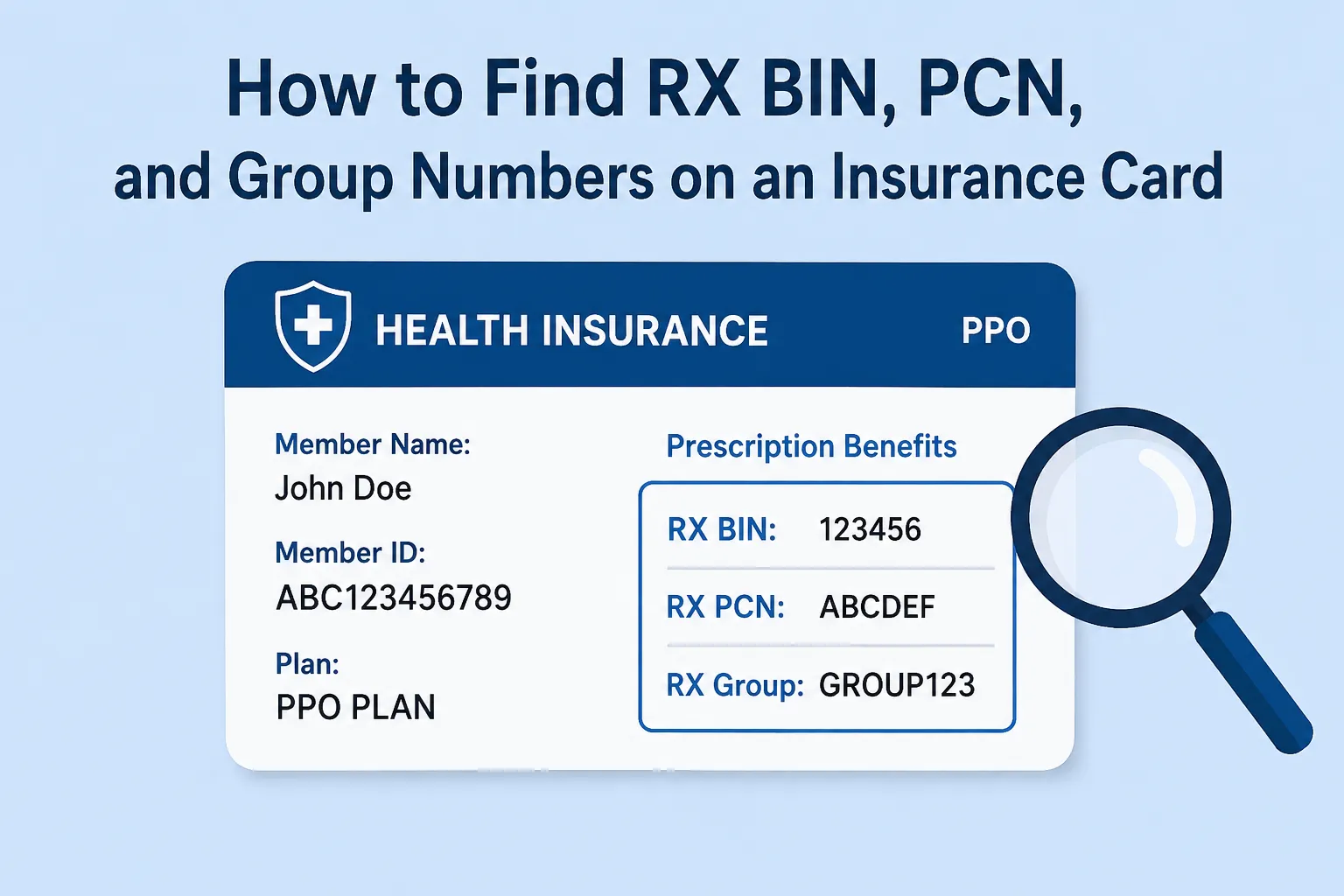
It is commonly located on the front of the insurance card, near the member ID or prescription benefit information.
For additional details and examples, read this guide to finding the Blue Cross Blue Shield RX BIN number.
What Is a PCN Number?
PCN stands for Processor Control Number. It provides additional information that helps the pharmacy benefit manager identify the patient’s specific prescription benefit plan.
While the RX BIN directs the claim to the correct processor, the PCN helps the processor determine which internal plan or benefit structure should handle the claim. In simple terms, the RX BIN identifies the processing company, while the PCN narrows the claim down to the appropriate plan.
The PCN may be listed as:
- PCN
- RXPCN
- Rx PCN
- Processor Control Number
PCN codes may contain letters, numbers, or a combination of both. Some insurance cards may not display a PCN because certain plans do not require one. If the pharmacy asks for a PCN and it is not shown on the card, the patient should contact the insurance company.
What Is an RX Group Number?
The RX Group number identifies the employer, organization, or insurance group connected to the patient’s prescription coverage. Insurance companies use it to distinguish between different groups that may have different benefits, copayments, deductibles, or medication formularies.
The Group number may appear as:
- RXGRP
- GRP
- Group
- Group ID
- RX Group
It is often printed close to the RX BIN and PCN. However, the location varies depending on the insurance company and card design.
An RX Group number may contain letters, numbers, or both. It should be entered exactly as it appears on the card.
Where Are These Numbers Located?
The RX BIN, PCN, and Group numbers are usually printed together in the prescription benefits section of an insurance card. In many cases, they appear on the front of the card near the member name and identification number.
Some insurance companies place prescription information on the back of the card. Others issue a separate pharmacy benefits card, especially when prescription coverage is managed by a third-party pharmacy benefit manager.
When reviewing the card, look for a section containing “RX,” “pharmacy,” or “prescription benefits.” The information may appear in a format similar to this:
RX BIN: 123456
RX PCN: ABC
RX Group: GROUP01
Patients should not confuse these codes with the member ID, policy number, or medical group number. Those numbers are used for different parts of the insurance claim process.
What If the Numbers Are Missing?
If the RX BIN, PCN, or Group number is not visible, the patient should first check the back of the card. It is also helpful to review any separate prescription card provided by the insurance company.
Other ways to find the information include:
- Logging in to the insurance company’s member portal
- Checking the insurer’s mobile application
- Reviewing digital insurance card details
- Calling the member services number on the card
- Asking the employer’s benefits department
- Contacting the pharmacy benefit manager
A pharmacist may also be able to locate the information using the patient’s member ID and insurance details. However, providing the correct numbers directly can help reduce processing time.
Why Accurate RX Information Matters
Incorrect prescription insurance information can cause a pharmacy claim to be rejected. For example, entering the wrong RX BIN may send the claim to the wrong processor. An incorrect PCN or Group number may prevent the system from matching the patient to the appropriate benefit plan.
When a claim is rejected, the patient may be told that the medication is not covered, the insurance is inactive, or prior authorization is required. In some cases, the issue is simply an incorrect number.
Patients should present their most recent insurance card whenever their coverage changes. Healthcare providers and pharmacies should also confirm prescription benefit information before submitting claims.
Final Thoughts
The RX BIN, PCN, and Group numbers help pharmacies identify, route, and process prescription drug claims. These codes are generally located in the prescription benefits section of an insurance card, although some plans place them on a separate pharmacy card.
The RX BIN identifies the claim processor, the PCN identifies the specific processing plan, and the Group number connects the patient to the correct insurance group. Taking a few moments to locate and verify these numbers can prevent claim rejections, reduce pharmacy delays, and make it easier to access covered medications.


























Sign in to leave a comment.