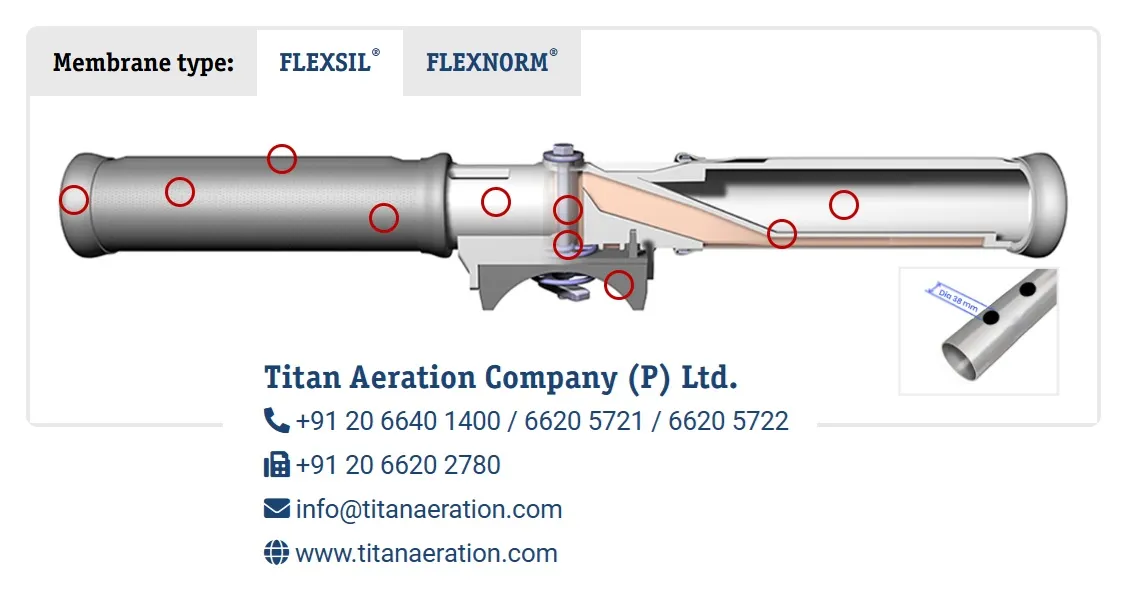

Efficient aeration is the foundation of successful wastewater treatment. Whether in municipal wastewater treatment plants, industrial effluent treatment facilities, aquaculture operations, or process water management systems, aeration directly impacts oxygen transfer efficiency, energy consumption, biological treatment effectiveness, and overall operational costs.
Modern fine bubble diffuser manufacturers play a crucial role in enhancing aeration system performance by developing advanced diffuser technologies that maximize oxygen transfer while minimizing energy usage. Through innovative engineering, premium membrane materials, precision manufacturing processes, and customized system designs, manufacturers continuously improve the effectiveness and reliability of aeration systems across various industries.
This article explores how fine bubble diffuser manufacturers contribute to superior aeration performance and why their innovations are transforming wastewater treatment worldwide.
Understanding Fine Bubble Diffuser Technology
Fine bubble diffusers are specialized aeration devices designed to release thousands of microscopic air bubbles into water or wastewater. These tiny bubbles create a significantly larger surface area compared to coarse bubble systems, allowing oxygen to dissolve more efficiently into the liquid.
The primary objectives of fine bubble aeration include:
- Increasing dissolved oxygen levels
- Supporting aerobic biological treatment
- Enhancing pollutant degradation
- Reducing operational costs
- Improving treatment consistency
- Minimizing environmental impact
Because oxygen transfer is one of the most energy-intensive processes in wastewater treatment, improving diffuser performance directly influences plant efficiency and profitability.
Advanced Membrane Engineering for Superior Oxygen Transfer
One of the most important ways manufacturers improve aeration performance is through advanced membrane technology.
The diffuser membrane determines:
- Bubble size
- Airflow distribution
- Pressure loss
- Oxygen transfer efficiency
- Fouling resistance
Leading manufacturers invest heavily in membrane research and development to create materials that maintain consistent performance under demanding operating conditions.
EPDM Membranes
EPDM membranes remain one of the most popular choices because they provide:
- Excellent flexibility
- Long operational life
- Resistance to ozone and UV exposure
- Cost-effective performance
These membranes are widely used in municipal wastewater treatment applications where reliability is essential.
Silicone Membranes
Silicone membranes offer:
- Enhanced temperature resistance
- Superior chemical compatibility
- Consistent bubble formation
- Long-term durability
Industrial facilities often choose silicone membranes for challenging wastewater environments.
Polyurethane Membranes
Polyurethane membranes provide:
- Exceptional abrasion resistance
- High mechanical strength
- Extended lifespan
- Excellent durability in aggressive wastewater streams
Manufacturers continually optimize membrane formulations to improve aeration efficiency and reduce maintenance requirements.
Precision Bubble Formation Increases Oxygen Transfer Efficiency
The size of air bubbles has a direct impact on oxygen transfer rates.
Fine bubble diffuser manufacturers utilize advanced perforation technologies and membrane designs to produce extremely small and uniform bubbles.
Benefits include:
- Greater oxygen transfer surface area
- Longer bubble contact time
- Improved oxygen dissolution
- Reduced air consumption
- Enhanced biological treatment performance
Smaller bubbles remain suspended in the water column longer, allowing more oxygen to transfer before reaching the surface.
This increased efficiency translates into substantial energy savings throughout the life of the aeration system.
Customized Aeration Solutions for Maximum Performance
Every treatment facility operates under unique conditions.
Factors influencing aeration performance include:
- Tank depth
- Hydraulic flow patterns
- Organic loading rates
- Oxygen demand
- Wastewater composition
- Environmental conditions
Leading fine bubble diffuser manufacturers provide customized engineering solutions that optimize system performance for specific applications.
Custom diffuser designs ensure:
- Uniform oxygen distribution
- Improved airflow balancing
- Reduced dead zones
- Enhanced biological activity
- Better process control
Customized systems consistently outperform generic aeration configurations.
Innovative Diffuser Disc and Tube Designs
Manufacturers continuously improve diffuser geometry to maximize aeration efficiency.
Popular diffuser configurations include:
Disc Diffusers
Disc diffusers provide:
- Uniform bubble distribution
- Easy installation
- Low maintenance
- High oxygen transfer rates
They are commonly used in municipal wastewater treatment plants.
Tube Diffusers
Tube diffusers offer:
- Greater aeration coverage
- Higher airflow capacity
- Flexible installation options
- Excellent performance in large tanks
Industrial facilities frequently use tube diffusers where large-scale aeration is required.
By optimizing diffuser shape and airflow characteristics, manufacturers improve overall aeration effectiveness.
Reducing Energy Consumption Through Aeration Optimization
Energy costs represent a significant portion of wastewater treatment operating expenses.
Modern fine bubble diffuser manufacturers focus heavily on reducing blower energy requirements.
Key strategies include:
- Lower pressure loss designs
- Improved membrane permeability
- Optimized airflow distribution
- Enhanced oxygen transfer efficiency
- Advanced aeration grid engineering
When oxygen transfer efficiency increases, less air is required to achieve desired dissolved oxygen levels.
This results in:
- Lower electricity consumption
- Reduced blower wear
- Decreased operational costs
- Improved sustainability
Many facilities achieve energy savings of 20% to 50% after upgrading to advanced fine bubble diffuser systems.
Improved Fouling Resistance Extends System Performance
Membrane fouling can significantly reduce diffuser efficiency over time.
Common causes include:
- Biological growth
- Mineral scaling
- Chemical deposits
- Particulate accumulation
Manufacturers combat fouling through:
Advanced Membrane Materials
Specialized membrane compounds reduce contaminant adhesion and maintain airflow consistency.
Self-Cleaning Designs
Modern diffuser technologies incorporate flexible membrane structures that minimize clogging.
Anti-Fouling Surface Treatments
Protective coatings help preserve diffuser performance and reduce maintenance frequency.
Enhanced fouling resistance improves long-term oxygen transfer efficiency and reduces operating costs.
Enhanced Durability for Long-Term Reliability
Aeration systems operate continuously under demanding conditions.
Manufacturers improve reliability through:
- Reinforced support structures
- Corrosion-resistant materials
- High-strength polymers
- Precision manufacturing techniques
- Advanced quality control systems
Durable diffuser construction minimizes:
- Mechanical failures
- Membrane damage
- Air leakage
- Maintenance downtime
Longer service life improves return on investment and lowers lifecycle costs.
Smart Monitoring and Digital Aeration Control
The latest generation of fine bubble diffuser manufacturers integrates digital technologies into aeration management.
Modern systems include:
- Real-time dissolved oxygen monitoring
- Airflow measurement sensors
- Pressure monitoring systems
- Automated aeration control
- Predictive maintenance tools
Smart technologies allow operators to:
- Optimize oxygen delivery
- Reduce energy waste
- Detect performance issues early
- Improve treatment consistency
Digital monitoring enables more precise aeration management than ever before.
Supporting Biological Nutrient Removal Processes
Modern wastewater treatment facilities increasingly rely on biological nutrient removal (BNR) processes to meet strict environmental regulations.
Fine bubble diffuser manufacturers design systems that support:
Nitrogen Removal
Precise oxygen control improves nitrification efficiency and overall nitrogen reduction.
Phosphorus Removal
Stable dissolved oxygen levels enhance biological phosphorus removal performance.
Process Stability
Consistent aeration promotes healthy microbial populations and reliable treatment outcomes.
Advanced diffuser systems help facilities maintain regulatory compliance while minimizing operational costs.
Applications Across Multiple Industries
Fine bubble diffuser manufacturers serve numerous industries requiring efficient aeration.
Municipal Wastewater Treatment
Benefits include:
- Improved effluent quality
- Reduced energy costs
- Increased treatment capacity
- Regulatory compliance
Food and Beverage Processing
Fine bubble aeration supports:
- High organic load treatment
- Stable biological activity
- Consistent wastewater performance
Chemical Manufacturing
Specialized diffuser materials withstand aggressive wastewater conditions while maintaining efficiency.
Pharmaceutical Production
Precise oxygen transfer supports advanced biological treatment requirements.
Aquaculture Systems
Fine bubble diffusers improve:
- Fish health
- Oxygen availability
- Water quality
- Production efficiency
Future Innovations in Fine Bubble Diffuser Manufacturing
The aeration industry continues to evolve through technological advancements focused on performance and sustainability.
Emerging innovations include:
- AI-powered aeration optimization
- Advanced membrane nanotechnology
- Energy-efficient airflow systems
- Predictive maintenance platforms
- Smart wastewater treatment integration
- Sustainable manufacturing processes
- Enhanced oxygen transfer materials
These innovations will further improve treatment efficiency while reducing environmental impact.
How to Choose the Right Fine Bubble Diffuser Manufacturer
Selecting the right manufacturer is critical for long-term success.
Key considerations include:
Engineering Expertise
Manufacturers should possess extensive experience in aeration system design and wastewater treatment applications.
Customization Capabilities
The ability to provide application-specific solutions improves performance and efficiency.
Quality Assurance Programs
Comprehensive testing ensures reliable and consistent product performance.
Material Technology
Advanced membrane materials contribute to greater durability and oxygen transfer efficiency.
Technical Support
Reliable support services help optimize installation, operation, and maintenance.
Industry Experience
Proven performance across municipal and industrial applications demonstrates manufacturing excellence.
Conclusion
Fine bubble diffuser manufacturers play a vital role in improving aeration system performance through advanced engineering, innovative membrane technologies, precision manufacturing, and customized aeration solutions. By maximizing oxygen transfer efficiency, reducing energy consumption, minimizing maintenance requirements, and enhancing treatment reliability, these manufacturers help wastewater treatment facilities achieve superior operational performance.
As environmental regulations become more demanding and energy efficiency becomes increasingly important, advanced fine bubble diffuser technologies will continue to drive innovation in wastewater treatment. Facilities that invest in high-quality diffuser systems benefit from improved process efficiency, lower operating costs, enhanced regulatory compliance, and long-term sustainability.
Choosing an experienced fine bubble diffuser manufacturer ensures access to cutting-edge aeration technologies capable of delivering exceptional performance in even the most demanding industrial and municipal wastewater treatment applications.
Contact us today to learn how advanced fine bubble diffuser solutions can transform your aeration system performance, reduce energy costs, and maximize wastewater treatment efficiency for years to come.



















Sign in to leave a comment.