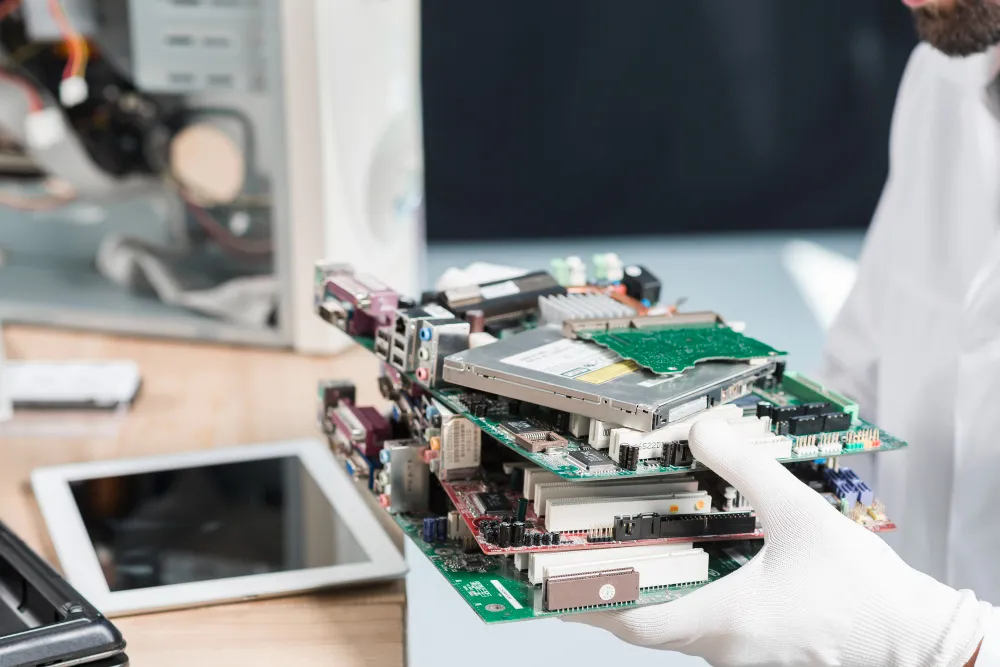
For businesses in Framingham, outdated computers, laptops, monitors, servers, printers, networking equipment, and other electronics can quickly accumulate as technology is upgraded. Simply placing these devices in the trash is not a responsible disposal strategy. Businesses need to consider data security and environmentally responsible recycling when retiring IT equipment.
Massachusetts has established rules around the handling of certain electronic waste, and MassDEP encourages businesses to use appropriate recycling and disposal channels rather than sending restricted materials to disposal facilities.
Why Businesses Should Recycle IT Equipment Responsibly
Old IT equipment can contain valuable metals and reusable components, but it may also contain materials that require careful handling. More importantly, computers, servers, hard drives, and other storage devices can contain confidential business information long after an employee stops using them.
Deleting files or performing a basic factory reset may not provide the level of protection a business needs. Before equipment leaves the organization, businesses should have a clear process for identifying devices that contain sensitive data and ensuring that storage media is securely sanitized or physically destroyed.
This makes secure recycling an important part of both an organization's sustainability and data-security strategy.
5 Steps for Safe IT Equipment Recycling in Framingham
1. Create an Inventory
Start by documenting the equipment scheduled for retirement. Include computers, laptops, servers, hard drives, monitors, printers, phones, networking devices, and peripherals. An inventory helps businesses track what is being removed and identify equipment that may contain sensitive information.
2. Separate Data-Bearing Devices
Identify hard drives, SSDs, USB drives, backup media, and other storage devices. These should receive appropriate data-destruction treatment before recycling, resale, or reuse.
3. Choose a Responsible Recycling Provider
When researching electronics recycling, businesses should look beyond price. Ask how the provider handles data-bearing equipment, where materials are processed, and whether the company follows recognized responsible-recycling practices.
Massachusetts' own environmentally preferable purchasing program identifies R2 and/or e-Stewards certification as requirements for vendors providing computer/electronics recycling under its electronic-waste category.
4. Consider Reuse Before Recycling
Not every outdated device needs to become waste. Working equipment may have resale, refurbishment, donation, or reuse potential. Asset management can help businesses recover value from equipment that is no longer needed internally.
5. Keep Disposal Records
Maintain records of equipment collected, recycled, reused, or destroyed. For organizations handling sensitive information, documentation of the disposal process can also provide useful accountability.
How DataShredder Corporation Can Help
DataShredder Corporation provides electronics recycling and secure data destruction services for businesses in Framingham and surrounding Massachusetts communities. Its services include computer and electronics recycling, IT equipment and e-waste recycling, hard-drive destruction, and media destruction.
For businesses looking for e-waste recycling in Massachusetts, combining responsible recycling with secure data destruction can create a more complete equipment-disposal process. DataShredder also helps businesses evaluate old electronics for potential resale, allowing usable equipment to be recovered rather than unnecessarily discarded.
A Smarter Approach to Electronics Recycling in Massachusetts
Responsible electronics recycling in Massachusetts is about more than getting unwanted equipment out of the office. Businesses should think about data protection, environmental responsibility, reuse opportunities, and proper downstream handling.
For Framingham businesses preparing an IT refresh, partnering with an experienced recycling and data-destruction provider can make the process safer, more organized, and easier to manage.
Frequently Asked Questions
Can businesses recycle old computers in Massachusetts?
Yes. Businesses can use appropriate electronics recycling providers and programs. The specific handling requirements depend on the type of equipment and materials involved. MassDEP provides recycling guidance and resources for electronic devices.
Should hard drives be destroyed before recycling?
If a hard drive contains confidential or sensitive information, businesses should use a secure data-destruction or sanitization process before the device is reused, recycled, or otherwise transferred. Recycling alone does not guarantee that stored data has been eliminated.
What IT equipment can businesses recycle?
Common items include computers, laptops, servers, monitors, printers, networking equipment, phones, keyboards, mice, and storage media. The appropriate recycling method can vary by device and material.
How can Framingham businesses recycle IT equipment securely?
Businesses should inventory their equipment, identify data-bearing devices, use secure data destruction where appropriate, select a responsible electronics recycler, and maintain disposal records. DataShredder Corporation offers both electronics recycling and data-destruction services for businesses in the Framingham area.
Why is secure IT recycling important?
It helps businesses address two separate concerns: preventing sensitive information from remaining on retired devices and ensuring electronic equipment is handled through appropriate reuse or recycling channels rather than being improperly discarded.

























Sign in to leave a comment.