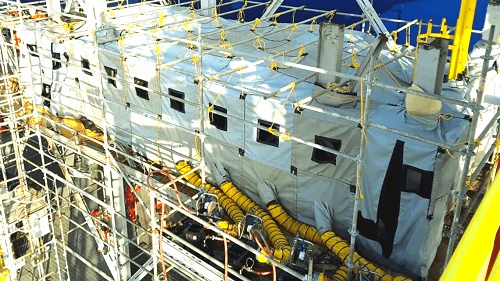

Innovative habitat systems are making significant strides towards eco-friendly living in modern sustainability. These certified habitat systems, designed for high-risk industries such as oil & gas, revolutionize safety and environmental conservation by creating safer, more controlled environments for potentially hazardous operations. Using examples like PetroHab's advanced habitat solutions, we explore how these technologies set new benchmarks for industrial operations, prioritizing safety and eco-friendliness.
Pressurized Welding Enclosures: A Safety Revolution
Pressurized welding enclosures are designed to mitigate risks associated with hot work operations. By creating a controlled, pressurized environment, habitat manufacturers such as Petrohab effectively isolate ignition sources inside the habitats and prevent the intrusion of flammable gases that may be outside them. This protects personnel within the enclosure and secures the surrounding area from potential hazards. Such enclosures exemplify the commitment to safety in environments with high risk of fire or explosion, making them indispensable in the oil & gas industry.
Enhancing Safety and Efficiency
The dual objectives of these habitat systems are clear: isolating ignition sources and protecting both personnel and assets. By containing sparks, heat, and molten metal, these enclosures ensure that hot work operations can proceed without compromising safety. Furthermore, their versatility and adaptability make them suitable for various applications, from maintenance and repair to new construction. This flexibility ensures that operations can be conducted safely and efficiently, regardless of external conditions.
Modular and Portable Solutions
Innovation in habitat systems is also evident in their modular and portable designs. Enclosures like PetroHab's Petro-Shield Hot Work Safety Enclosure (HWSE) are built with field workers in mind, offering protection against inclement weather and allowing for customizations to suit specific project needs. The modular nature of these systems, expandable in increments of several feet each, provides the adaptability required for dynamic industrial settings. Moreover, climate control options ensure worker comfort and productivity, highlighting a comprehensive approach to safety and efficiency.
Portable Hot Work Safety Enclosures
Another key innovation is the development of portable hot work safety enclosures, such as the Petro-Lite HWSE. These enclosures are designed for quick assembly and high-temperature endurance, offering practical and safe solutions for urgent and routine hot work tasks. Features like quick-locking panel technology and heat-resistant materials underscore the focus on safety and efficiency. These portable habitats' versatility and ease of use make them ideal for various environmental conditions, further enhancing their utility in promoting eco-friendly industrial practices.
The Future of Eco-Friendly Industrial Operations
Integrating certified habitat systems into industrial operations is a testament to the evolving relationship between industrial safety and environmental conservation. By enabling safer hot work operations without compromising the environment, these systems embody the principles of eco-friendly living. The advancements in habitat technology safeguard personnel and assets and protect the surrounding environment from the potential impacts of industrial activities.
In conclusion, developing innovative habitat systems represents a significant leap towards sustainable and eco-friendly living in high-risk industries. Companies can merge safety with environmental stewardship Through intelligent design and application of technologies like pressurized welding enclosures and portable hot work safety habitats. As these technologies evolve, their role in fostering a safer, more sustainable future for industrial operations becomes increasingly paramount. Through the efforts of habitat manufacturers and the adoption of these advanced systems, we continue to move closer to achieving a balance between industrial progress and environmental conservation.










Sign in to leave a comment.