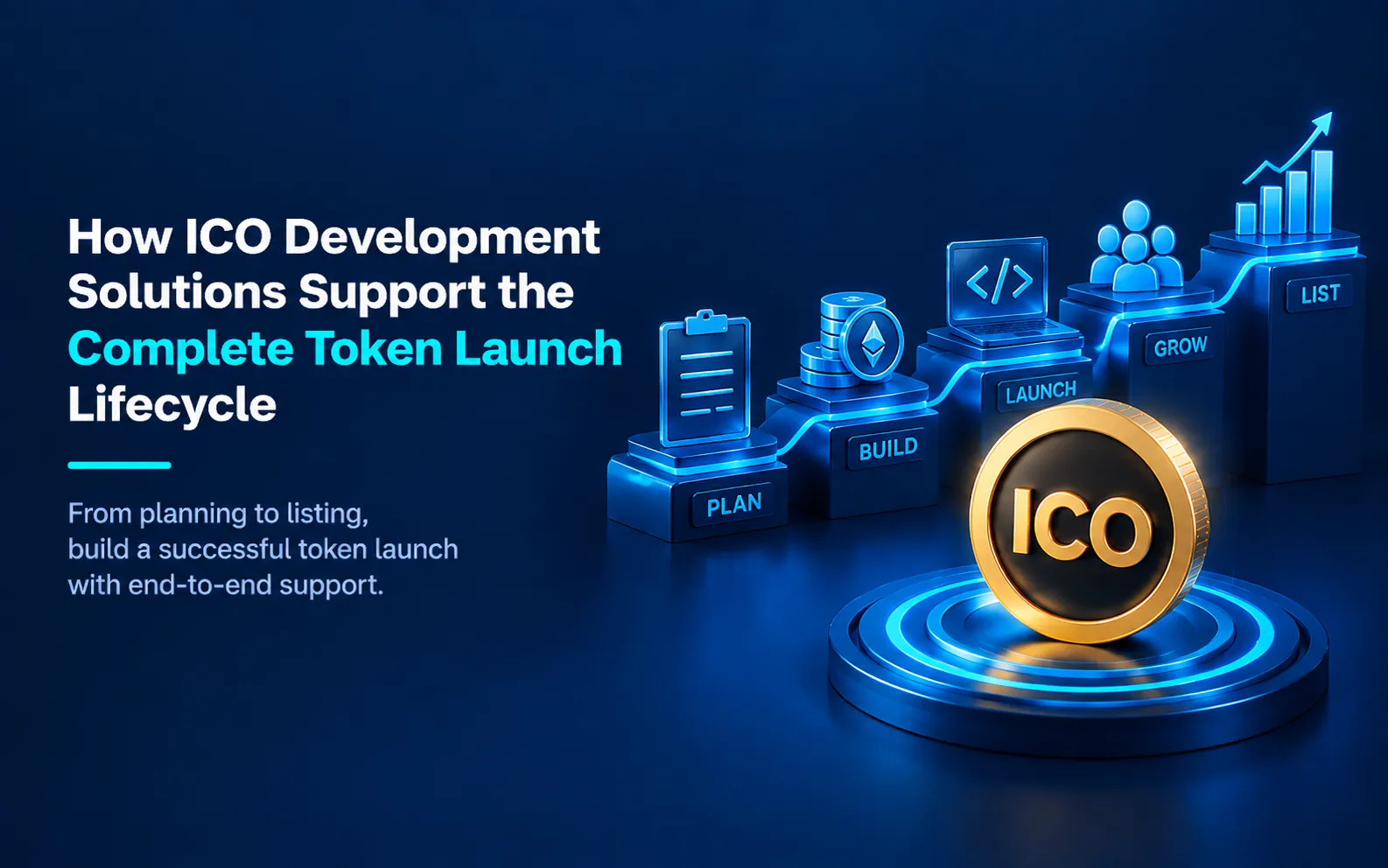

An ICO now involves far more than creating a token and opening a contribution page. Businesses need to plan token economics, investor access, smart contracts, fundraising rules, token distribution, treasury controls, security, and post-TGE activity as connected parts of the same launch.
The market has become more selective too. CryptoRank reported that public token sales raised $58 million through ICOs, IDOs, and IEOs in Q2 2026, an 85% drop from the previous quarter. Public sales fell from 105 in Q1 to 37 in Q2.
This does not mean token fundraising has stopped. CryptoRank recorded $12.86 billion across 271 crypto fundraising transactions during Q2 2026, with venture capital accounting for $4.99 billion and debt financing reaching $4.36 billion. Capital remains active, but businesses need stronger fundamentals to attract it.
These conditions make ICO development solutions more important. A well-built platform can connect the major stages of a token launch and give businesses better control from initial planning through post-launch operations.
Token Planning Sets the Direction for the Launch
A successful token launch starts before the first smart contract is deployed. Businesses need a clear reason for issuing the token and a defined role for it inside the product or ecosystem.
Token supply, allocation, pricing, vesting, utility, treasury reserves, and future emissions all affect investor expectations. These decisions also affect the amount of supply entering circulation after TGE.
The fundraising model should follow these token economics. A business planning a $10 million raise needs to define how much of the total supply will support the public sale, how much will remain locked, and how much will enter circulation at TGE.
This planning becomes more important in a selective market. Recent token performance shows that fundraising success does not automatically translate into post-launch strength. Memento Research found that 84.7% of 118 token launches tracked from 2025 were trading below their TGE valuation by December 20, 2025.
The lesson is clear. Token economics and launch infrastructure need to work together from the start.
ICO Development Solutions Connect Investor Onboarding
Investor onboarding has become a central part of token sale infrastructure. A public sale can attract participants from different jurisdictions and investor categories. Each group can have different eligibility requirements.
An ICO platform can connect registration with identity checks, investor eligibility, contribution limits, payment status, and wallet information. The exact compliance requirements depend on the legal structure of the offering and its target markets.
A connected process gives investors a clearer path from registration to participation. It can show verification status, contribution limits, allocation details, vesting schedules, and claim dates through one dashboard.
The business benefits from the same structure. The project team can maintain clearer records and reduce manual checks across different systems.
This becomes especially useful during high-demand sales. A platform that handles hundreds or thousands of participants needs rules that operate consistently across every eligible investor.
Fundraising Mechanisms Need Flexible Rules
Token sales no longer follow one standard format. Businesses can use fixed-price sales, tiered pricing, contribution limits, pro-rata allocation, or auction-based models.
The choice affects how investors receive tokens and how the business handles demand.
Consider an ICO offering $5 million in tokens that receives $15 million in eligible contributions. A basic first-come model can give early participants a much larger share. A pro-rata model can distribute the available tokens based on eligible contributions.
An ICO development platform can apply these rules automatically. It can calculate allocations, enforce caps, process refunds, and record the final distribution.
This reduces dependence on spreadsheets and manual calculations. It also gives investors a clearer explanation of how the allocation was determined.
The system should support changes during the planning stage too. Fundraising targets, contribution limits, sale phases, and allocation rules often change after legal and financial reviews.
Smart Contracts Turn Business Rules Into Transactions
Smart contracts handle the transaction logic behind many ICO functions. They can manage contributions, token allocation, refunds, vesting, claims, and distribution.
The contract must match the rules communicated to investors.
Suppose a project promises a 12-month vesting schedule with 20% released at TGE. The claim contract needs to reflect those terms. The investor dashboard needs to display the same information.
A mismatch between the website and smart contract can create serious operational problems.
ICO development therefore needs contract design, frontend development, backend systems, wallet infrastructure, and token economics to follow one specification.
Security testing is another major part of this stage. Developers need to review contract permissions, administrator roles, upgrade controls, wallet interactions, transaction validation, and external dependencies.
The objective is not simply to deploy a working contract. The objective is to create transaction rules that match the business model and investor terms.
Payment and Allocation Systems Support the Sale
Payment processing is another part of the token launch lifecycle. An ICO can accept supported cryptocurrencies or other payment methods based on its structure and applicable requirements.
The platform needs to identify contributions correctly. It needs to connect each payment with the right investor record and allocation rule.
A strong payment flow should handle incomplete transactions, duplicate payments, refunds, contribution caps, and allocation calculations.
These controls become more important during periods of high demand. A project that receives thousands of contributions cannot depend on manual reconciliation.
An integrated system creates a record from payment through allocation. The business can then track how much has been raised, how much remains available, and how much each investor has received.
Security Must Cover the Entire ICO Infrastructure
Smart contract security receives much of the attention in token launches, but the wider system has several other attack surfaces.
The ICO website, investor dashboard, backend services, APIs, administrator accounts, wallets, payment systems, and token contracts all need protection.
Access controls should limit administrative privileges. Treasury wallets should use suitable approval mechanisms. Sensitive actions should generate records that the project team can review.
Security testing should take place before public access begins. Contract audits can identify code-level weaknesses, but businesses should assess the complete platform too.
This becomes more important as tokenization expands beyond native crypto assets. CoinGecko reported that tokenized real-world assets reached $19.3 billion by March 31, 2026, up 256.7% from $5.42 billion at the start of 2025.
The growth of tokenized treasuries, commodities, stocks, and ETFs brings new types of issuers and investors into blockchain markets. These projects often require stronger controls around ownership, access, distribution, and reporting.
Treasury Management Continues After the Fundraise
An ICO does not end once the fundraising target is reached.
The business needs to manage the capital it has raised. Treasury wallets can hold operating funds, liquidity reserves, ecosystem allocations, or other project resources.
A structured ICO platform can connect treasury activity with fundraising records. This gives the team a clearer view of incoming funds and approved outgoing transactions.
Multisignature wallet controls can add approval requirements for treasury movements. Role-based permissions can restrict sensitive actions to authorized team members.
Treasury management should match the project's financial plan. A business needs to know how much capital it can spend, which wallets hold those funds, and what approvals apply to major transactions.
These records can support internal reporting and investor communication after the sale.
Token Distribution Links the Sale With TGE
Token distribution is one of the most important links between fundraising and market launch.
The project needs to know how many tokens each investor receives, when those tokens become claimable, and how much remains locked.
Initial circulating supply can affect trading conditions. A small float can produce sharp price movements. A large float can create selling pressure when demand does not match available supply.
Vesting schedules add another variable. Large unlocks can release substantial supply into the market at fixed dates.
An ICO development platform can connect allocations with vesting and claim systems. Investors can view their schedules through their dashboards. The project team can track total claimed tokens and remaining locked supply.
This gives the business better visibility into token circulation after TGE.
Post-TGE Management Is Part of the Launch
The token launch lifecycle does not stop at TGE.
After listing, businesses need to monitor token distribution, treasury movements, liquidity, investor activity, and scheduled unlocks. They need accurate records of circulating and locked supply.
This information helps the team communicate with investors and plan future token distributions.
Post-TGE operations can include staking, governance participation, ecosystem rewards, additional distributions, or future fundraising rounds. Each activity affects token supply and holder behavior.
An ICO development solution can provide the infrastructure needed to manage these functions from the same core records used during the initial sale.
That continuity matters. The business should not need to rebuild its investor and token records after TGE.
ICO Development Is Becoming More Connected to RWA Tokenization
The growth of tokenized real-world assets shows how much the use of blockchain assets has expanded.
CoinGecko reported that tokenized commodities reached $5.5 billion by the end of Q1 2026. Tokenized stocks reached around $500 million, and tokenized ETFs reached $300 million.
This creates new opportunities for businesses that want to raise capital around tokenized assets. A project can represent ownership or economic rights through blockchain-based assets, subject to the applicable legal and financial structure.
Such projects require more than a basic token contract. They need investor eligibility controls, asset records, distribution rules, custody arrangements, disclosures, and transaction monitoring.
ICO development solutions can provide the technical foundation for these processes. The exact implementation needs to follow the legal structure of each offering.
What a Complete ICO Development Solution Should Cover
A business planning a token launch should look beyond token creation. The platform should support the main stages of the fundraising lifecycle:
- Token economics and sale configuration
- Investor registration and verification
- Contribution and payment processing
- Token pricing and allocation
- Smart contract deployment
- Refund management
- Token claims and vesting
- Treasury controls
- Investor dashboards
- Security and access management
- Post-TGE distribution tracking
These functions should follow the same business rules.
A disconnected setup can create gaps between the website, investor records, payment system, smart contract, and token distribution process. A connected platform gives the project team a single operating structure for the sale.
Why Businesses Need End-to-End ICO Infrastructure
The decline in public token sales has changed the role of ICO development. CryptoRank's four-year review found that public token sales raised $4.29 billion across 3,989 sales from Q3 2022 through Q2 2026. The market reached a peak of $849 million in Q1 2025, then fell to $40 million across 47 public sales in Q2 2026.
These figures show a more selective fundraising environment. Businesses need to compete through stronger products, clearer token economics, controlled investor access, secure infrastructure, and better post-TGE planning.
An ICO is now a complete operating process. The business needs to connect planning, onboarding, fundraising, allocation, smart contracts, treasury management, token distribution, and post-launch controls.
That is where ICO development solutions provide value. They bring the technical components of a token sale into one coordinated system and give businesses greater control over each stage.
Blockchain App Factory provides custom ICO development services for businesses that need token sale infrastructure built around their fundraising model, token economics, investor workflows, smart contracts, and launch requirements. A complete ICO system gives a project the foundation to manage the token from the first investor interaction through TGE and post-launch operations.




















Sign in to leave a comment.