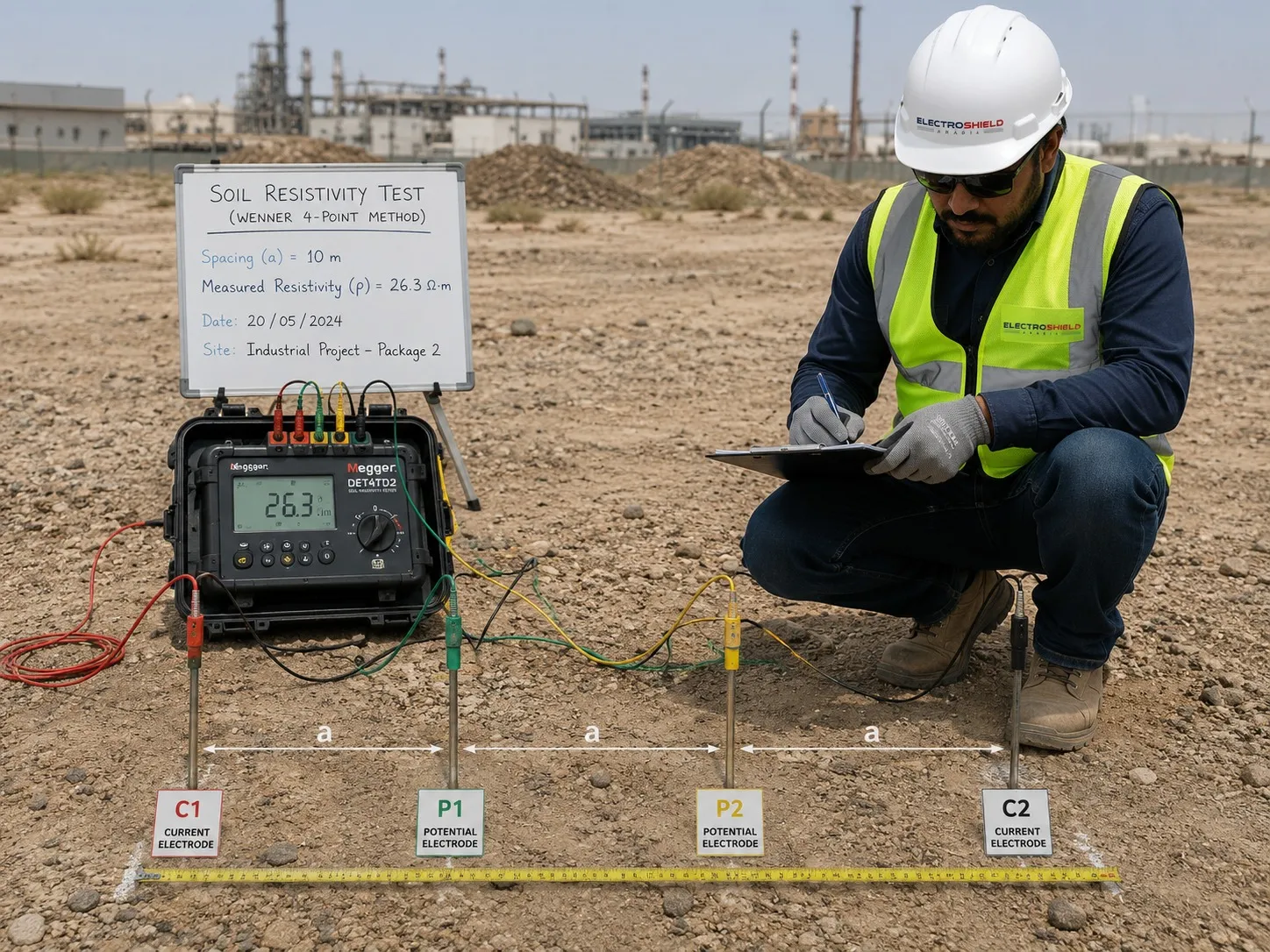

Earthing system failures rarely announce themselves in advance. They develop gradually, the result of design decisions made without adequate information, until a fault event, a lightning strike, or a formal inspection reveals that the system is not performing as required. In the majority of cases that engineers diagnose in post-failure analysis, the root cause traces back to one critical omission: soil resistivity data was not measured, or was measured inadequately, before the system was designed.
Understanding how this omission creates failure helps project teams make better decisions before the first electrode is ever installed.
The Design Without Data Problem
When a designer lacks soil resistivity data, every electrode decision becomes a guess. Rod lengths are chosen based on what worked on a previous project, electrode spacing is selected from a table that assumes average soil conditions, and the number of electrodes is determined by rule of thumb rather than calculation.
In favorable soil conditions, this guesswork may produce a system that happens to meet its resistance target. In challenging conditions, which are common across much of Saudi Arabia's landscape, the same guesswork produces a system that falls short. The designer typically does not know which outcome will result until post-installation testing, at which point the cost of adding more electrodes to a finished system is significantly higher than designing correctly from the start.
The Seasonal Resistance Problem
Even when a system passes its initial commissioning test, problems can emerge seasonally. In dry periods, soil moisture retreats from electrode surfaces to greater depth. If the electrode design did not account for this seasonal variation by targeting permanently moist soil layers, the resistance value that looked acceptable in the wet season may increase substantially during the dry season.
Soil resistivity testing conducted during a dry period, or interpreted to understand the year-round range of soil moisture variation, gives the designer the information needed to target electrode designs that maintain compliance in the worst-case seasonal conditions, not just the average ones.
The Corrosion Failure Accelerated by Unknown Chemistry
Soil chemistry varies widely and has a major impact on the corrosion rate of earthing electrodes. Soils with high salinity, high acidity, high sulfate content, or significant stray currents all corrode electrodes faster than neutral, dry soils. If the soil conditions are not characterized before electrode material is selected, the wrong material may be installed in an aggressive environment.
Galvanized steel electrodes that perform adequately in neutral soils may corrode through in a few years in highly saline coastal conditions. Copper electrodes that provide excellent service in most soils may cause galvanic corrosion problems in environments where they contact other metals. Understanding the soil chemistry as part of the overall site investigation process allows the engineer to specify materials with appropriate corrosion resistance for each specific location.
The Step-Touch Potential Hazard
In substations, switching stations, and other high-fault-current facilities, the consequences of inadequate earthing design extend beyond equipment damage to direct human safety. Step potential, the voltage difference between two points on the ground surface spaced one step apart, and touch potential, the voltage difference between a metallic structure and a nearby point on the ground, can both reach dangerous levels if the earthing system is not designed correctly.
Calculating these potentials accurately requires a validated soil model derived from proper earthing system survey data. Designs produced without this data may not identify that dangerous step or touch potentials exist around the earthing grid, exposing people working in the facility to shock hazards that the designer never anticipated.
How ElectroShield Arabia Prevents These Failures
ElectroShield Arabia builds soil resistivity testing into the front end of every earthing project as a standard engineering activity, not an optional extra. Their engineers conduct systematic surveys, develop validated soil models, and use these models as the direct input to electrode design calculations.
This process ensures that every electrode system is designed for the actual conditions at the installation site, not for assumed average conditions. It also ensures that seasonal variation is accounted for and that electrode materials are matched to the specific corrosion risk of each location.
Conclusion
Earthing system failure linked to inadequate soil characterization is entirely preventable. The investment in proper soil resistivity testing at the project's outset is repaid many times over in reliable system performance, reduced rework, avoided corrosion failures, and confident compliance demonstration. For Saudi Arabia's demanding infrastructure sectors, where reliability and safety are paramount, this investment is not a project overhead; it is a fundamental engineering responsibility.


























Sign in to leave a comment.