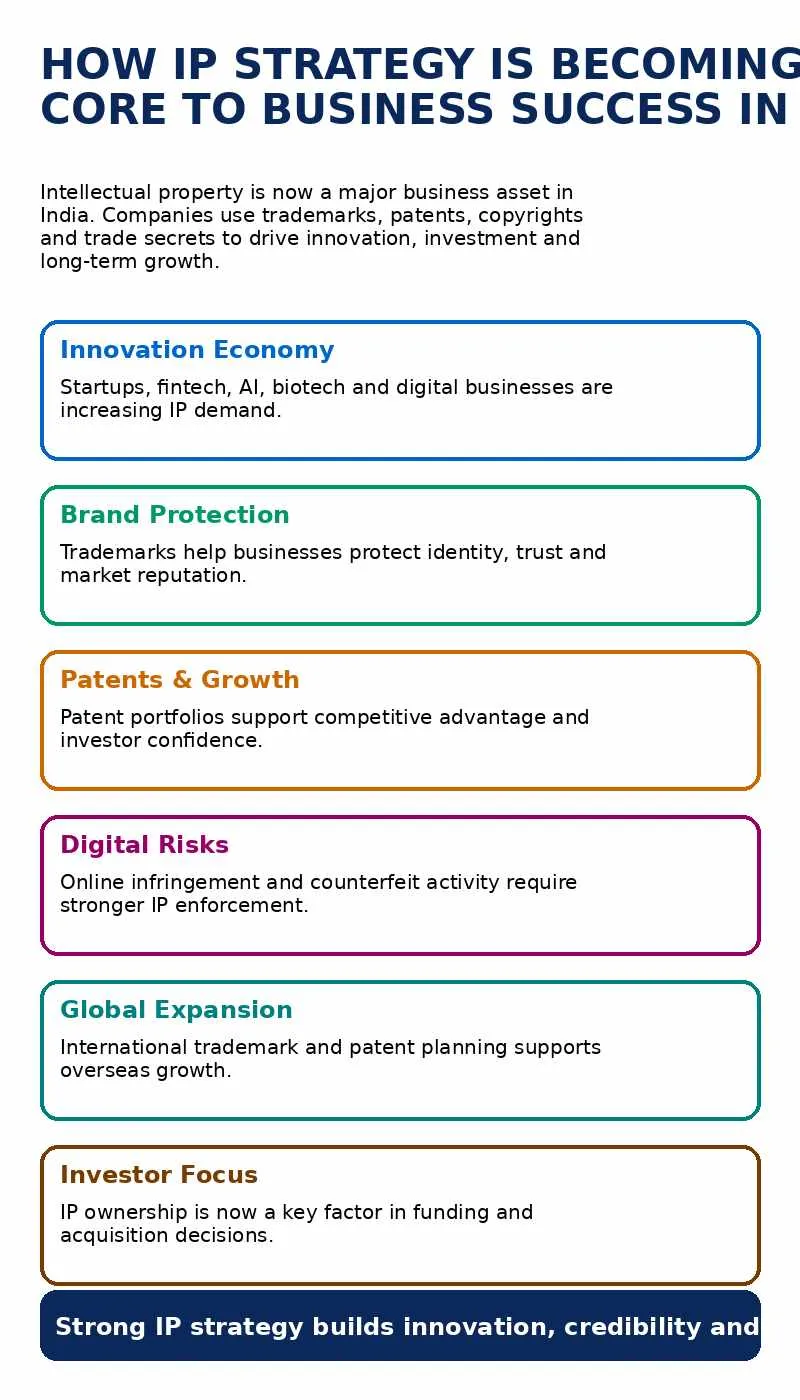

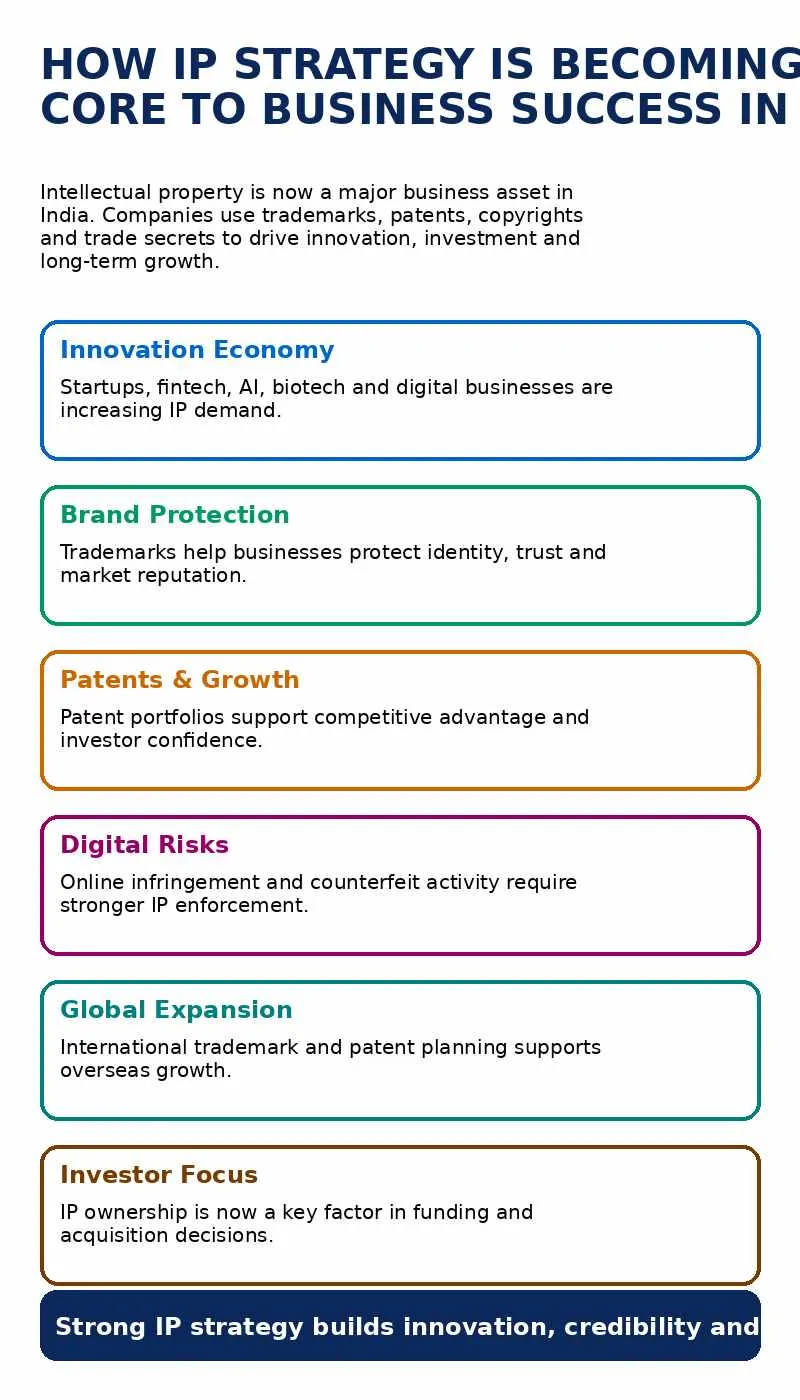
India’s business landscape is changing rapidly. Innovation, digital growth, and global competition now influence almost every industry. In this environment, intellectual property has evolved from a legal formality into a major business asset. Companies across India increasingly view intellectual property strategy as a key part of commercial success.
Businesses no longer focus only on products and services. They also invest in protecting ideas, brands, technologies, creative content, and research driven innovations. Intellectual property strategy now supports growth, investment, market expansion, and long term competitive advantage.
From startups to multinational corporations, organisations are recognising the commercial value of patents, trademarks, copyrights, and trade secrets. A strong intellectual property framework can influence business valuation, investor confidence, and market position.
Understanding IP Strategy in Modern Business
An intellectual property strategy refers to the structured management of intellectual assets within a business. It involves identifying valuable creations, protecting them through legal rights, and using them to support business objectives.
A comprehensive IP strategy often includes:
- Trademark protection
- Patent management
- Copyright protection
- Trade secret policies
- Licensing agreements
- Brand enforcement measures
- Portfolio management
- International IP planning
Businesses today integrate intellectual property decisions into product development, marketing, investment planning, and expansion strategies.
Rather than treating intellectual property as a separate legal issue, companies increasingly connect IP planning with overall business goals.
India’s Innovation Economy Is Expanding
India has emerged as one of the fastest growing innovation economies in the world. Sectors such as fintech, biotechnology, software development, healthcare, ecommerce, renewable energy, and artificial intelligence continue to grow rapidly.
Government initiatives including Startup India, Digital India, and Make in India have encouraged innovation and entrepreneurship. As competition increases, businesses must differentiate themselves in crowded markets.
Intellectual property protection helps companies secure exclusive rights over innovations and brand identities. It also creates stronger barriers against imitation and unfair competition.
For startups, intellectual property often represents one of the most valuable business assets during early growth stages. Investors frequently assess IP ownership before providing funding support.
Brand Protection Is Driving Commercial Growth
Trademarks have become essential for businesses operating in digital and global markets. Consumers now associate strong brands with quality, trust, and credibility. As online commerce expands, brand misuse and counterfeit activities also continue rising.
Businesses therefore place greater focus on trademark registration and enforcement strategies. A registered trademark strengthens brand identity and provides legal protection against unauthorised use.
Many companies work closely with an ip law firm in India to develop structured brand protection frameworks. This support often includes trademark searches, portfolio management, monitoring services, and enforcement planning.
Strong brand protection also supports international market expansion. Businesses entering overseas markets must secure trademark rights in multiple jurisdictions to avoid conflicts and commercial disruption.
Patents Are Supporting Competitive Advantage
Innovation driven industries rely heavily on patents to protect technical developments and research investments. Patent ownership can provide businesses with exclusive commercial rights for new technologies, manufacturing methods, and product innovations.
Indian businesses increasingly recognise patents as strategic business tools rather than technical legal documents. Patent portfolios can improve market position, attract investors, and support licensing opportunities.
Sectors such as pharmaceuticals, clean technology, electronics, and software development continue witnessing increased patent activity in India.
Patent strategies also influence collaboration opportunities. Research partnerships, technology transfers, and joint ventures often depend on clearly defined intellectual property ownership structures.
As competition intensifies, businesses with stronger patent strategies may gain significant commercial advantages.
Intellectual Property Is Influencing Investment Decisions
Investors now evaluate intellectual property assets more carefully during funding and acquisition processes. Strong intellectual property ownership often signals innovation capability, market potential, and long term scalability.
Startups with protected technology or recognised brands may achieve higher valuations during investment negotiations. Intellectual property can also increase business attractiveness during mergers and acquisitions.
Due diligence processes frequently examine:
- Trademark registrations
- Patent ownership
- Licensing agreements
- Pending disputes
- Copyright protection
- Confidentiality measures
Weak intellectual property management can create risks for investors and reduce transaction value.
Businesses therefore increasingly invest in structured intellectual property governance to improve commercial credibility.
Digital Transformation Has Increased IP Risks
India’s digital economy continues expanding rapidly. Businesses rely heavily on digital platforms, online branding, software systems, and creative content. While digital growth creates opportunities, it also increases intellectual property risks.
Online infringement, counterfeiting, content piracy, and unauthorised brand use remain major concerns across industries.
Companies now require proactive intellectual property enforcement strategies to protect digital assets and consumer trust. Monitoring online marketplaces and social media platforms has become increasingly important.
Many organisations seek guidance from a trademark lawyer india to manage online brand enforcement and trademark dispute resolution.
Businesses operating internationally also face jurisdictional complexities when dealing with cross border infringement issues.
IP Strategy Supports Global Expansion
Indian companies increasingly expand into foreign markets through exports, digital services, franchising, and international partnerships. Global expansion requires careful intellectual property planning.
Trademark registrations, patent filings, and copyright protection vary across jurisdictions. Businesses must align intellectual property strategies with international commercial objectives.
Failure to secure intellectual property rights in overseas markets can create legal disputes and operational challenges. In some cases, businesses may even lose access to their own brand names in foreign jurisdictions.
Strategic intellectual property planning helps businesses avoid these risks while strengthening global market positioning.
International intellectual property portfolios can also support licensing arrangements and foreign investment opportunities.
Small Businesses Are Becoming More IP Aware
Earlier, intellectual property protection was often associated with large corporations. Today, small businesses and startups increasingly recognise the importance of protecting intangible assets.
Social media growth and ecommerce expansion have made branding more visible and commercially valuable. Even local businesses now face risks related to brand copying and digital misuse.
As awareness improves, more entrepreneurs seek professional guidance regarding trademarks, copyrights, and patents during early business stages.
This shift reflects a broader understanding of intellectual property as a business growth tool rather than merely a legal safeguard.
The Future of IP Strategy in India
India’s intellectual property ecosystem is expected to become more sophisticated in the coming years. Businesses are likely to invest further in innovation driven growth, digital assets, and international expansion.
Artificial intelligence, blockchain technology, and digital commerce may create new intellectual property challenges and opportunities. Regulatory developments and judicial decisions will continue shaping intellectual property enforcement standards in India.
Businesses with strong intellectual property strategies may gain greater resilience in highly competitive markets. Intellectual property will increasingly influence valuation, investor confidence, and long term commercial sustainability.
As the economy evolves, intellectual property strategy is likely to become a standard part of business planning across industries.
Conclusion
Intellectual property strategy is no longer limited to legal departments or specialised industries. It has become a core business function supporting innovation, brand value, investment potential, and commercial growth.
Indian businesses now operate in an environment where ideas, creativity, technology, and reputation carry significant economic value. Protecting these assets requires structured planning and proactive management.
Companies investing in strong intellectual property strategies today are better positioned to compete in both domestic and global markets. As innovation continues driving India’s economic transformation, intellectual property will remain central to sustainable business success.





























Sign in to leave a comment.