
As businesses continue to invest in digital transformation, many organizations find themselves relying on software applications that have evolved over years of updates, integrations, and feature additions. While these applications may still function, their underlying code often becomes increasingly complex, difficult to maintain, and costly to support. Over time, technical debt can impact performance, security, scalability, and overall business efficiency.
Application refactoring offers a strategic solution to these challenges. Rather than replacing an entire system, refactoring focuses on improving the internal structure of an application while preserving its core functionality. For organizations relying on enterprise software, a well-planned java application refactoring strategy can significantly reduce operational costs, improve stability, and create a stronger foundation for future growth.
Why Application Refactoring Matters
Many businesses postpone modernization efforts because their applications continue to perform basic functions. However, maintaining outdated code often requires increasing development resources, longer release cycles, and higher maintenance costs.
As applications become more complex, introducing new features or resolving issues becomes more time-consuming. Development teams may spend more time managing technical debt than delivering business value. This slows innovation and limits an organization's ability to respond to changing market demands.
Refactoring addresses these challenges by improving code quality, simplifying application architecture, and enhancing maintainability. Organizations looking to strengthen their software infrastructure can explore solutions offered by Samosys Technologies to improve long-term application performance and reliability.
Common Problems Caused by Legacy Code
Legacy applications frequently contain code that was developed under different business requirements, technology standards, and development practices. As multiple updates accumulate over time, the application structure can become increasingly difficult to manage.
One common issue is code duplication, where similar functionality exists in multiple locations. This increases maintenance efforts and creates greater risk when changes are introduced. Poor documentation and inconsistent coding standards can further complicate development activities.
Performance bottlenecks, security vulnerabilities, and integration limitations are also common concerns. As systems grow, these issues can negatively impact customer experiences and operational efficiency.
Without proactive improvement, technical debt continues to accumulate, increasing both short-term development costs and long-term business risks.
How Refactoring Reduces Development and Maintenance Costs
One of the primary advantages of refactoring is its ability to lower overall software maintenance expenses. Clean, well-structured code is easier to understand, modify, and test, allowing development teams to work more efficiently.
By removing unnecessary complexity, organizations can reduce the time required to implement updates, fix defects, and introduce new features. This leads to faster development cycles and improved resource utilization.
An experienced java development company can identify inefficient code structures, eliminate redundancies, and optimize application architecture without disrupting existing business operations. These improvements help organizations maximize the value of their technology investments while reducing ongoing support requirements.
Modern java development practices also emphasize automation, code quality standards, and continuous improvement, further contributing to long-term cost savings.
Improving Application Stability Through Refactoring
Stability is essential for business-critical applications. System failures, performance issues, and unexpected downtime can disrupt operations and negatively affect customer trust.
Refactoring improves stability by simplifying code structures and eliminating hidden issues that often cause recurring problems. Clean architecture makes applications easier to test, monitor, and maintain, reducing the likelihood of unexpected failures.
Improved code organization also enhances collaboration among development teams. When applications are easier to understand, teams can resolve issues more quickly and implement changes with greater confidence.
A well-maintained java application is more resilient to operational challenges and can adapt more effectively to changing business requirements. Organizations seeking to learn more about improving software reliability should consider refactoring as a proactive investment rather than a reactive maintenance activity.
Supporting Scalability and Future Growth
Refactoring is not only about reducing costs or fixing existing issues. It also prepares applications for future growth. Businesses must continuously adapt to changing customer expectations, market conditions, and technology advancements.
Applications built on outdated structures often struggle to support increasing workloads, new integrations, and evolving functionality requirements. Refactoring helps create a more flexible architecture that can scale efficiently as business needs change.
Modern development approaches encourage modular design, reusable components, and optimized performance patterns that support long-term adaptability. These improvements make it easier to integrate cloud technologies, automation tools, and emerging digital solutions.
Organizations that invest in application modernization today are often better positioned to innovate and compete in rapidly evolving markets.
Strategic Considerations for Successful Refactoring
Effective refactoring requires careful planning and a clear understanding of business objectives. Organizations should begin by assessing application performance, maintenance challenges, and areas where technical debt is affecting productivity.
Rather than attempting large-scale changes all at once, many businesses achieve better results through phased improvements. This approach minimizes operational risks while allowing teams to measure progress and prioritize high-impact improvements.
Comprehensive testing is also critical throughout the refactoring process. Automated testing frameworks help ensure that application functionality remains consistent while internal improvements are implemented.
Businesses looking to explore services related to application modernization should prioritize partners that combine technical expertise with a strong understanding of business goals. This alignment helps maximize both technical and commercial outcomes.
Why Choose Samosys Technologies
Successful application refactoring requires expertise in software architecture, code optimization, and enterprise development practices. Organizations need a technology partner capable of balancing modernization efforts with ongoing business operations.
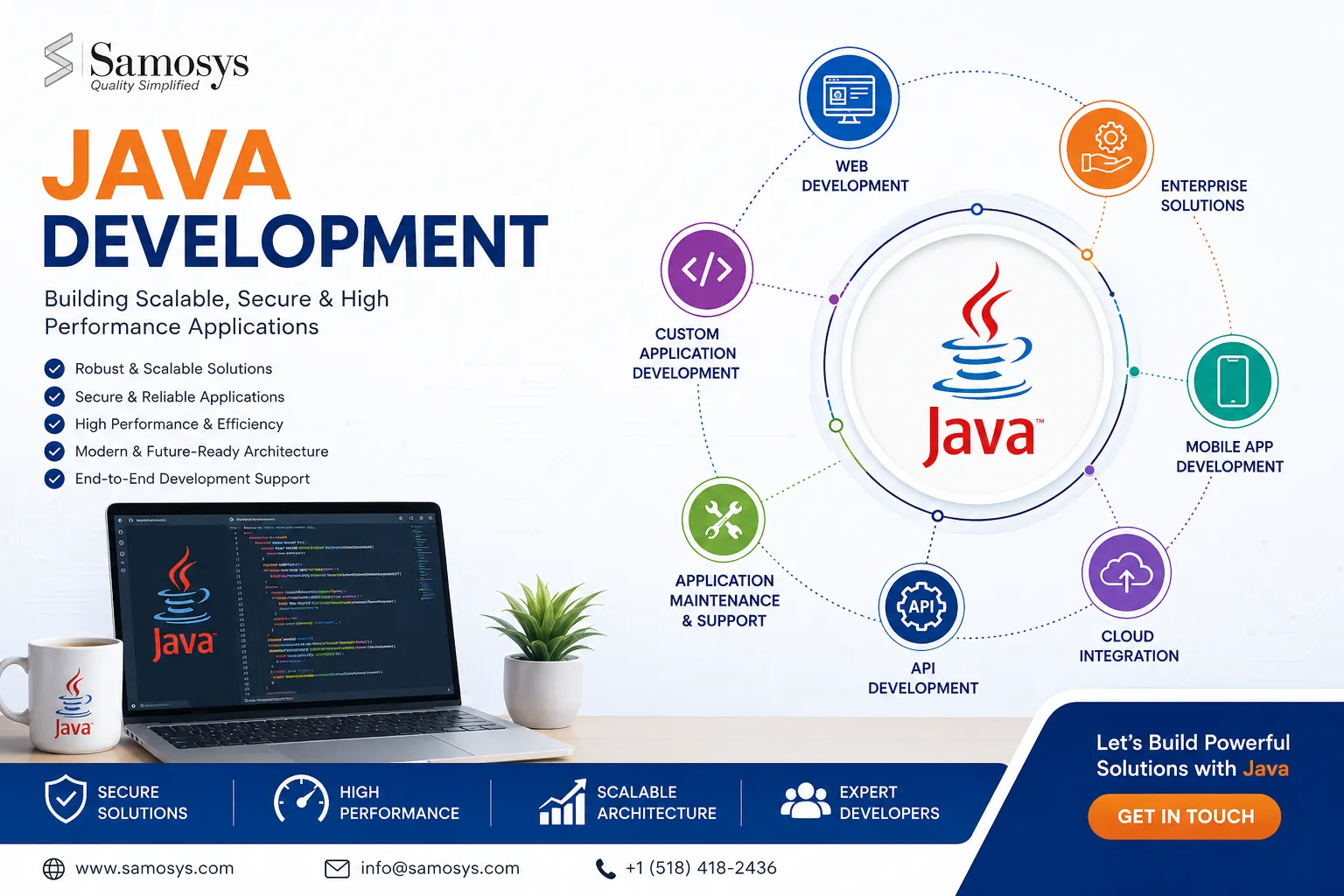
Samosys Technologies provides comprehensive Java development solutions designed to help businesses improve application performance, reduce technical debt, and strengthen long-term software stability. The company follows structured development methodologies focused on quality, scalability, and operational efficiency.
From code analysis and architecture assessment to implementation, testing, and ongoing support, the team delivers end-to-end expertise throughout the refactoring process. Businesses seeking professional java development services benefit from a strategic approach that prioritizes measurable business outcomes alongside technical improvements.
By aligning modernization initiatives with organizational objectives, Samosys Technologies helps companies achieve greater efficiency, reliability, and long-term technology value.
Future of Java Application Modernization
As organizations continue adopting cloud-native platforms, automation technologies, and advanced analytics, the demand for efficient and maintainable software will continue to increase. Businesses that proactively address technical debt will be better positioned to adapt to these evolving requirements.
Java remains one of the most trusted enterprise technologies because of its scalability, security, and extensive ecosystem. Modern Java frameworks provide powerful tools for creating applications that are easier to maintain, optimize, and expand.
Companies that invest in refactoring today can reduce future modernization costs while improving overall application performance. Partnering with Samosys Technologies allows organizations to prepare for future growth while maintaining stability and operational continuity.
Conclusion
Application refactoring is a strategic investment that helps businesses reduce maintenance costs, improve stability, and strengthen long-term software performance. Rather than replacing existing systems, refactoring focuses on improving code quality and architecture to deliver greater efficiency and reliability.
By addressing technical debt proactively, organizations can accelerate development, reduce operational risks, and create a stronger foundation for future innovation. Working with an experienced java development company ensures that refactoring initiatives are executed effectively, helping businesses maximize the value of their applications while supporting sustainable growth and digital transformation.





















Sign in to leave a comment.