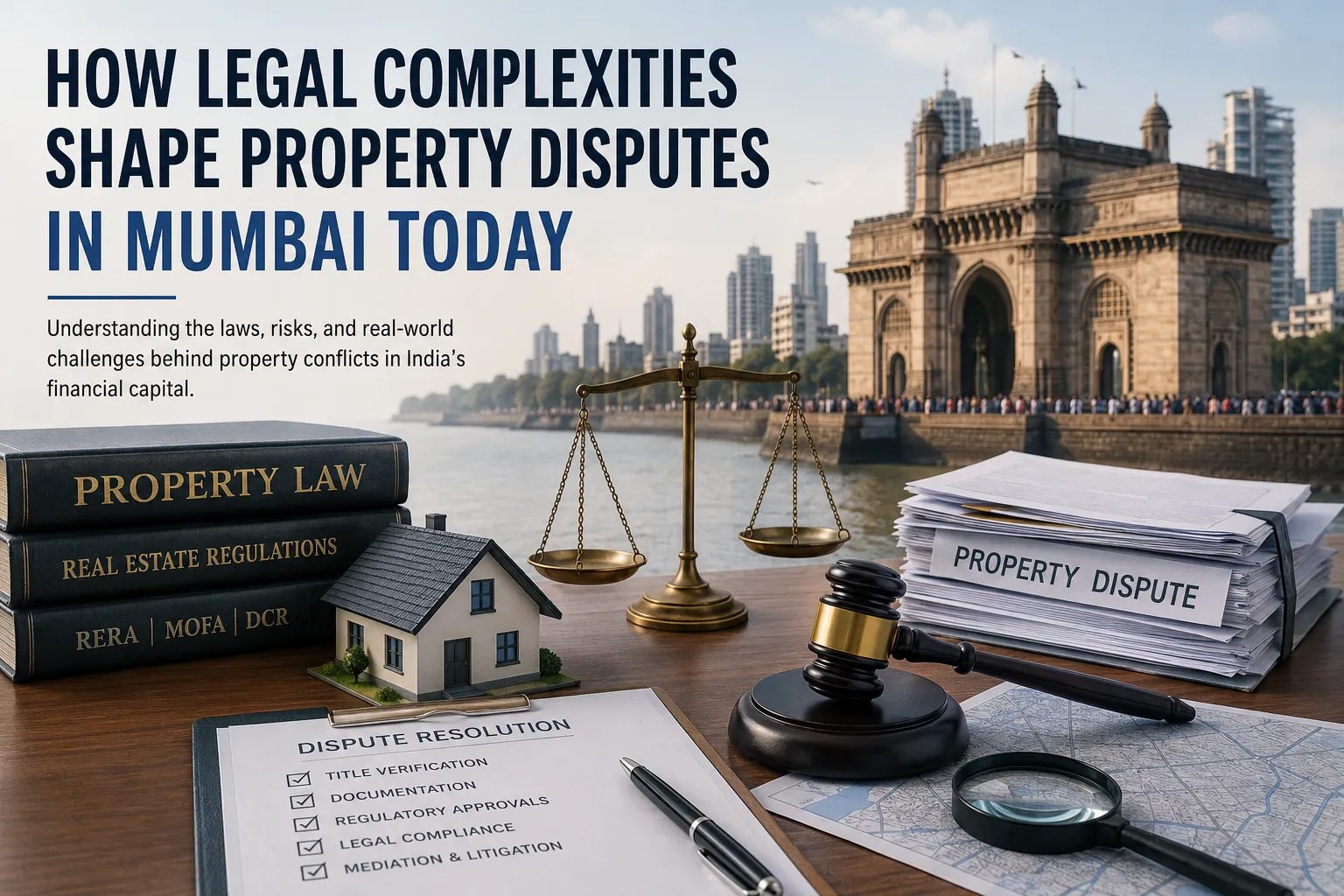
Mumbai remains one of India’s most valuable and densely populated property markets. High land prices, redevelopment projects, inheritance claims, and changing regulations continue to fuel disputes across residential and commercial sectors. Property conflicts in the city no longer involve only ownership disagreements. Today, they often include regulatory approvals, tenancy rights, redevelopment obligations, fraud concerns, and contractual interpretation.
The legal framework governing property in Mumbai has become increasingly layered. Multiple authorities, ageing housing structures, and rising investor activity add further pressure. As a result, individuals, housing societies, developers, and businesses often face long and technically demanding legal battles.
Why Property Disputes Are Increasing in Mumbai
Mumbai’s limited land availability is one of the biggest reasons behind the rise in disputes. Every square foot carries substantial financial value. This creates intense competition between owners, developers, tenants, and investors.
Redevelopment projects have also contributed to growing litigation. Many old buildings require reconstruction for safety and urban renewal. However, disagreements often emerge over consent terms, compensation, temporary accommodation, carpet area allocation, and project delays.
Inheritance disputes continue to remain common. Families frequently contest wills, succession rights, or co ownership interests. In many cases, records are incomplete or outdated, which complicates the legal process further.
The increase in fraudulent transactions has added another layer of concern. Buyers sometimes discover forged documents, hidden liabilities, or unauthorised construction after purchase. These issues often lead to criminal complaints alongside civil litigation.
The Impact of Regulatory Frameworks
Property disputes in Mumbai are deeply connected with regulatory compliance. Several laws operate together, including the Transfer of Property Act, Maharashtra Ownership Flats Act, Real Estate Regulation and Development Act, and municipal development rules.
The introduction of RERA improved transparency in many respects. Developers now face stricter disclosure obligations and greater accountability. Yet disputes still arise over delayed possession, construction quality, or deviations from sanctioned plans.
Municipal regulations also play a major role. Questions relating to floor space index, environmental clearances, occupancy certificates, and redevelopment permissions often become central to litigation. In redevelopment matters, even small procedural lapses can delay projects for years.
Courts also examine whether housing societies have followed proper voting procedures and consent requirements before entering redevelopment agreements. Failure to comply with legal standards may invalidate decisions and trigger further disputes.
Redevelopment Disputes and Housing Societies
Redevelopment has transformed many parts of Mumbai. However, it has also created significant legal friction. Housing societies frequently face disagreements among members regarding developer selection, profit sharing, and rehabilitation terms.
Some members support redevelopment due to financial benefits and improved living conditions. Others resist because of distrust, sentimental attachment, or fear of displacement. These conflicting interests often result in prolonged litigation.
Disputes may also arise between societies and developers. Delays in project completion remain one of the most common complaints. Financial instability of developers can leave residents stranded in temporary accommodation for years.
In such cases, legal representation becomes essential for interpreting agreements, assessing liabilities, and protecting member rights. Many parties seek guidance from real estate lawyers in mumbai to navigate redevelopment negotiations and regulatory challenges effectively.
Title Verification and Documentation Issues
One of the most overlooked causes of disputes is defective title verification. Mumbai has properties with long ownership histories, fragmented records, and legacy claims. Buyers who fail to conduct proper due diligence often face serious consequences later.
Property documents must be examined carefully before any transaction. This includes title deeds, encumbrance certificates, municipal approvals, tax receipts, and society records. Even a minor inconsistency may create future litigation risks.
Benami transactions and disputed power of attorney arrangements have also contributed to legal uncertainty. Courts increasingly scrutinise transactions involving indirect ownership structures or suspicious transfers.
Digital land records have improved transparency to some extent. However, inconsistencies between old physical records and updated electronic systems still create confusion in certain cases.
The Role of Courts and Alternative Dispute Resolution
Mumbai’s property disputes frequently reach civil courts, cooperative courts, consumer forums, or RERA authorities. However, the volume of litigation often results in delays. Some matters continue for several years before final resolution.
Alternative dispute resolution methods such as mediation and arbitration are becoming more popular. These mechanisms can reduce costs and preserve relationships between parties, especially in redevelopment and commercial property disputes.
Mediation has shown particular value in family property conflicts and society related disagreements. Since many disputes involve emotional and long term relationships, negotiated settlements often produce more practical outcomes than prolonged litigation.
Businesses and investors operating across cities often consult professionals familiar with regional property regulations. Many clients handling transactions in Maharashtra also engage
real estate lawyers in pune for broader legal due diligence and investment related advisory work.
Fraud and Criminal Dimensions in Property Disputes
Modern property disputes increasingly involve criminal allegations alongside civil claims. Fraudulent sales, forged signatures, fake title documents, and illegal possession attempts have become major concerns in Mumbai’s property market.
Unsuspecting buyers sometimes purchase flats from individuals without valid ownership rights. In other situations, developers market projects without obtaining required approvals. These cases may lead to police investigations, criminal prosecution, and financial losses.
Cyber fraud has emerged as another challenge. Fake online property listings and manipulated digital documents can mislead buyers during remote transactions. This makes professional verification even more important before entering agreements or making payments.
Courts now place greater emphasis on documentary evidence and transaction transparency. Parties unable to maintain proper records often struggle to defend their claims effectively.
Changing Market Trends and Future Challenges
Mumbai’s property market continues to evolve due to infrastructure expansion, luxury housing demand, and increased institutional investment. While growth creates economic opportunities, it also increases legal complexity.
Large infrastructure projects can trigger disputes relating to land acquisition, rehabilitation, and compensation. At the same time, rising property values encourage more aggressive litigation strategies among competing claimants.
The legal landscape may continue shifting as courts interpret evolving regulations and redevelopment policies. Technology driven documentation systems and stricter compliance standards could reduce certain risks in future. However, disputes connected with ownership rights and urban development are unlikely to disappear completely.
Conclusion
Property disputes in Mumbai reflect the city’s unique combination of economic value, limited land availability, and regulatory complexity. From redevelopment disagreements to title verification issues, legal challenges have become increasingly sophisticated.
Successful resolution often depends on strong documentation, regulatory awareness, and timely legal action. As Mumbai continues to expand and modernise, property law will remain central to protecting ownership rights, balancing commercial interests, and ensuring fair urban development.




























Sign in to leave a comment.