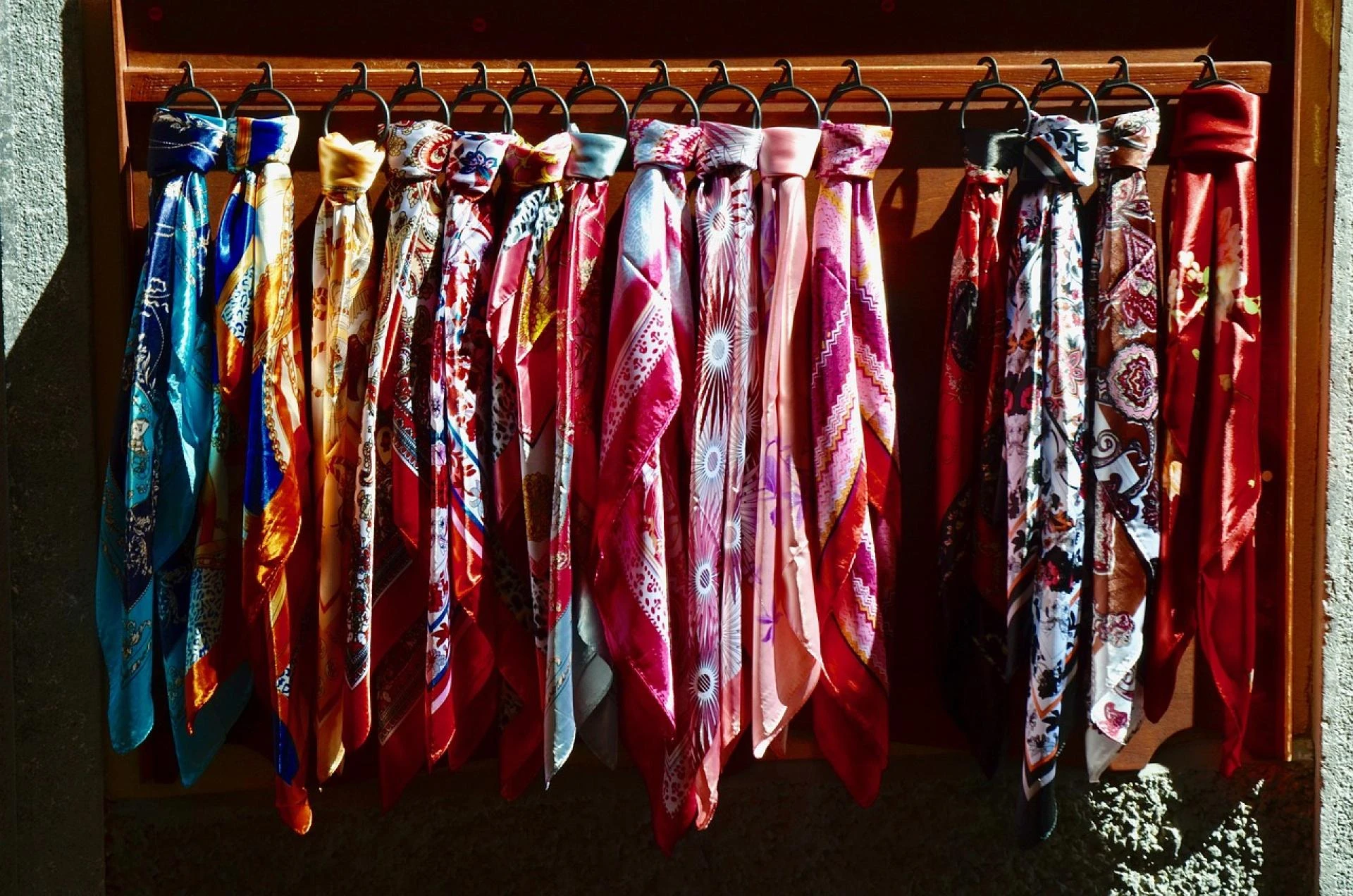

Scarves are frequently distinguished from classic accessories since they are adaptable, stylish, and valuable. However, scarves are not all made equal. If you've ever looked at a collection of womens Italian scarves, you will notice the fabric's texture, the narrative behind each item, and the attention to detail. That distinction results from a legacy of skillful creativity, a dedication to mindful manufacturing, and artistry that reflects cultural heritage.
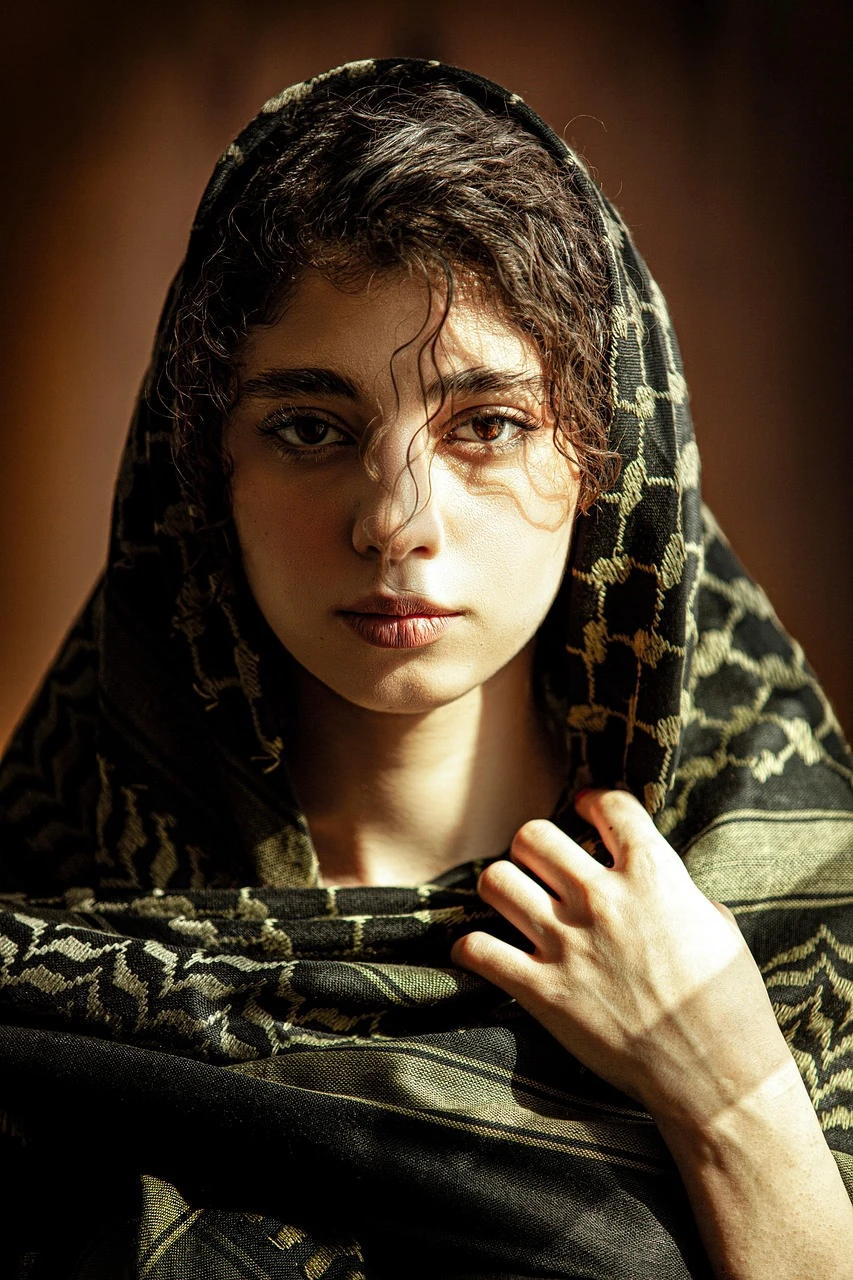
Rooted in Italian Craftsmanship
Italy is well known for its history of fashion and textile arts, and the Como area in particular is well known across the globe for producing silk. Generations of skills passed down through tiny, family-run workshops are frequently reflected in the Italian silk scarves in this area. These things aren't mass-produced. Every scarf is made with age-old techniques that put creativity and quality over quantity.
These women’s scarves are usually made with care and accuracy rather than emphasizing speed. Some are produced on looms that have been around for many years. The end product is a scarf that blends durability with timeless elegance, meant to be worn frequently and treasured for many years.
Conscious Sourcing: From Fabric to Finish
The fabrics used to make these luxury Italian silk scarves are essential. In many Como workshops, 100% silk is still used instead of synthetic blends. This selection improves the scarf's breathability, softness, and natural gloss.
Another critical factor is the dying procedure. Brands such as Elizabetta prioritize non-toxic dyes that are safer for the environment and the wearer. These colors are applied carefully to maintain the silk's quality and reduce its negative effects on the environment. These luxury silk scarves are safe and comfortable when worn on the skin, particularly in the hair or around the neck.
Family-Run and Woman-Led Values
Families frequently run these workshops, and women are heavily represented in both production and leadership positions. For instance, women lead the creative direction at Elizabetta, where each collection combines traditional values with contemporary elegance. The end outcome is more than simply a product; it is a manifestation of careful planning, moral work, and a sense of community.
Sustainability in Practice
Sustainability is not just a fad for many Italian craftspeople; it is ingrained in their manufacturing ethic. Long-lasting design, local material utilization, and small-batch manufacturing may achieve a lower environmental impact. Avoiding rapid fashion techniques reduces production waste, the impact of transportation, and the use of hazardous chemicals.
Design decisions also support long-term use. These women's silk scarves frequently showcase classic designs and color schemes rather than seasonal fashions. This promotes deliberate buying, selecting fewer, better-made items that hold their appeal over time and add sophistication to one's wardrobe.
Designed for Everyday and Beyond
The finest Italian silk scarves are very adaptable. They are insulating in the winter and lightweight enough for the summer, making them easy to transition between seasons. They provide both practicality and flair, whether worn as a head wrap, draped over the shoulders, attached to a purse, or worn as a neck scarf, with vibrant colors enhancing their appeal.
Bandanas, shawls, and long scarves are just a few types that allow for creative ways to wear them. Vibrant hues and intricate patterns complement muted palettes and give regular ensembles a sense of elegance and intrigue.
Cultural Significance and Personal Meaning
There is more to these Italian scarves than just their visual worth. They stand for custom, nurturing, and enduring memories for many. A well-made scarf can have sentimental value, whether given as a gift, passed down, or purposefully selected. It could bring up memories of a journey, a person, or a certain period of your life.
Selecting an Italian-made silk scarf is likewise a deliberate choice. It encourages a slower, more deliberate fashion that prioritizes ethics, quality, legacy, craftsmen, and sustainable techniques.
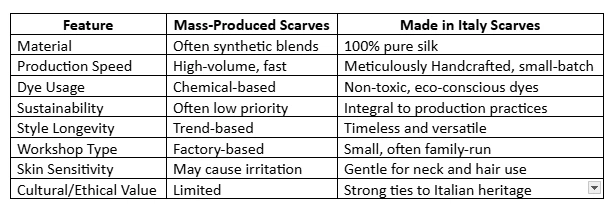
Comparison Table: Mass-Produced vs. Made in Italy Scarves
FAQs
1: What makes Como, Italy, a famous place to produce silk?
Como has a long history of silk weaving, which is bolstered by favorable environmental conditions and pure water availability, which are essential for the dyeing and finishing processes. There are still a lot of artisan silk workshops operating there now.
2: Are non-toxic pigments truly more environmentally friendly?
Yes. Compared to synthetic chemical dyes, non-toxic dyes are generally safer for the wearer and the environment, reducing hazardous runoff into water systems.
3: What makes a scarf luxurious?
A luxury scarf is usually expertly crafted, made with traditional methods, and composed of high-end materials like pure silk. The end product is both aesthetically pleasing and long-lasting.
4: How should a silk scarf be maintained?
The best options are professional cleaners with silk cleaning knowledge or hand washing with cold water and a little detergent. Store it flat or rolled in a cool, dry location to preserve its form and color.
5: Is it possible to wear silk scarves all year round?
Yes. Silk is appropriate for warm and mild climates due to its inherent ability to regulate temperature. Because it is lightweight, it may be styled in various ways throughout the year.
Conclusion
Purchasing a meticulously crafted scarf from Italy’s artisanal workshops or heritage brands like Burberry is more than an accessory purchase; it’s an investment in environmentally conscious practices, ethical manufacture, and a celebration of enduring textile traditions. Like Italy’s legacy, Burberry’s commitment to craftsmanship ensures these pieces become timeless additions to any wardrobe.































Sign in to leave a comment.