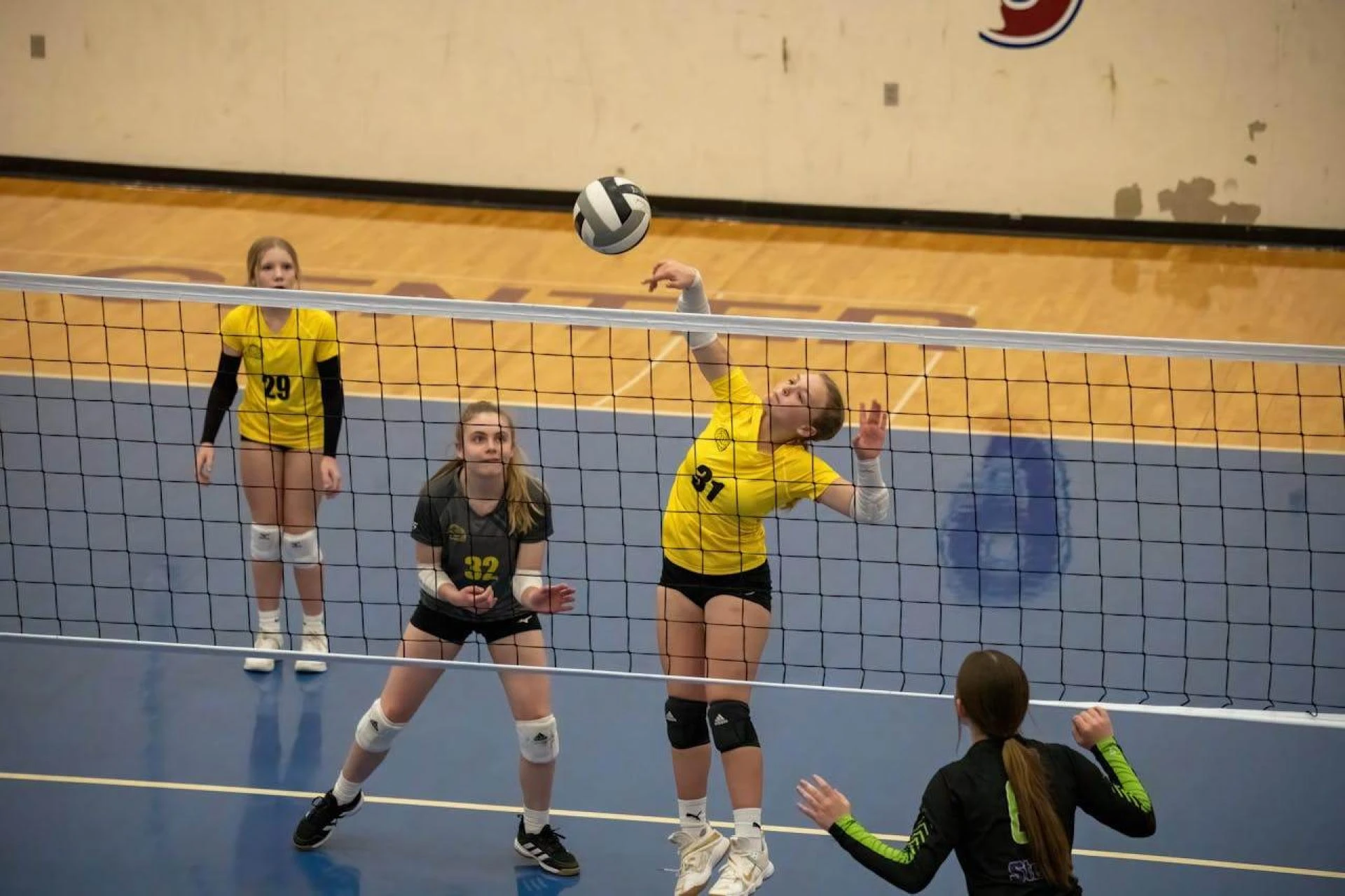

Volleyball is one of the most popular sports across the world, admired for its fast pace, teamwork, and thrilling rallies that leave fans at the edge of their seats. Whether you are just starting out, a casual fan, or a seasoned volleyball enthusiast, one question often arises: how many sets are played in a volleyball game?
The answer, though seemingly simple, depends on the version of volleyball being played, the level of competition, the format of the match, and whether we are talking about indoor volleyball, beach volleyball, or variations like sitting volleyball.
This article aims to break down the concept of sets in volleyball, explain the number of sets typically played, and go into detail about why rules differ in various competitive contexts.
Understanding the Concept of a "Set" in Volleyball
Before addressing the number of sets played in a match, it is important to understand what a volleyball set actually is. A set is essentially a unit of play that makes up the larger match, similar to quarters in basketball or innings in baseball. In volleyball, however, sets are finite rounds that teams must win through points, and the accumulation of set victories determines the overall winner of the game.
A set is won when one team reaches a certain number of points, usually 25 in indoor volleyball and 21 in beach volleyball, though they must win by at least two points. This “win by two” rule ensures that the margin of victory is legitimate and not simply the result of a single mistake or lucky point. Because of this, sets in volleyball often extend beyond the base score, leading to intense showdowns of 26-24, 28-26, or even higher before a winner is declared.
So, when we ask how many sets are in a volleyball game, the true answer lies not only in the standard rules but also in how those rules are applied in different forms of the sport.
The General Match Format: Best of Five Sets
In standard indoor volleyball, such as what we see in international competitions, college games, and the Olympic Games, matches follow a best-of-five set format. This means a team must win three sets in order to win the match.
The first four sets are played to 25 points, requiring a two-point advantage to secure a win. However, if the match reaches the deciding fifth set, that set is played to 15 points instead of 25, but the “win by two” margin still applies.
This format ensures diversity in pacing: the earlier sets allow for endurance and strategy, while the shorter final set creates immense pressure and excitement, often producing the most dramatic moments in volleyball history.
Thus, in most competitive indoor contexts, a volleyball game can last anywhere between three and five sets, depending on how closely matched the teams are.
Best of Three Sets: Shorter Formats
Not all volleyball competitions adopt the best-of-five structure. At recreational levels, school tournaments, or youth divisions, matches are often conducted in a best-of-three format. Under this system, the first two sets are played to 25 points and, if the teams tie 1-1, a third deciding set is played to 15 points.
This shorter structure makes the game more accessible for younger athletes and more manageable for leagues with multiple matches scheduled on the same day. It’s also commonly used in tournaments with time or facility restrictions, since a best-of-five match can last several hours when teams are evenly matched.
For these reasons, many volleyball players at the grassroots level grow up experiencing best-of-three match formats before transitioning into best-of-five competitions at advanced levels.
Beach Volleyball and the Three-Set Standard
Beach volleyball, though sharing many fundamentals with indoor volleyball, uses a different competitive structure. International beach volleyball matches typically follow a best-of-three set format.
In beach volleyball, the first two sets are played to 21 points with a two-point margin required, while the decisive third set, if needed, is played to 15 points. This format is deliberately shorter than indoor volleyball due to the more physically exhausting nature of playing on sand.
Dives, jumps, and extensions are significantly tougher on sand than on hard courts, so the three-set structure balances competitiveness with player endurance.
Beach volleyball matches often move quickly, but the reduced set requirement in no way diminishes the excitement. In fact, the shorter race to 21 points makes every rally critical, and momentum shifts can happen rapidly.
Variations Across Levels of Play
High School Volleyball
At the high school level, most leagues adopt best-of-five sets for varsity matches but may use best-of-three for junior varsity or freshman teams. This balance allows experienced athletes a true match test while keeping younger players focused with a shorter format.
College Volleyball
In the United States, collegiate volleyball under NCAA rules uses best-of-five sets exclusively. This ensures consistency at the elite amateur level and prepares athletes for professional or international competition.
International Volleyball
The International Volleyball Federation (FIVB), which governs global competition including the Olympics, also uses the best-of-five format. This standard creates universal alignment for international tournaments and professional play.
Why Does the Fifth Set Only Go to 15 Points?
One of the unique quirks of volleyball is the shortened deciding set. While previous sets play to 25 (indoor) or 21 (beach), the fifth or deciding third set typically stops at 15. This design exists for several reasons.
First, shortening the deciding set keeps games from becoming excessively long, especially in tournaments where teams may play multiple matches within a single day.
Second, the shortened scoreline provides drama by concentrating the competition into a sprint-like scenario, where every point carries significant weight. This design ensures that the excitement level is maximized without forcing teams into several exhaustive hours of play.
Despite being shorter, the final set is no less demanding. The psychological pressure of a 15-point race often leads to heightened emotions and relentless intensity.
How Long Do Volleyball Matches Last?
Since the number of sets in a volleyball game can vary, match lengths are unpredictable. A three-set sweep in a best-of-five scenario might last just over an hour, while a five-set thriller with extended points could stretch over two and a half hours. Factors influencing match duration include team parity, rally length, timeouts, and challenges.
This is why the distinction between best-of-three and best-of-five formats matters significantly: tournaments with best-of-three matches typically resolve faster, while elite competitions using best-of-five push both stamina and strategy to the limits.
Psychological and Strategic Impact of Sets
The number of sets in a match does more than determine the structure — it impacts the entire psychology of the game and the strategies teams use.
In a best-of-five match, coaches and players have more room for tactical adjustments. Losing the first set does not spell immediate doom, and momentum shifts are possible across longer battles.
On the other hand, in a best-of-three structure like beach volleyball, urgency is paramount. With fewer opportunities to recover, every set looms large, forcing teams to maintain sharpness from the very start.
This difference explains why some athletes excel indoors while others thrive on the beach. Indoor specialists may pace themselves and adapt to long matches, while beach volleyball players must embrace high-stakes decision-making with little margin for error.
Historical Evolution of Set Rules
Volleyball’s set structure hasn’t always been what it is today. Originally, matches featured side-out scoring, where only the serving team could score points, and sets were played to 15 points. This often led to long, drawn-out affairs with scores stagnating well into extended rallies.
In the late 1990s, rally scoring was introduced to make matches faster, more spectator-friendly, and easier for television.
Now, every rally produces a point, regardless of who served. Alongside this change, set lengths were standardized at 25 points for indoor volleyball and 21 for beach. The decisive shorter set format was also introduced, giving the game its modern balance of drama and efficiency.
Understanding this evolution helps us appreciate why volleyball today is both a grueling competition and an accessible sport for players at all levels.
Common FAQs on Sets in Volleyball
How many sets are in Olympic volleyball?
Olympic volleyball follows the international standard of best-of-five sets, with the first four to 25 points and the fifth to 15.
How many sets are in beach volleyball?
Matches are played in a best-of-three format, with the first two sets to 21 points and the third to 15 points.
Why do high school matches sometimes have three sets and sometimes five?
Varsity teams often play best-of-five matches, while lower divisions like junior varsity play best-of-three to keep matches shorter.
Can volleyball matches end in a tie?
No, volleyball matches cannot end in a tie. A winner must be determined by winning the deciding set.
What is the difference between a set and a match?
A set is an individual round of points, while a match is the collection of sets that determines the overall winner.
Conclusion
So, how many sets are in a volleyball game? The answer depends on the context. At the highest level of indoor play, it is typically a best-of-five match, requiring three set victories to secure a win. At recreational and youth levels, best-of-three formats are common, and in beach volleyball, the best-of-three system is the official standard.























Sign in to leave a comment.