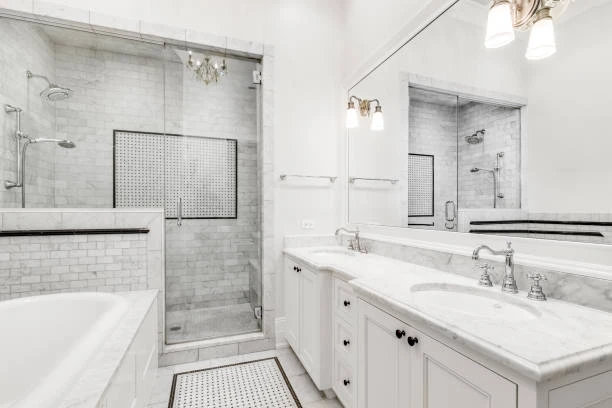

Thinking about giving your bathroom a refresh? Renovating in Melbourne in 2025 can be a smart investment, especially with the property market staying competitive and design trends moving quickly. But before you start picking out tiles or tapware, it’s important to know what you're really getting into — especially when it comes to cost.
Here’s a no-nonsense look at what a bathroom renovation will realistically cost you in Melbourne this year, based on the kind of work you’re doing, the finish you want, and what others are actually paying.
What Impacts the Cost of a Bathroom Renovation?
Bathroom renovation costs in Melbourne can swing dramatically depending on several key factors.
The biggest one is whether you're changing the layout. Keeping your existing plumbing in place (i.e., where the shower, toilet, and vanity are) will keep your budget in check. But if you want to move things around — especially the toilet or shower — that means shifting pipes, waterproofing new zones, and often opening up floors or walls. That adds thousands.
Material choices are another big cost factor. Mid-range finishes like ceramic tiles, semi-frameless shower screens, and standard vanities are affordable and practical. But if you start looking at natural stone, custom cabinetry, matte black fittings or underfloor heating, expect your price to climb fast.
Labour is another area that adds up. Melbourne’s trades — plumbers, tilers, waterproofers, electricians — are in high demand, especially in the post-pandemic building boom. Skilled professionals often charge a premium, and if you're renovating in an area with tricky access (think inner-city terraces or older homes with limited space), that can add even more to your labour bill.
Then there are hidden issues. Older Melbourne homes, especially those built before the 1980s, often have outdated wiring, water damage behind walls, or old pipes that don’t meet today’s plumbing codes. These surprises can’t always be seen before work begins — so smart renovators always budget a bit extra just in case.
Finally, bathroom size and shape play a role. A larger space naturally means more materials and time, but smaller bathrooms with awkward layouts or tight corners can be just as labour-intensive, especially for tasks like tiling or custom cabinetry.
What Melbourne Homeowners Are Paying in 2025
In 2025, Melbourne homeowners are seeing a fairly clear price pattern depending on how much they want to do and the quality of the finish.
For a basic, cosmetic bathroom update — where you’re keeping the layout the same and updating the vanity, tapware, and maybe retiling the shower — you can expect to pay anywhere from $12,000 to $20,000. These updates are typically quicker and cheaper, especially if you don’t touch plumbing or electrical.
If you're planning a full mid-range renovation, the average spend jumps to around $25,000 to $40,000. This often includes updated fixtures, better-quality tiles, new lighting, and possibly some minor layout tweaks like shifting a shower or repositioning a vanity.
High-end or luxury renovations — which often involve moving walls, installing custom cabinetry, adding freestanding tubs, feature lighting, premium tiles, or underfloor heating — start around $45,000 and can easily go beyond $70,000. If you live in a heritage area or want a fully custom design, that number could be even higher.
Where the Money Goes in a Renovation
So, where does all your money actually go?
A big chunk — often 40 to 50 percent — goes to labour. That includes tiling, plumbing, electrical work, waterproofing, and general project management. Melbourne’s trades are in high demand, so this is one area where you’ll see most of your budget spent.
Next comes fixtures and fittings, which can make up 15 to 25 percent of the total cost. This covers vanities, taps, basins, toilets, showers, mirrors, and so on. The choices here are nearly endless, and prices can range from budget-friendly to high-end designer.
Tiles and surfaces usually take up 10 to 20 percent of your budget. That includes floor and wall tiles, tile adhesive, grout, and sealants. The size, material and pattern of the tiles can all impact cost — large-format tiles tend to be more expensive to install but offer a sleek look with fewer grout lines.
Custom cabinetry and storage can take another 5 to 15 percent, especially if you’re opting for bespoke joinery or built-in units. Standard, off-the-shelf vanities are more affordable, but don’t always maximise storage — especially in tight spaces.
Waterproofing and compliance-related work adds around 5 to 10 percent to your budget. This step is crucial for preventing leaks and meeting Victorian building regulations. Don’t skimp here — poor waterproofing can lead to major structural issues down the line.
Electrical work, lighting, and other extras (like heated towel rails or ambient mirror lights) tend to sit around 3 to 7 percent of the total. This includes exhaust fans, new power points, switches and ceiling lights.
Then there’s demolition, waste removal and site cleanup, which often take up 2 to 5 percent of the overall spend. If you’re removing old tiles, walls, or flooring, this step can get messy — and expensive.
Lastly, always factor in a 10 to 15 percent contingency buffer. There are almost always surprises once you open up walls or start plumbing. Having this buffer can save you serious stress and money mid-project.
How to Estimate Your Bathroom Reno Budget
If you're planning your own bathroom reno, here’s a quick way to map out your budget realistically:
- Start with your goals. Are you doing a facelift, a full renovation, or a luxury upgrade? Nail down what “must-haves” and “nice-to-haves” are on your list.
- Measure the space and inspect the current condition. Older homes often hide water damage, bad plumbing or uneven floors.
- Decide whether you’re moving plumbing. If yes, that’ll add thousands.
- Choose your fixtures and finishes with a price range in mind — one for your ideal picks, and one with cost-effective alternatives.
- Get multiple quotes from Melbourne-based bathroom builders or trades. Always ask for detailed breakdowns.
- Add a 10-15% buffer on top of your projected costs. This is your emergency fund — and it’s often used.
Tips to Save Money Without Cutting Corners
- Stick to your layout. Keeping plumbing where it is saves a lot.
- Choose affordable tiles wisely. Use premium tiles for features (e.g., a shower wall) and go budget-friendly elsewhere.
- Use paint in dry zones. High-quality water-resistant paints are much cheaper than full-wall tiling.
- Buy fixtures during sales. End-of-line clearance sales or trade discounts from local suppliers can save you hundreds.
- Reuse what works. If your vanity is solid but dated, consider repainting or changing just the handles or benchtop.
- Get reliable tradies. Poor work leads to expensive fixes later. Choose licensed, experienced professionals.
Final Word
Bathroom renovations in Melbourne are a significant investment — but one that can transform how you use and feel about your home. In 2025, most homeowners are spending somewhere between $25,000 and $40,000 for a quality, mid-range renovation. Simple facelifts can still be done for under $20,000, and luxury upgrades push well past $50,000.
Planning well, setting clear expectations, and working with reliable local professionals are the best ways to avoid budget blowouts — and get a result you’ll love for years.





















Sign in to leave a comment.