
Cost is usually the first question buyers ask when they start exploring overseas manufacturing, and it's a fair one. The numbers you hear vary widely, and it can be hard to know what's realistic versus what's marketing. CNC Machining China is widely known for being more affordable than local machining in the US, UK, or Australia, but the actual price depends on a set of factors that every buyer needs to understand before requesting a quote. Getting clear on what drives cost helps you budget accurately, compare quotes meaningfully, and avoid surprises when the invoice arrives.
This guide breaks down the real cost structure of CNC machining in China, what you can expect to pay for different types of parts, and where buyers typically lose money by not planning properly.
What Factors Determine the Price of a CNC Machined Part?
Part price is never arbitrary. Every line item in a CNC machining quote traces back to a specific cost driver, and understanding those drivers tells you where the money is actually going.
Material is the starting point. The cost of raw stock varies significantly by material type and grade. Aluminum is relatively inexpensive and machines quickly, keeping total part cost low. Stainless steel costs more as raw material and takes longer to cut, raising both the material and machining components of the price. Titanium sits at the higher end of the cost spectrum because it's expensive to source and demands slower cutting speeds, more tool wear, and greater care during setup.
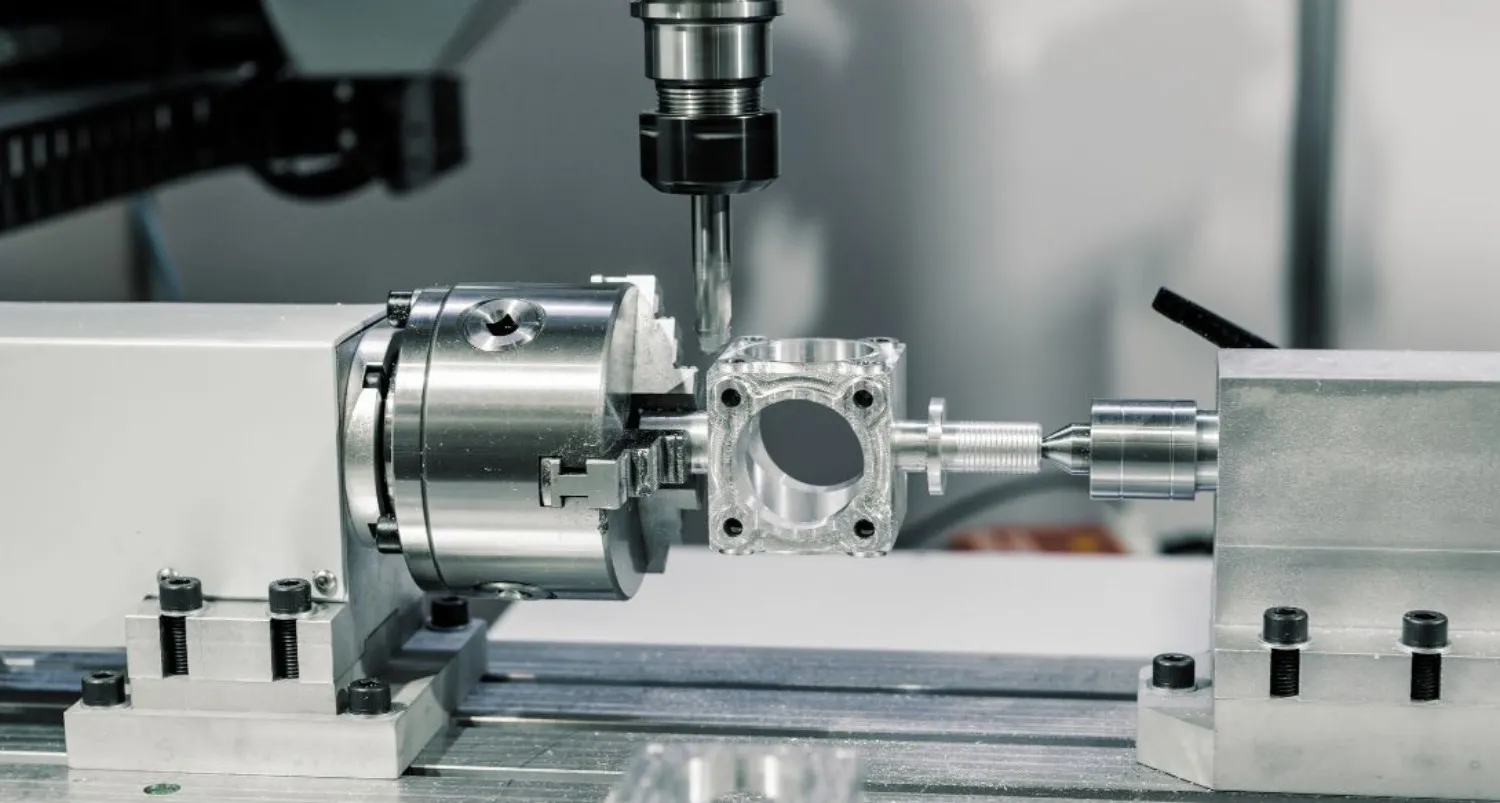
Machining time is the other major variable. A simple rectangular bracket with a few drilled holes takes far less time to program and cut than a complex housing with curved surfaces, multiple pockets, and tight tolerances. Every additional feature adds time, and time directly adds cost. Tolerances matter too. Holding ±0.05mm is straightforward on modern CNC equipment. Holding ±0.005mm requires slower cutting, more careful setup, and more thorough inspection, all of which show up in the price.
How Do Material Choices Affect Your Total Cost?
Aluminum 6061 is the most cost-effective CNC machining material for most applications. It machines quickly, produces clean surfaces, and responds well to anodizing. For enclosures, brackets, structural components, and prototypes where weight and cost both matter, it's the default choice for good reason. Aluminum 7075 offers higher strength but costs more as raw stock and machines slightly slower.
Stainless steel 303 machines better than 316 and typically costs less to produce. If your application doesn't specifically require 316's corrosion resistance, 303 gives you similar durability at a lower part price. Brass is moderately priced and machines exceptionally well, making it cost-effective for fittings and electrical components despite the material cost being higher than aluminum.
Engineering plastics sit at a wide range. ABS and nylon are affordable and fast to machine. PEEK is significantly more expensive as a raw material and requires careful handling during cutting, which pushes part prices considerably higher. If your design can achieve the required performance with a less expensive plastic, the savings on a production run can be substantial.
What Are Typical Price Ranges for CNC Parts from China?
Giving exact prices without seeing specific drawings is difficult because geometry, tolerances, and quantity all shift the number considerably. That said, realistic ballpark figures help buyers calibrate expectations before they start requesting quotes.
A simple aluminum bracket or plate with standard tolerances, drilled holes, and no surface finish typically runs between $15 and $40 per piece at prototype quantities of 1 to 10 units. At production quantities of 100 to 500 pieces, that same part might come down to $8 to $20 per piece as setup costs spread across more units and machining efficiency improves.
More complex parts with 5-axis geometry, tighter tolerances, or multiple operations start higher. A machined aluminum housing with pockets, threaded inserts, and an anodized finish might run $60 to $120 per piece at low quantities, dropping toward $30 to $60 at production volumes. Stainless steel parts of similar complexity typically run 30 to 50 percent higher than their aluminum equivalents due to material cost and longer cutting time.
How Does Quantity Affect Pricing?
Volume pricing in CNC machining works differently from injection molding. There's no tooling cost to amortize, so the relationship between quantity and unit price is driven by setup time efficiency rather than tooling recovery.
Setup costs are largely fixed per batch. Programming the machine, creating fixtures, and verifying the first piece takes the same time whether you're running 1 part or 100. When that setup cost gets spread across more units, the per-piece cost drops. The steepest savings typically happen between quantities of 1 to 10 and quantities of 50 to 100. Beyond a few hundred pieces, the per-unit savings curve flattens as setup becomes a smaller fraction of total production time.
For prototype quantities of 1 to 5 pieces, you're essentially paying a premium for the setup relative to the total machining time. This is normal and expected. The value at prototype stage isn't the per-unit price, it's getting functional parts in real production material to validate your design before committing to volume. China CNC Machining Co supports single prototypes through to full production runs, giving buyers the flexibility to start small and scale without switching suppliers.
What Does Surface Finishing Add to the Cost?
Surface finishing is a separate cost layer on top of machining, and it's one that buyers sometimes overlook when budgeting. The as-machined finish straight off the machine is functional for many internal or non-visible components, but external parts and consumer-facing products usually require some form of additional treatment.
Anodizing is the most common finishing process for aluminum. Type II anodizing adds a hard, corrosion-resistant oxide layer and comes in clear or various colors. It typically adds $5 to $15 per part at low quantities, though the cost per piece drops at volume. Type III hard anodizing provides greater wear resistance and costs somewhat more.
Bead blasting gives aluminum a uniform matte texture before anodizing and adds a modest cost. Powder coating on aluminum or steel adds more than anodizing but delivers excellent durability and a wide color range. Electroless nickel plating, chrome plating, and other specialty coatings are available but priced higher and require longer lead times. When you're budgeting a project, add finishing costs to your machining estimate rather than treating them as an afterthought.
How Do Tolerances Impact Your Budget?
Tolerance requirements have a direct and significant effect on part cost, and this is an area where buyers can sometimes over-specify without realizing it. Tighter tolerances require slower cutting speeds, more careful machine setup, more frequent tool changes, and more thorough inspection. All of that takes time, and time costs money.
For features that don't affect fit or function, specifying a tight tolerance adds cost without adding value. A general machining tolerance of ±0.1mm is appropriate for most non-critical features. Functional interfaces like bearing bores, press fits, or precision shaft diameters warrant tighter callouts, typically ±0.01mm to ±0.025mm. Specifying ±0.005mm across an entire part when only a few features actually need it drives cost up unnecessarily.
Working with a supplier who provides DFM feedback is valuable here. An experienced machining team will flag over-toleranced features and suggest where standard tolerances are sufficient, helping you reduce cost without compromising the function of the part. China CNC Machining Co includes this DFM review as part of their standard quoting process.
What Other Costs Should You Factor into Your Budget?
Shipping is the most obvious additional cost that buyers sometimes underestimate. Air freight from Shenzhen to the US, UK, or Australia for a typical small parts shipment runs roughly $50 to $200 depending on weight and dimensions. Heavier or bulkier shipments cost proportionally more. For very small orders, shipping can represent a meaningful percentage of total project cost, which is worth factoring in when comparing China pricing to local alternatives.
Import duties apply in most countries and vary by material and product classification. Aluminum machined parts imported into the US, for example, attract different duty rates than steel components. Knowing the applicable tariff classification and duty rate for your parts helps you calculate the true landed cost rather than just the ex-works price from the supplier.
Packaging and export documentation are typically included by established suppliers but worth confirming. Quality inspection reports and material certifications, which you should always request, are generally provided at no additional charge by suppliers who treat documentation as standard practice rather than a premium service.
How Do You Get an Accurate Quote?
The quality of a quote depends entirely on the quality of information you provide. Submitting complete CAD files in STEP or IGES format, along with a fully dimensioned drawing that specifies tolerances, material grade, surface finish, and any special requirements, gives the supplier everything they need to price accurately.
Vague requests produce vague or padded quotes. If you submit a STEP file without a drawing and simply ask for a price on an aluminum part, the supplier has to make assumptions about tolerances, finish, and requirements. Those assumptions often lead to a quote that doesn't match your actual needs, either higher because they assumed tight tolerances throughout, or lower because they assumed a simpler spec than you intended.
Requesting quotes from two or three suppliers on the same drawing is a reasonable practice for first-time orders. It gives you a sense of market pricing for your specific part and helps you identify outliers in either direction. A quote that comes in significantly lower than others deserves scrutiny, just as one that comes in significantly higher warrants explanation.
What Does Good Value Actually Look Like?
Good value in CNC machining isn't just the lowest price per part. It's the combination of accurate pricing, complete documentation, reliable lead times, and a supplier relationship that handles problems professionally when they arise. A part priced at $20 that arrives out of tolerance costs more than a $28 part that arrives correct the first time, once you factor in rework, delay, and the time spent managing the problem.
Buyers who focus exclusively on unit price and ignore the total cost of the supplier relationship often end up spending more over time than buyers who pay a moderate premium for a supplier with strong quality systems and transparent communication. The goal is a total landed cost that includes parts, shipping, duties, and the time your team spends managing the supplier, not just the number on the quote.
China CNC Machining Co delivers competitive pricing alongside DFM feedback, quality inspection, and material certification as standard inclusions, giving buyers clear value without hidden costs or documentation gaps that create problems downstream.
Ready to Get Started?
Understanding what drives cost in CNC machining helps you submit better requests, interpret quotes accurately, and make sourcing decisions that hold up over the full life of a project. Whether you're pricing a first prototype or planning a production run, knowing the cost structure puts you in a much stronger position as a buyer.
To get an accurate quote for your parts or to discuss your project requirements, contact Gavin Yi, CEO of China CNC Machining Co, at +86 189 2659 5104 or [email protected]. Their team provides CNC milling, turning, 5-axis machining, rapid prototyping, and surface finishing for custom metal and plastic parts, with DFM feedback, quality inspection, and international delivery from their facility in Shenzhen, China.





















Sign in to leave a comment.