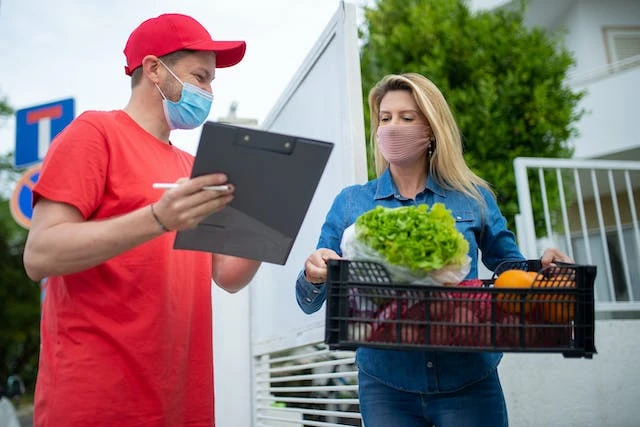

With the introduction of supermarket delivery services, online grocery shopping has become even more convenient in today's quick-paced and technologically advanced society. The demand for on-demand grocery delivery apps has increased dramatically as more and more customers desire the convenience of having their daily necessities delivered to their homes.
Such an app must be developed by a skilled app development companies with expertise in building user-friendly interfaces and seamless functionalities. However, depending on a variety of factors, including features, complexity, platform compatibility, and project scope, the cost of grocery delivery app development may differ.
In this article, we'll look at the cost of developing a grocery delivery app and explain any potential charges involved.
How to Build Your Grocery Delivery Application: A Step-by-Step Guide
Step 1: Strategize
A strong business strategy is the foundation of any successful endeavor. Create a unique selling proposition (USP) for your grocery delivery business to set it apart from rivals, identify your target consumer base, and comprehend their demands. To enable real-time product availability and expedite order fulfillment, decide if you need to link with the inventory systems of affiliated grocery stores. Give top priority to functional features that improve user experience and increase the effectiveness of your software.
Step 2: Market investigation
Conduct in-depth market research to learn more about the grocery delivery business. Determine who your rivals are, and what makes them successful and less successful, and research current industry trends. You may improve your app's features, price plans, and marketing techniques to more successfully appeal to your target demographic with the aid of this study.
Step 3: Define Features and Functionalities
Make a thorough list of the features and functions you want your app to have based on your company plan and market research. User registration, a product catalog, a shopping cart, integration of a secure payment gateway, real-time order tracking, push notifications, customer assistance, and fluid communication channels are typical features.
Step 4: Select the Appropriate Platform
Make a deliberate choice between crafting a native application for one of the supported platforms, Android or iOS, or opting for a cross-platform solution. While native apps undoubtedly offer unparalleled user experience and superior performance, it necessitates independent design and development for each platform. Cross-platform programs, on the other hand, simplify development processes but may forgo certain performance advantages.
Step 5: Design the User Interface (UI/UX)
The success of your grocery delivery software depends heavily on the user experience (UI/UX) design. Put your attention on simple navigation, distinct product classification, and a quick checkout. Make sure the app is responsive and adjusted for different screen sizes and devices.
Step 6: Backend Development
To manage user data, product information, order processing, and secure transactions create a solid and expandable backend architecture. Implement a solid server architecture and database management system to handle the expanding user base and data load.
Step 7: Integration
Include third-party APIs for critical features like payment processing, location tracking, SMS alerts, and social media logins. Work together with reputable payment processors to give your users safe and simple payment choices.
Step 8: Vendor Onboarding (For Marketplaces)
Allow grocery retailers and merchants to register on your platform if you decide to use a marketplace approach. Establish a user-friendly vendor portal so they can control their product inventories, alter prices, and handle order fulfillment.
Step 9: Testing and Quality Assurance
Test your grocery delivery app assiduously to find any bugs or problems and repair them. To validate the app's functionality, usability, and general performance, do human and automated tests. Set security testing as a top priority to safeguard user information and financial activities.
Step 10: Marketing and Launch
It's time to publish your software on the Google Play Store and Apple software Store once it has undergone thorough testing. Use powerful marketing techniques to advertise your software and get consumers. To increase app downloads and user engagement, employ social media, online advertising, influencer marketing, and special offers.
Step 11: Collect user feedback and keep improving
To pinpoint areas that need improvement, pay attention to customer comments and reviews. Continually improve and upgrade your app's functionality in response to user feedback and shifting consumer preferences. To retain users and acquire a competitive edge, you must practice continuous improvement and proactive customer service.
How Much Does It Cost to Develop a Grocery App?
Your grocery delivery app's level of difficulty will directly depend on the functionality and design choices you make during the development process. The choice of the development region is another important factor in cost difference.
For instance, paying higher rates of $150 to $250 per hour when hire ios app developers in the USA. On the other side, developers operating in Eastern Europe often charge a little less, between $100 and $150 per hour. However, the hourly development cost will drop dramatically if you opt to work with Indian developers, to anywhere between $40 and $80.
The estimated cost to develop a basic grocery delivery app with essential functionalities, designed for a single platform and enlisting Indian developers or an on-demand grocery app development company, falls within the range of $15,000 to $25,000. However, should you seek to create a more advanced and feature-rich application compatible with both iOS and Android platforms, the projected expense would likely scale up to approximately $45,000.
Notwithstanding, it is imperative to recognize that these cost approximations remain subject to variability based on specific project requirements, intricacy levels, and the incorporation of supplementary features in the grocery delivery app. To obtain a more precise and definitive price quotation, engaging in detailed consultations with app development firms to thoroughly review your project particulars is of paramount importance. This approach will enable you to tailor the app's features and functionalities in accordance with your budget while ensuring an effective and successful app development process.
Conclusion
When considering the development of a grocery delivery app, it is essential to strike a balance between the desired features and your budget. Hire dedicated moble app developers can help you navigate through these decisions more effectively. They can offer valuable insights, create a tailored development plan, and ensure the app meets your specific requirements while optimizing development costs.
























Sign in to leave a comment.