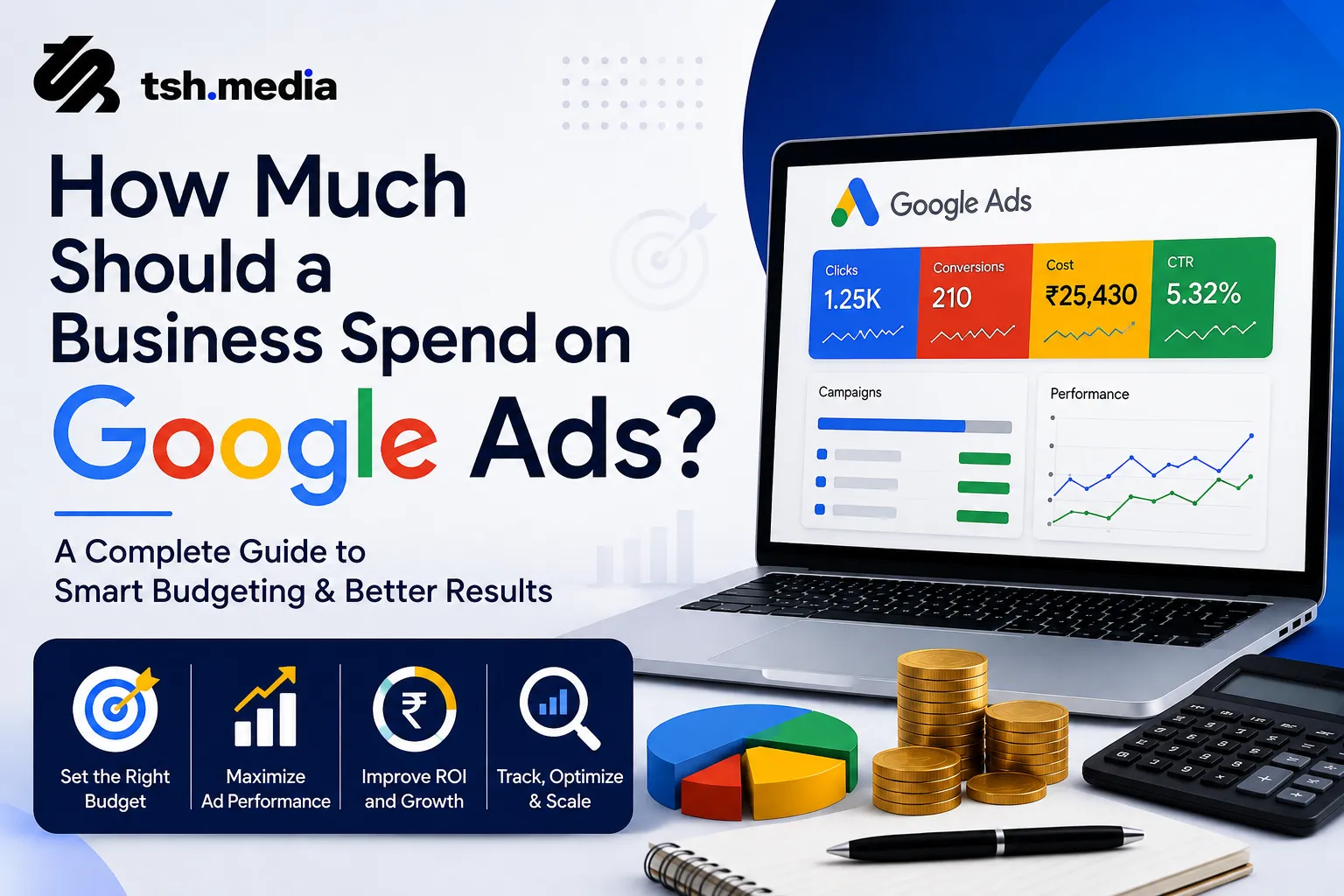

Running Google Ads is one of the fastest ways to reach potential customers, but one question every business owner asks is, "How much should I spend?" The truth is that there isn't a fixed amount that works for everyone. Your ideal budget depends on your goals, industry, competition, and expected return on investment.
At tsh.media, businesses often ask this question before launching their campaigns. Whether you're working with a PPC agency in Mumbai or managing campaigns in-house, understanding how Google Ads budgeting works can help you invest wisely and generate better results.
Let's explore the factors that determine your Google Ads budget and how you can make every rupee count.
Why There Is No One-Size-Fits-All Budget
Google Ads works on an auction system, meaning advertisers compete for ad placements based on keywords, bid amounts, and ad quality. Because every business operates in a different market, the cost of advertising can vary significantly.
Instead of asking, "What's the average budget?" ask:
- What are my business goals?
- How many leads or sales do I need each month?
- What is a customer worth to my business?
- How competitive is my industry?
Answering these questions gives you a much clearer idea of what your advertising budget should look like.
Factors That Affect Your Google Ads Budget
1. Your Business Goals
The first step is deciding what you want your ads to achieve.
Some common objectives include:
- Generating leads
- Increasing online sales
- Driving website traffic
- Building brand awareness
- Getting more phone calls
- Promoting a local business
A business focused on lead generation may require a different budget than an e-commerce store aiming for hundreds of daily sales.
2. Industry Competition
Some industries are naturally more competitive than others.
For example:
- Legal services
- Finance
- Insurance
- Healthcare
- Real estate
These sectors often have higher advertising costs because many businesses compete for the same audience. On the other hand, niche industries may enjoy lower costs and better returns.
3. Cost Per Click (CPC)
Google Ads charges advertisers when someone clicks on their ad.
The cost per click depends on several factors, including:
- Keyword competition
- Location targeting
- Search demand
- Ad quality
- Competitor bids
Highly competitive keywords generally cost more, while long-tail keywords can often deliver quality traffic at a lower cost.
How to Decide Your Monthly Budget
Start with Your Revenue Goals
Rather than selecting a random number, work backwards.
For example:
Suppose your business wants:
- 30 new customers every month
- Your website converts 10% of visitors
- You need around 300 qualified clicks
- Average CPC is ₹40
Estimated monthly budget:
300 × ₹40 = ₹12,000
This simple calculation provides a realistic starting point based on your business objectives instead of guesswork.
Should Small Businesses Invest in Google Ads?
Absolutely.
Small businesses don't need massive budgets to see results. Even modest campaigns can generate qualified leads when they target the right audience and use relevant keywords.
Many successful campaigns begin with a manageable budget. As performance improves and positive returns become consistent, businesses gradually increase their investment.
The key isn't spending more, it's spending smarter.
Focus on Return, Not Just Budget
Many advertisers become overly focused on daily spending.
Instead, monitor metrics that directly impact business growth, such as:
- Cost per lead
- Conversion rate
- Return on ad spend (ROAS)
- Cost per acquisition
- Revenue generated
A campaign spending ₹25,000 that generates ₹2,50,000 in sales is far more valuable than a ₹5,000 campaign that produces no conversions.
Tips to Maximize Your Google Ads Budget
Choose High-Intent Keywords
Focus on keywords used by people who are ready to buy or contact your business. These searches often produce better-quality leads than broad informational keywords.
Improve Your Landing Pages
A relevant, fast-loading landing page encourages visitors to take action. Google also rewards quality landing pages with better ad performance.
Use Location Targeting
If you only serve specific cities or regions, avoid showing ads nationwide. Targeting the right geographic areas reduces unnecessary spending.
Track Every Conversion
Install conversion tracking for:
- Contact form submissions
- Phone calls
- Online purchases
- Appointment bookings
Without tracking, it's impossible to know which campaigns are delivering real business results.
Continuously Optimize Campaigns
Google Ads isn't a "set it and forget it" platform.
Regular optimization includes:
- Reviewing search terms
- Pausing underperforming keywords
- Testing new ad copy
- Adjusting bids
- Improving audience targeting
Small improvements over time often lead to significantly better performance.
Common Budget Mistakes to Avoid
Spending Without a Strategy
Launching campaigns without clear objectives usually results in wasted budget.
Ignoring Negative Keywords
Negative keywords prevent your ads from appearing in irrelevant searches, helping reduce unnecessary clicks.
Chasing Clicks Instead of Conversions
High click numbers may look impressive, but conversions are what actually grow your business.
Not Testing Different Ads
Testing headlines, descriptions, and calls to action helps identify which ads perform best.
How Often Should You Review Your Budget?
Your advertising budget should evolve with your business.
Review your campaigns regularly when:
- Sales goals change
- New products launch
- Competition increases
- Seasonal demand shifts
- Campaign performance improves
Adjustments based on real data are far more effective than keeping the same budget throughout the year.
Conclusion
There is no perfect Google Ads budget that suits every business. The right amount depends on your objectives, competition, target audience, and expected returns. Starting with realistic goals, tracking performance, and continuously optimizing your campaigns will help you get the most value from every advertising rupee.
At tsh.media, businesses receive data-driven strategies that focus on measurable growth instead of unnecessary spending. Whether you're looking for expert guidance from a performance marketing agency in Mumbai or want to improve the results of your existing campaigns, investing strategically is the key to long-term success.


























Sign in to leave a comment.