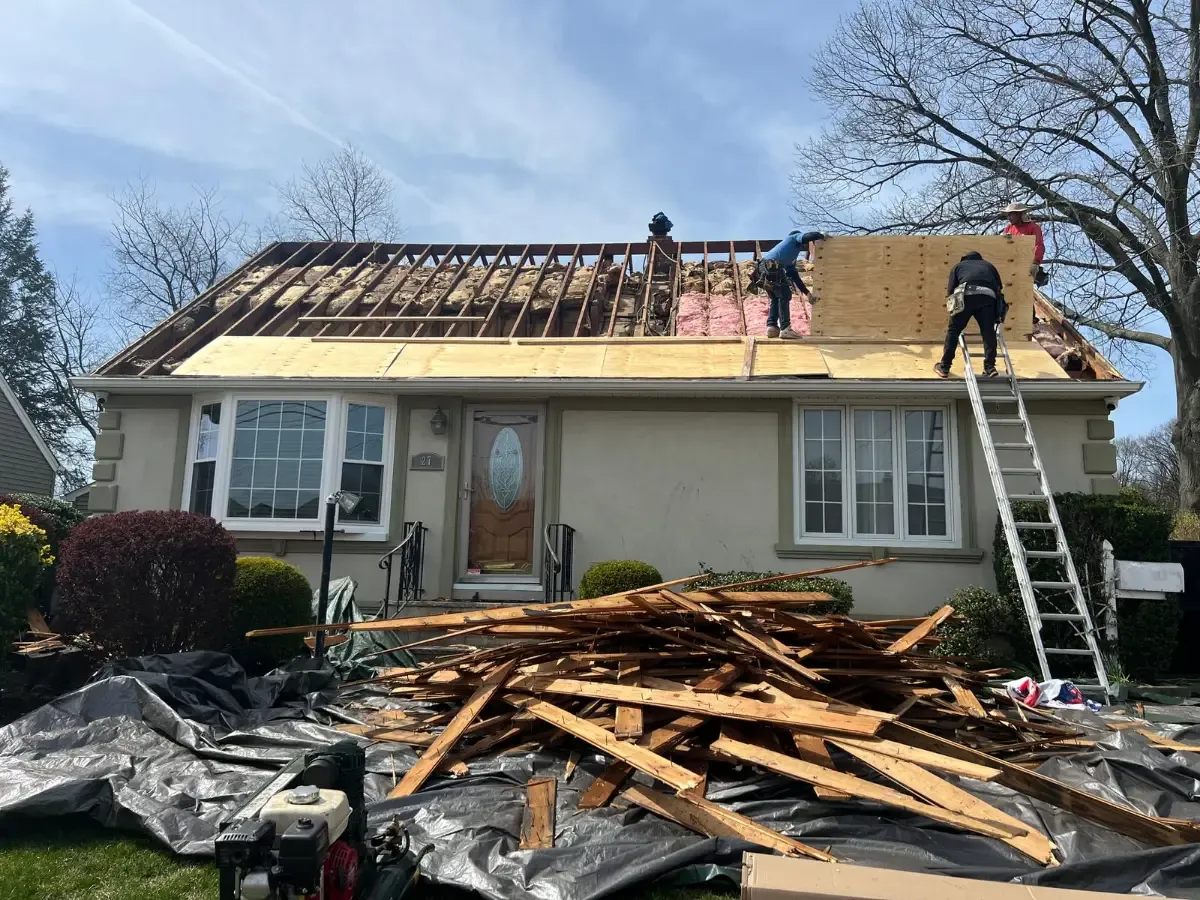

TL;DR
- Wind damage typically requires replacement when it affects 25% or more of a single roof slope, or spreads across multiple slopes
- Sustained winds above 50 mph or gusts over 60 mph commonly cause damage to aged or worn roofs
- The most common wind damage signs are creased shingles, missing shingles, lifted shingles, and torn flashing
- Repair costs range from $200 for minor work to $3,000 for moderate damage. Full replacement runs $7,000 to $30,000+
- NJ sees wind damage events from nor'easters, hurricane remnants, and summer thunderstorms every year
Introduction
A windstorm rolls through, and the next morning you're standing in the driveway looking at your roof, wondering whether what you see is bad enough to do something about. Most homeowners aren't sure where the line is between "needs a repair" and "needs a full replacement."
The general industry threshold is 25% damage to a single slope, or damage spread across multiple slopes. This guide walks you through what wind damage actually looks like, how to spot it from the ground, what it typically costs to fix, and what NJ homeowners should know about storm timelines. If you're dealing with hail damage instead, see how much hail damage to replace a roof for the corresponding breakdown.
What Wind Damage Actually Looks Like
Wind damages roofs in distinct patterns. Knowing what to look for helps you decide quickly whether you have a repair situation, a replacement situation, or something in between.
Creased Shingles
Wind gets under a shingle, lifts it, and folds it back. Even after it settles back down, the crease at the fold is permanent. A creased shingle has lost its waterproof seal. It looks fine from below but fails in the next storm. Roofers typically count creased shingles as full losses.
Missing Shingles
The most obvious sign. Bare patches where shingles have been completely torn off, exposing the underlayment or roof deck. The more missing shingles you see, the more serious the damage. A few missing shingles is a repair. A dozen across multiple slopes is usually a replacement conversation.
Lifted Shingles
Shingles that visibly stand up at the corners or edges. The seal strip that bonds shingles to each other has broken. Water can now flow underneath. Lifted shingles often look minor from the ground but cause major leaks within months.
Torn Flashing
The metal flashing around chimneys, vents, and skylights can lift or tear in high winds. Damaged flashing is one of the most common causes of post-storm leaks, often more serious than visible shingle damage.
Damaged Ridge Caps
The shingles along the peak of your roof take the worst wind exposure. Missing or lifted ridge caps usually indicate the rest of the roof faced significant wind too, even if the slopes look intact.
Granule Loss
Sustained winds can scour the protective granules off shingles, especially on the windward slope. Unlike hail-related granule loss, wind scouring tends to be more uniform across affected areas.
How the 25% Rule Actually Works
The 25% threshold is the most widely used standard for determining whether a roof needs full replacement vs spot repair.
The basic principle: if wind damage affects 25% or more of a single slope, full replacement is typically needed because patching that much area creates uneven wear, color mismatches, and seal issues that compromise the whole roof.
What complicates the rule:
- Multi-slope damage often qualifies for full replacement even when no single slope hits 25%
- Older roofs face more scrutiny because adjusters and contractors need to separate storm damage from existing wear
- Some materials follow different rules. Metal and tile roofs have their own thresholds based on system integrity
- Total damage value matters too. If repair costs exceed roughly 30% of full replacement cost, replacement usually becomes the better choice
The 25% rule is a guideline, not a hard formula. A qualified contractor's assessment matters more than any single percentage.
What Wind Speeds Actually Cause Damage?
Damage thresholds vary based on roof age, material quality, and installation. Wind speed alone doesn't tell the whole story.
General damage thresholds:
- 50 to 60 mph sustained winds: Older roofs (15+ years) start showing damage. Newer roofs typically hold up.
- 60 to 75 mph gusts: Most asphalt roofs show some damage, especially aging ones
- 75 to 110 mph (Category 1 hurricane equivalent): Significant damage almost universal
- 110+ mph: Catastrophic damage, full replacement typically required
What changes the actual threshold:
- Age of the roof. Aged shingles with weakened seal strips fail at much lower wind speeds. For more on this, see how long a shingle roof lasts.
- Installation quality. Shingles nailed with 6 nails (best practice) hold dramatically better than 4-nail installs (code minimum)
- Manufacturer wind rating. Premium architectural shingles often carry 110-130 mph ratings. Basic 3-tab shingles carry 60 mph ratings.
- Wind direction. Wind hitting a slope perpendicular causes more damage than wind hitting it parallel
- Pre-existing wear. A roof that already had granule loss or lifted shingles before the storm will show more damage faster
How to Inspect Your Roof Safely from the Ground
You don't need to climb the roof to do an initial damage check. Most wind damage is visible from the ground if you know what to look for.
What to do from the ground:
- Walk around the perimeter of your house and look up at each roof slope
- Use binoculars or your phone camera with zoom to scan for damage
- Check for missing shingles, lifted edges, dark patches of exposed underlayment, and torn flashing around chimneys and vents
- Look at your gutters and downspouts for granules, dents, or detached sections
- Check your yard and neighboring yards for blown-off shingle pieces
- Take photos of any damage you see, multiple angles, dated and timestamped
Inside the house:
- Check attic spaces for daylight, water stains, or wet insulation
- Look at ceilings for new water spots or stains
- Inspect upper-floor walls for moisture marks
- Smell for damp or musty odors that weren't there before the storm
If you spot significant damage, don't climb up to inspect it yourself. Damaged roofs are unstable, and most homeowner roof falls happen during post-storm self-inspections. Call a professional.
NJ-Specific Wind Patterns
NJ sees three main storm types that cause wind damage, and each leaves a different damage signature.
Nor'easters (October through April):
Long-duration storms with sustained 40 to 60 mph winds for hours at a time. Damage builds gradually rather than from a single peak gust. Often produces widespread minor damage across multiple slopes.
Hurricane remnants (August through October):
Higher peak gusts, often 70 to 100+ mph, combined with heavy rain. Damage is more dramatic. Missing shingles, exposed underlayment, and torn flashing are common. NJ averages 1 to 2 named storm events affecting the state per year.
Summer thunderstorms (June through August):
Short bursts of 50 to 80 mph winds, often combined with hail. Damage is sometimes concentrated and severe in localized areas. Homes on the same block can see very different damage levels.
For active wind damage that needs same-day attention, 24-hour emergency roof repair from a verified local contractor can tarp exposed areas and prevent water damage before it spreads.
What It Costs to Fix Wind Damage
Costs depend heavily on damage extent and material.
| Damage Level | Typical NJ Cost |
| Minor (few lifted or missing shingles) | $200 - $600 |
| Moderate (multiple shingles, flashing, vent work) | $600 - $3,000 |
| Major slope-level damage | $3,000 - $8,000 |
| Full replacement (1,800 to 2,400 sq ft asphalt) | $7,000 - $25,000 |
| Full replacement with deck repairs | $10,000 - $30,000+ |
Repair or Replace: How to Decide
The decision usually comes down to four factors.
Repair is the right call when:
- Damage is isolated to one slope and under 25%
- Roof is less than 15 years old
- Underlying decking is intact
- Repair cost is significantly under full replacement cost
- The rest of the roof has years of remaining life
Replacement is the right call when:
- Damage spans multiple slopes or exceeds 25% of any slope
- Roof is 15+ years old
- Repair cost exceeds 30% of full replacement
- Decking is widely damaged
- The roof was already near end of life before the storm
Storm Chaser Warning
Wind-damaged neighborhoods are prime targets for storm chasers, out-of-state contractors who follow weather events. They knock on doors, offer "free inspections," and pressure homeowners to sign contracts before reasonable evaluation can happen.
Warning signs:
- Knocks unannounced within days of a storm
- Out-of-state plates on the truck
- Pressure to sign "today"
- Promises to handle insurance entirely on your behalf
- No physical NJ office
- Demands a large cash deposit upfront
For a full breakdown of how these scams work, see how to avoid roofing scams before they cost you thousands.
Always verify a contractor's HIC license and insurance before signing. See why licensing and insurance matter for roofing contractors for the verification steps that protect you.
Frequently Asked Questions
What wind speed damages a roof?
Most asphalt shingle roofs start showing damage at sustained winds of 50 to 60 mph or gusts above 60 mph. Older roofs (15+ years) often fail at lower thresholds because seal strips weaken with age. Premium architectural shingles can hold up to 110 to 130 mph in proper installations.
How do I tell if my roof has wind damage?
Look for creased shingles (folded over and unfolded), lifted shingles standing up at the edges, missing shingles, torn flashing, and damaged ridge caps. Check gutters for granules and dents. Inside, look in the attic for daylight, water stains, or wet insulation. Most damage is visible from the ground with a good pair of binoculars.
Can I file a wind damage claim months after a storm?
Most homeowners insurance policies allow 6 to 12 months to file storm damage claims, but earlier filing is strongly recommended. Evidence deteriorates, weather changes can obscure damage patterns, and adjusters may dispute claims filed long after the original storm date.
Will insurance pay for wind damage to a roof?
Standard homeowners insurance typically covers wind damage from a sudden storm, minus your deductible. Coverage depends on your policy type (Replacement Cost Value vs Actual Cash Value), the age of your roof, and whether the damage is clearly storm-related versus pre-existing wear and tear.
Should I get the roof inspected even if damage looks minor?
Yes. Minor visible damage often hides bigger problems underneath, lifted seals, damaged decking, or compromised flashing that lead to leaks weeks or months later. A professional inspection costs little to nothing and gives you documentation either way.
Final Word
Wind damage isn't always obvious from the ground, and the 25% rule isn't a hard formula. Document what you see, get a written assessment from a verified local contractor, and never sign with anyone who pressures you in your driveway.
📞 Call (201) 364-2084 for a written estimate with photo documentation and itemized scope. Golden Hammer Roofing & Chimney is a GAF Master Elite certified contractor serving residential and commercial properties across all 21 NJ counties.
Document the damage. Verify the contractor. Decide from there.



























Sign in to leave a comment.