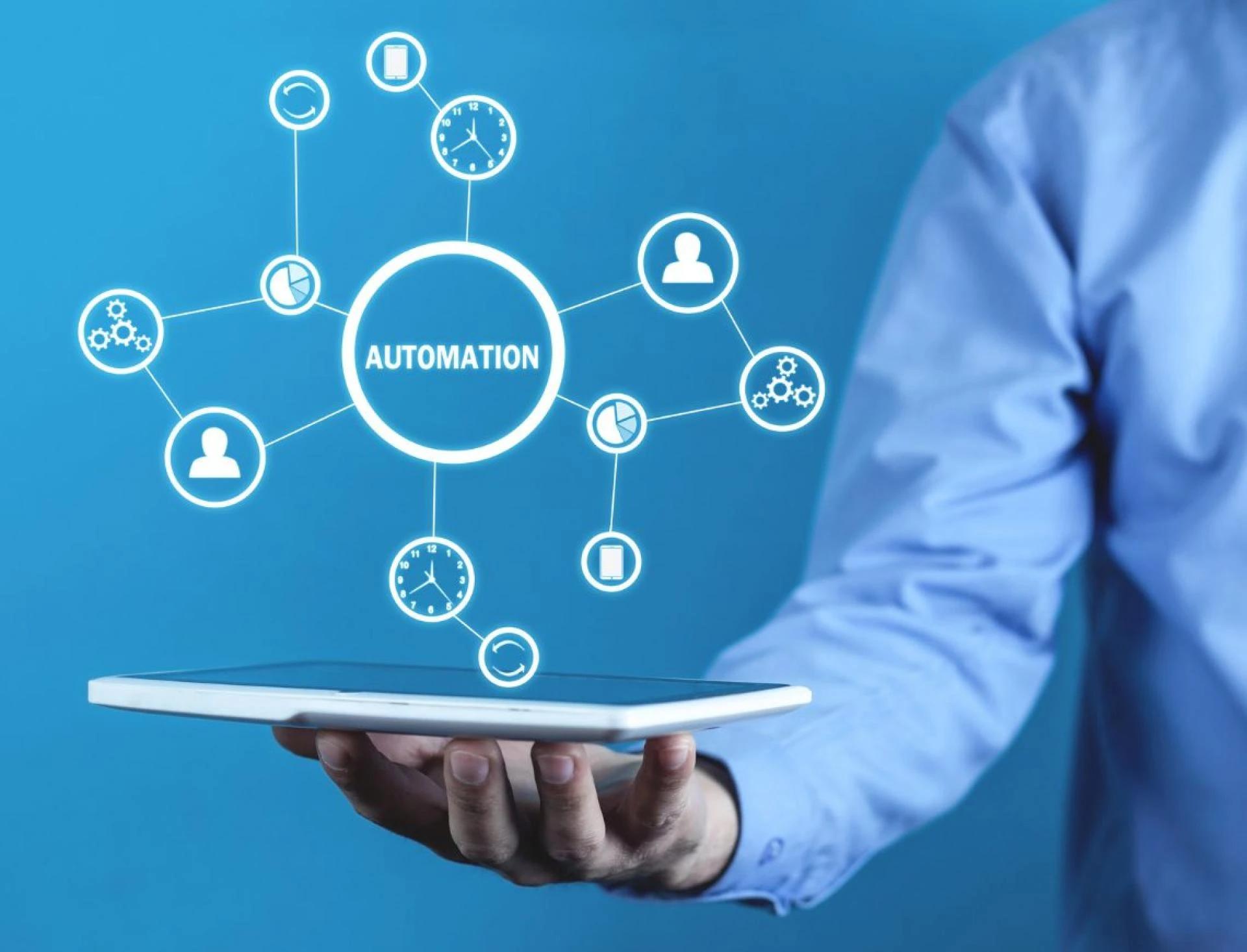

In today’s fast-moving digital landscape, businesses are no longer satisfied with basic automation. They are pursuing hyper automation, where every repetitive, manual process is optimized through intelligent technologies. At the heart of this revolution lie OCR (Optical Character Recognition) and ICR (Intelligent Character Recognition) platforms. These technologies are transforming how companies handle documents, data entry, and information management, forming the foundation of smart, automated workflows.
From document scanning and data extraction to intelligent classification and real-time analytics, OCR and ICR solutions help organizations minimize human effort, reduce errors, and accelerate decision-making. Whether it’s a financial institution processing thousands of invoices or a healthcare company digitizing patient records, OCR/ICR platforms are the silent engines driving hyper automation at scale.
What Is Hyper Automation and Why Does It Matter?
Hyper automation refers to the strategic use of multiple advanced technologies including AI, ML, RPA, and OCR/ICR to automate complex business processes end-to-end. Unlike traditional automation that targets specific tasks, hyper automation focuses on entire workflows, integrating systems, data, and decision-making processes seamlessly.
According to Gartner, hyper automation remains a top technology trend because it enables organizations to achieve higher productivity, operational agility, and accuracy. By combining OCR and ICR, businesses can digitize data previously locked in paper or image formats, fueling automation tools with structured, machine-readable information.
OCR vs. ICR: What’s the Difference?
To understand how OCR ICR platforms enable hyper automation, it’s important to distinguish between the two technologies:
- OCR (Optical Character Recognition): Converts printed or typed text from scanned documents, images, or PDFs into editable, searchable data. Example: Extracting text from invoices, receipts, or contracts.
- ICR (Intelligent Character Recognition): A more advanced version of OCR that reads and interprets handwritten text using AI-based pattern recognition. ICR continuously learns and improves accuracy, ideal for forms and handwritten applications.
Together, OCR and ICR make document automation intelligent capable of interpreting both printed and handwritten data across multiple document types.
How OCR ICR Platforms Power Document Automation
1. Converting Unstructured Data into Structured Insights
Most organizations still store critical data in paper documents, scanned images, or PDFs. OCR and ICR platforms automate data extraction and digitization, converting this unstructured content into structured formats like CSV or XML.
Example: An insurance company can use OCR to scan claim forms and automatically extract policy details eliminating manual entry and ensuring faster processing.
2. Seamless Integration Across Systems
Modern OCR ICR platforms integrate smoothly with RPA, ERP, CRM, and document management systems. Once data is captured, it flows effortlessly across these platforms, enabling end-to-end workflow automation.
For instance, OCR can capture invoice data, RPA bots validate it, AI systems approve it, and ERP tools process payments all with minimal human intervention.
3. Reducing Errors and Enhancing Compliance
Manual data handling often leads to transcription errors and compliance risks. OCR ICR solutions use validation algorithms and AI-based verification to ensure high accuracy. For regulated industries like healthcare or finance, this means improved efficiency while maintaining compliance with strict data regulations.
How OCR ICR Solutions Enable Hyper Automation Across Industries
1. Banking and Finance: Streamlining Document-Heavy Workflows
Banks process countless loan applications, KYC forms, and contracts daily. OCR and ICR help extract and validate this data automatically, reducing turnaround time. ICR can even read handwritten signatures or notes, while OCR handles structured printed data together, forming a hyper-automated pipeline that cuts processing time by up to 80%.
2. Healthcare: Revolutionizing Patient Data Management
Hospitals often manage handwritten medical records and lab reports. OCR and ICR digitize these documents and integrate them with Electronic Health Record (EHR) systems, resulting in faster data retrieval, accurate diagnoses, and better interdepartmental communication all critical to a hyper automated healthcare ecosystem.
3. Manufacturing and Logistics: Automating Supply Chain Documentation
OCR and ICR automate the handling of invoices, shipping labels, and inspection reports, providing real-time visibility into inventory, shipments, and payments. This enables faster operations, fewer bottlenecks, and better resource allocation throughout the supply chain.
Key Features of OCR ICR Platforms That Drive Hyper Automation
- AI-Powered Recognition: ICR leverages machine learning and neural networks to continuously improve recognition accuracy.
- Multi-Language and Format Support: Advanced OCR supports hundreds of languages and multiple file types, including images, scanned PDFs, and camera captures.
- Cloud-Based Accessibility: Cloud-native OCR ICR platforms allow remote document processing and easy integration with SaaS-based tools.
- Smart Document Classification: AI can automatically classify documents like invoices, contracts, or ID cards saving hours of manual sorting.
How to Implement OCR ICR for Hyper Automation
To make the most of OCR and ICR, organizations should take a structured approach:
- Identify document-heavy workflows such as invoice or claim processing.
- Choose platforms that integrate with existing ERP or RPA systems.
- Train AI models using real business documents for better recognition accuracy.
- Continuously validate, monitor, and refine outputs.
- Expand automation gradually across departments.
When done right, OCR ICR implementation can reduce manual workloads by up to 70%, improve processing speed, and free employees to focus on strategic, high-value work.
The Future of Hyper Automation with OCR and ICR
As AI advances, OCR and ICR are evolving into cognitive automation tools capable of understanding context and intent, not just text. Future versions will integrate Natural Language Processing (NLP) and predictive analytics, enabling smarter business insights and proactive decision-making.
Document automation is shifting from simple digitization to intelligent interpretation making it a core element of tomorrow’s hyper-automated enterprises. Companies adopting these technologies early will gain lasting advantages in speed, accuracy, and scalability.
Conclusion
OCR and ICR have evolved from basic text recognition tools to intelligent automation enablers driving digital transformation across industries. By bridging the gap between unstructured data and digital workflows, they empower organizations to achieve true hyper automation.
Businesses that invest in these platforms not only streamline operations but also future-proof their processes against growing data complexity. In the modern enterprise, OCR and ICR are no longer optional they’re fundamental building blocks of a smarter, faster, and more efficient digital future.

























Sign in to leave a comment.