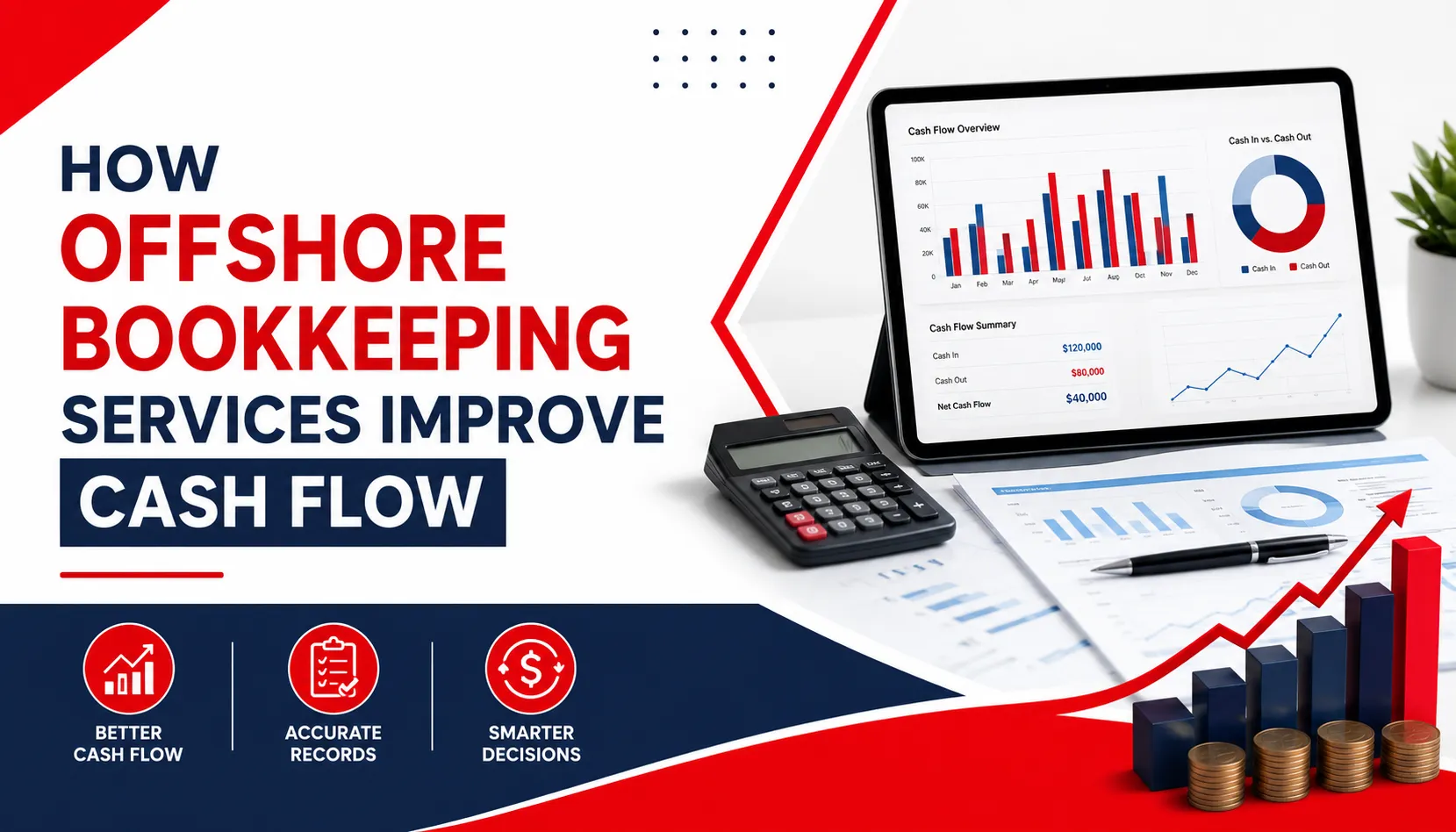

Cash flow rarely becomes a problem overnight. It usually slips in quietly through delayed payments, rising expenses, and inconsistent financial tracking until a business starts feeling the pressure of not having enough liquidity at the right time. What often separates stable businesses from struggling ones is not just revenue, but how well they manage timing and visibility of money movement. This is where offshore bookkeeping services play a crucial role by bringing structure, consistency, and clarity into financial operations that directly influence cash flow health.
Strengthening Cash Inflows Through Receivables Discipline
A strong cash flow starts with predictable inflows. However, many businesses struggle because payments from clients are not tracked or followed up systematically.
Key improvements include:
- Timely invoice generation and recording
- Automated or structured payment reminders
- Clear accounts receivable aging reports
- Faster identification of overdue payments
When receivables are actively managed, businesses stop losing money in delayed payment cycles. Instead of reacting to cash shortages, they begin to anticipate inflows with greater accuracy.
On a practical level, this means fewer surprises at month-end. Teams can see which clients are delaying payments and take early action. Over time, this improves liquidity and reduces dependence on credit lines or emergency funding.
Better Expense Control and Reduced Financial Leakages
Cash flow issues are not always caused by low income; often, they come from unnoticed or poorly tracked expenses. Small leaks in spending can grow into significant financial pressure.
Structured bookkeeping helps by:
- Categorizing every expense accurately
- Identifying duplicate or unnecessary charges
- Tracking recurring subscriptions and overheads
- Highlighting unusual spending patterns
Once expenses are clearly visible, decision-makers can take corrective action quickly. This might include cutting unused services, renegotiating vendor contracts, or reallocating budgets more efficiently.
The impact is gradual but powerful. Businesses begin to build healthier margins because money is no longer slipping away unnoticed. Over time, this improves the overall balance between income and outflow, strengthening cash reserves.
Improving Forecasting and Real-Time Financial Decisions
Cash flow becomes far more manageable when businesses can anticipate future financial movement instead of reacting to it. Accurate forecasting depends heavily on clean and up-to-date financial data.
Some key advantages include:
- Real-time visibility into income and expenses
- Identification of seasonal revenue trends
- Better planning for slow business cycles
- More accurate budgeting and resource allocation
With consistent bookkeeping, financial reports reflect what is actually happening in the business, not what was recorded weeks ago. This helps leadership make faster and more confident decisions, whether it’s delaying a non-essential expense or planning a new investment.
This is where offshore bookkeeping services often add strategic value beyond routine data entry. By maintaining continuous financial updates and reconciliations, they enable business owners to access reliable reports without delays. This improves decision-making speed, whether it involves managing payroll timing, adjusting vendor contracts, or planning investments.
Instead of relying on outdated monthly summaries, businesses gain a live financial picture that supports faster and more confident decisions.
Enhancing Scalability, Compliance, and Financial Stability
As businesses grow, financial operations become more complex. More transactions, multiple payment channels, and expanding teams can easily lead to confusion if systems are not structured.
Bookkeeping support helps by:
- Maintaining consistency across high transaction volumes
- Ensuring accurate reconciliation at scale
- Supporting tax compliance and audit readiness
- Reducing internal workload on finance teams
Scalability becomes smoother because financial systems are already in place. Businesses don’t need to constantly rebuild processes as they grow, they simply expand existing structures.
Compliance is another major advantage. Accurate records reduce the risk of reporting errors, penalties, and last-minute financial stress. It also improves credibility with investors, lenders, and stakeholders who rely on transparent financial data.
Bringing It All Together
Cash flow improvement is not the result of one major change, but a combination of small, consistent financial practices executed well over time. When receivables are tracked properly, expenses are controlled, forecasting becomes accurate, and financial records remain reliable, businesses naturally move toward stronger liquidity and stability.
Many organizations eventually realize that managing this level of detail internally can be time-consuming and resource-heavy. That is why they choose external financial support to maintain consistency without stretching internal teams.
If a business is looking to strengthen financial control and improve cash flow discipline, it can be practical to hire virtual bookkeeper support from trusted providers such as Zirtual, Pilot, or Invedus Outsourcing. The right setup doesn’t just manage numbers, it creates a financial system that supports long-term growth and stability.

























Sign in to leave a comment.