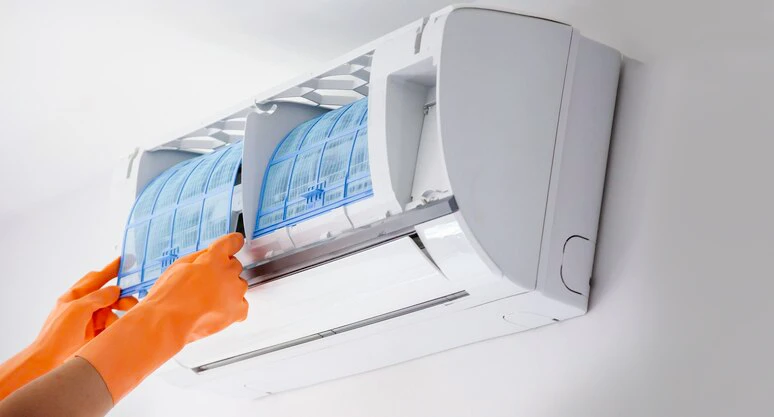

Is your AC running but barely cooling your home? A clogged filter might be silently driving up your energy bills and forcing your system to work overtime. In this guide, you'll learn exactly when to schedule air conditioner filter replacement, how to spot warning signs early, and expert tips to keep your system running efficiently all year long.
At AC Maintenance UAE, we've helped thousands of homeowners maintain their HVAC systems, and we're sharing our proven strategies with you.
What Is Air Conditioner Filter Replacement
Air conditioner filter replacement involves removing your old, dirt-filled filter and installing a fresh one to maintain proper airflow and cooling performance. This simple maintenance task ensures your AC runs efficiently while protecting internal components from dust and debris.
Why AC filters matter for airflow and cooling
Your home air filter acts as the first line of defense against airborne particles entering your HVAC system. When filters become clogged with dust, pet dander, and pollen, airflow becomes restricted, forcing your unit to work harder and consume more energy.
Clean filters ensure proper air circulation throughout your home. They also prevent dust buildup on evaporator coils and blower motors, which can lead to costly repairs down the line.
How Often Should You Replace Your AC Filter
Most homeowners should perform ac air filter replacement every 30-90 days depending on usage and environmental factors. Standard 1-inch filters typically need changing monthly, while thicker 4-inch filters can last up to three months.
Recommended replacement timeline for homes
For average households without pets, replace filters every 60-90 days. Homes with one pet should change filters every 60 days, while multiple pets require monthly replacement to maintain air quality.
If anyone in your household has allergies or asthma, consider monthly changes regardless of pet ownership. Vacation homes or units with minimal use can extend replacement to every 6-12 months.
Factors that affect replacement frequency
AC filter cleaning frequency depends on several variables. Homes in dusty environments or near construction sites accumulate debris faster and need more frequent attention.
Key factors include:
- Number of occupants – More people generate more airborne particles
- Pet ownership – Fur and dander clog filters rapidly
- Local air quality – Pollen, smog, and pollution impact filter life
- Season and usage – Filters work harder during peak cooling months
Running your AC constantly during summer means filters trap more particles daily. We recommend checking filters monthly and replacing them when they appear gray or clogged, even if it hasn't been 90 days.
Signs You Need to Replace Your AC Filter
Your AC system provides clear warning signals when filters need attention. Recognizing these signs early prevents system damage and keeps energy costs under control.
Weak or reduced airflow
If air barely flows from your vents despite the AC running at full blast, a clogged filter is likely restricting circulation. Hold your hand near supply vents—weak airflow indicates immediate AC filter change is needed.
Higher electricity bills
Sudden spikes in energy costs without increased usage often point to filter problems. Dirty filters force your system to run longer cycles, consuming significantly more electricity to achieve the same cooling results.
Dust buildup around vents
Visible dust accumulation on vent covers means particles are bypassing your filter. This indicates the filter is saturated and can no longer trap contaminants effectively, requiring prompt replacement.
AC Filter Replacement vs. Cleaning What's the Difference
Understanding when to clean versus replace saves money while maintaining system efficiency. Not all filters are designed for cleaning, and using the wrong approach can damage your HVAC system.
When cleaning is enough
Reusable filters with rigid frames can be vacuumed or washed every month. Remove the filter, vacuum both sides gently, then rinse with water if manufacturer instructions allow. Let it dry completely (usually 24 hours) before reinstalling.
Never wash disposable pleated filters. They're designed for single-use and will fall apart when exposed to water.
When full replacement is required
Disposable filters should be replaced, not cleaned. Once they appear gray or clogged, their filtration efficiency drops significantly and cleaning won't restore performance.
If your filter shows any tears, frame damage, or compressed pleats, replacement is mandatory. Damaged filters allow unfiltered air to bypass the media, defeating their purpose entirely.
DIY Guide How to Replace Your AC Filter
Performing your own air filter replacement cost just $5-30 per filter plus five minutes of your time. This simple task requires no special tools or technical knowledge.
Locating your AC filter
Most filters sit in one of three locations: inside the return air vent, in the blower compartment, or at the air handler unit. Look for a rectangular slot with a cover or access panel.
Check your owner's manual if you're unsure. Some systems have multiple filters throughout the ductwork that all require regular attention.
Step-by-step installation process
Follow these steps for proper installation:
- Turn off your AC at the thermostat to prevent unfiltered air circulation
- Remove the old filter by sliding it out of the track
- Note the airflow arrows on the filter frame showing correct direction
- Insert the new filter ensuring arrows point toward the blower motor
- Secure the access panel and restore power to your system
The entire process takes less than five minutes. Write the installation date on the filter frame to track replacement schedules easily.
Common mistakes to avoid
Never run your AC without a filter installed, even temporarily. Unfiltered air carries debris directly onto expensive components, causing premature failure and costly repairs.
Installing filters backwards blocks airflow severely. Always check directional arrows and ensure they point toward the air handler, not the return vent.
How Much Does Air Filter Replacement Cost
Budget-friendly maintenance doesn't have to break the bank. Understanding pricing helps you choose quality filters without overspending on unnecessary features.
Standard filter pricing
Basic fiberglass filters cost $1-5 each but offer minimal filtration. Mid-range pleated filters run $5-15 and provide better particle capture for most homes.
The air filter replacement cost annually ranges from $12-180 depending on filter type and replacement frequency. Buying multi-packs reduces per-unit costs significantly.
High-efficiency and HEPA filter costs
Premium HEPA filters range from $20-50 each and capture 99.97% of particles. These work best for severe allergy sufferers but may restrict airflow in systems not designed for high-efficiency media.
Electrostatic washable filters cost $40-100 upfront but last 5-8 years with proper cleaning. Calculate long-term savings versus disposable options based on your maintenance preferences.
Choosing the Best Air Filter for Your Home
Selecting the best air filter for home use balances filtration efficiency with airflow requirements. Higher ratings aren't always better if your system can't handle the restriction.
Understanding MERV ratings
MERV (Minimum Efficiency Reporting Value) scales from 1-16 measure particle capture ability. MERV 8-11 filters suit most residential applications, trapping dust, pollen, and mold spores effectively.
MERV 13+ filters capture bacteria and smoke but may reduce airflow in standard systems. Check your HVAC manual for maximum recommended MERV rating before upgrading.
Best filters for allergy sufferers
Allergy and asthma sufferers benefit from MERV 11-13 filters that capture smaller allergens. Look for pleated media with activated carbon to also remove odors and volatile organic compounds.
Consider upgrading to a 4-inch filter housing if space allows. Thicker filters provide more surface area, maintaining airflow while capturing more particles between changes.
Benefits of Regular AC Filter Replacement
Consistent maintenance delivers measurable improvements in comfort, efficiency, and equipment longevity. The small investment in filters prevents expensive repairs and premature system replacement.
Lower energy consumption
Clean filters reduce energy consumption by 5-15% compared to clogged ones. Your system achieves target temperatures faster using less electricity, directly lowering monthly utility bills.
Improved airflow means shorter run cycles and less wear on critical components. This efficiency compounds over time, saving hundreds annually on operating costs.
Fewer repairs and longer AC lifespan
Regular replacement prevents dust accumulation on evaporator coils and blower motors. These components run cooler and cleaner, dramatically reducing breakdown frequency and extending system life by 3-5 years.
Dirty filters cause frozen coils, compressor strain, and blower motor failure (repairs costing $200-2,000). Spending $50 annually on filters prevents thousands in emergency repairs and premature replacement.
Frequently Asked Questions About AC Filters
How long do AC filters typically last
Standard 1-inch filters last 30-90 days depending on usage and environment. Thicker 4-inch filters can last up to 6 months in average conditions. Check monthly and replace when visibly dirty.
Can I wash and reuse my air filter
Only washable electrostatic filters with rigid frames can be cleaned and reused. Disposable pleated filters must be replaced, as washing destroys their structure and filtration ability.
What happens if I never change my filter
Neglected filters cause system failure, frozen coils, drastically higher energy bills, and poor indoor air quality. Eventually, the blower motor or compressor will fail, requiring repairs costing $500-3,000.
Do more expensive filters work better
Higher-priced filters offer better filtration but must match your system's capabilities. MERV 8-11 filters balance performance and airflow for most homes without restricting circulation.
Should I change filters more often in summer
Yes, peak cooling season requires more frequent changes because your system runs constantly. Check filters monthly during summer and replace when they appear gray or restrict airflow.
Can a dirty filter cause my AC to freeze
Absolutely. Restricted airflow from clogged filters causes evaporator coils to freeze, blocking cooling entirely. This is one of the most common AC problems and is easily prevented with regular replacement.
Where can I buy replacement filters
Purchase filters at hardware stores, home improvement centers, or online retailers. Buying multi-packs reduces cost per filter. Always note your current filter's dimensions before shopping.
Do all filters fit all AC units
No. Filters come in standard sizes like 16x20x1 or 20x25x4 inches. Check your current filter's dimensions printed on the frame and purchase exact replacements for proper fit.
Final Thoughts on AC Filter Maintenance
Regular air conditioner filter replacement is the simplest way to protect your investment, reduce energy costs, and maintain healthy indoor air quality. By following manufacturer recommendations and watching for warning signs, you'll prevent costly repairs while keeping your home comfortable year-round.
Most homeowners can handle this essential maintenance task in minutes using basic tools. The small time investment delivers significant returns in system performance and longevity.
At AC Maintenance UAE, we're here to help you with all your HVAC needs. Now that you know how to maintain your AC filter properly, ready to keep your system running at peak performance? [Schedule Your Filter Replacement Today]



























Sign in to leave a comment.