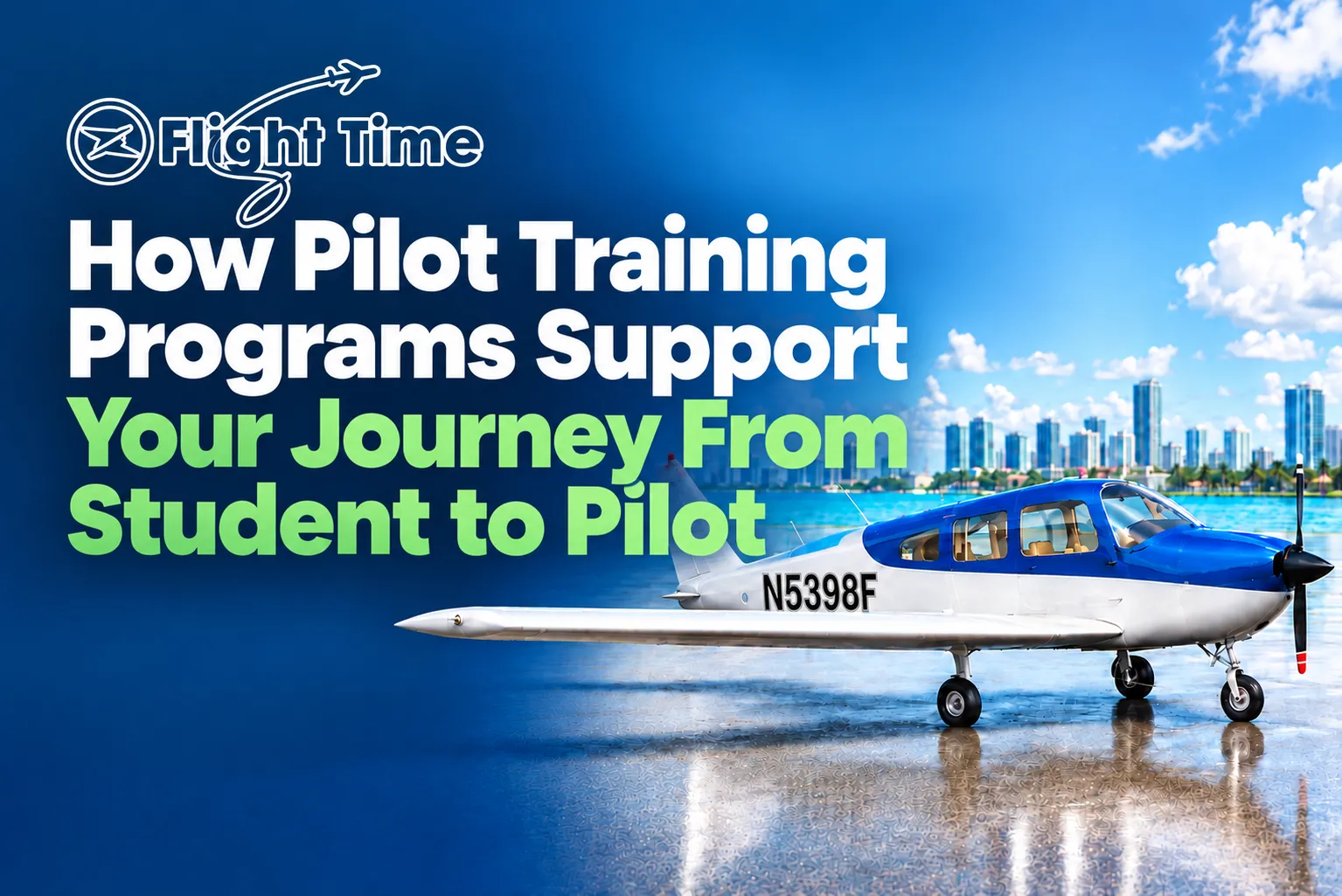

Nobody climbs into a cockpit on day one knowing how to fly. Most pilots remember their first lesson as a blur of checklists, radio calls they barely caught, and a calm hand on the controls that wasn't theirs. The road from that nervous first flight to an airline seat is long, and it rarely runs straight. Good pilot training programs exist to shorten that road and keep you from getting lost on it.
Below is how a well-built program carries you from student to working pilot, and what's worth checking before you commit to one.
It Starts With a Plan, Not Just Lessons
Booking lessons whenever your schedule and the weather happen to line up is the slow way to learn. Structured pilot training programs map out the whole path before you begin: private pilot certificate, instrument rating, commercial license, and often a multi-engine add-on or CFI certificate after that.
Seeing the sequence changes how you train. You stop treating the private checkride as a finish line and start building habits you'll lean on two ratings later. A tidy instrument scan, clean radio work, and sound decision-making all carry forward.
Consistency Is What Actually Makes You Better
Ask an instructor what slows students down, and you'll usually hear one word: gaps. Fly twice in a week, skip the next three, and your next lesson turns into a review session. Progress stalls, and your budget takes the hit.
Location matters more than most people expect. South Florida offers flyable weather nearly year-round, and training at a busy field like Fort Lauderdale Executive (KFXE) puts you in real airspace with real traffic from the start. Talking to a busy tower quickly becomes routine instead of intimidating.
The Stage Nobody Warns You About: Building Hours
This is the math that catches many new commercial pilots off guard. You finish your Commercial Pilot License with around 250 hours. The airlines want 1,500 for an ATP certificate. That 1,250-hour gap is where plenty of careers quietly stall.
The traditional fix is to become a flight instructor. It works, but slowly. Instructors can log only eight hours of flight training per day, a big share of their time goes to ground school, and they only fly when students actually show up. For most, that path takes two to three years.
A dedicated time-building program flips the equation. You fly the hours yourself, with no students to wait on and no daily teaching cap. At My Flight Time, pilots can fly up to 12 hours a day, seven days a week, and on that schedule the climb from 250 to 1,500 hours can take roughly six to nine months. That's the difference between interviewing next year and interviewing three years from now.
What to Look For in Time Building Florida Programs
Not all hours are equal, and neither are the operators selling them. If you're comparing Time Building Florida operators, a few details deserve a close look.
- Aircraft availability. Company-owned aircraft backed by an in-house maintenance team mean fewer flights cancelled while you wait on a mechanic.
- Transparent pricing. Published rates let you budget honestly. Single-engine hours at KFXE, for example, run $100 at the regular rate and drop to $60 on a 1,500-hour package, while multi-engine time in a Beechcraft Duchess falls as low as $160 an hour at volume.
- Choice of hours. Some pilots need single-engine time, others need multi-engine experience for airline minimums, and many want solo PIC hours to sharpen their judgment. The right program offers all of them.
- Help outside the cockpit. Housing and financing seem minor until you're relocating for months. Support with accommodations and payment options removes a surprising amount of stress.
Hours That Count for More Than the Logbook
Hours alone won't make you airline-ready; what you do with them does. Planning cross-country flights, working around coastal weather, and making your own go/no-go calls build the judgment interviewers look for. That variety is a big part of why Time Building Florida programs draw pilots from across the country.
One Team for the Whole Journey
There's real value in earning your ratings and building your hours with the same people. Your instructors already know how you fly, scheduling stays simple, and you skip the weeks lost to switching schools and getting checked out in unfamiliar aircraft.
The best pilot training programs understand that students aren't just buying lessons; they're investing in a career. Clear structure, steady flying, honest pricing and a focused path through hour building are what turn that investment into a job offer.
If you're ready to map out your next step, from your very first lesson to your final 1,000 hours, the team at My Flight Time in Fort Lauderdale can walk you through the options that fit your goals.






















Sign in to leave a comment.