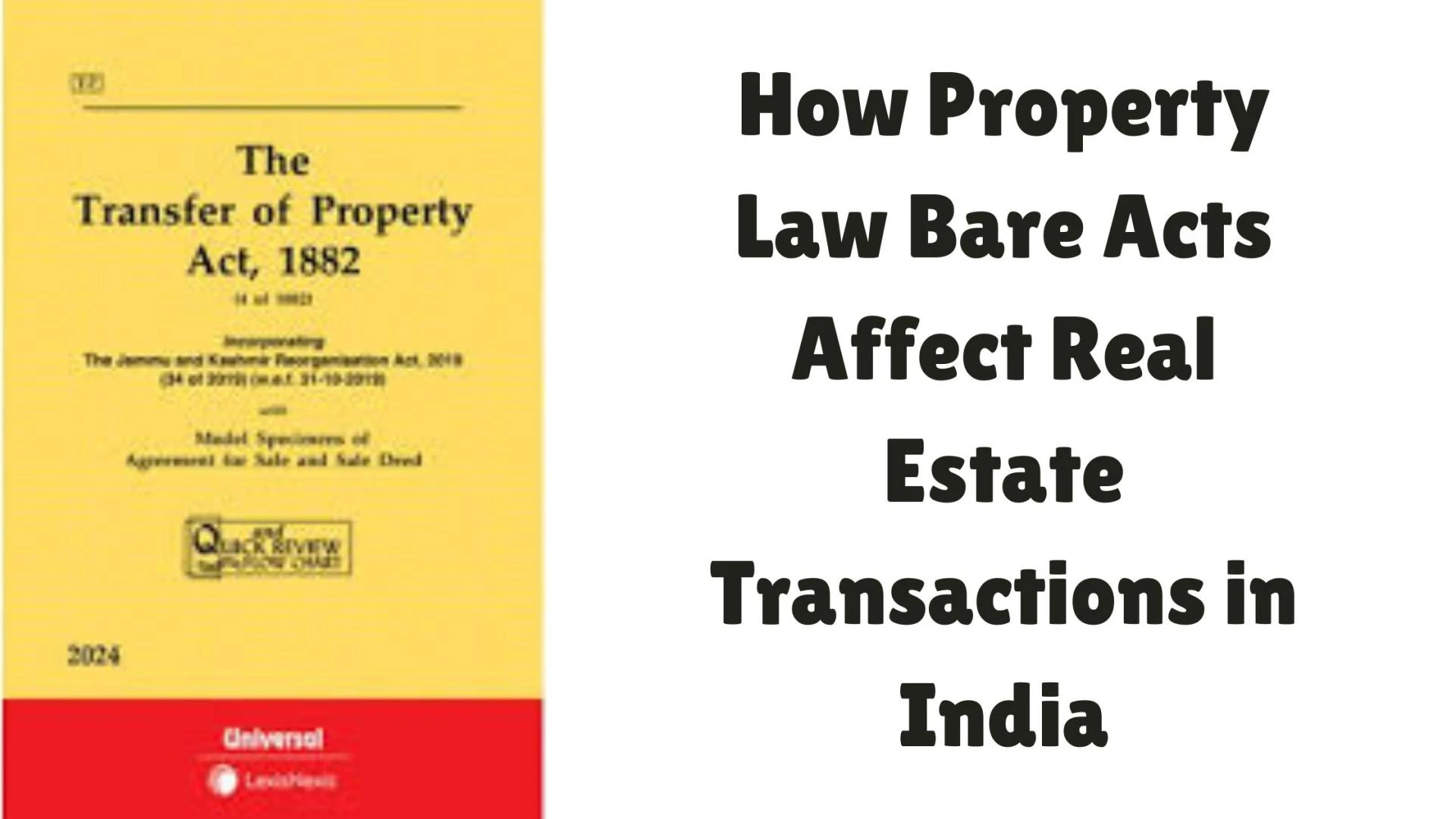

Real estate transactions in India are governed by a complex web of laws, and at the core of these are Property Law Bare Acts. These legal texts serve as the foundation for understanding and executing property-related dealings, ensuring transparency and adherence to statutory requirements. Whether you are a buyer, seller, or real estate professional, understanding how these Bare Acts impact transactions is essential.
In this blog, we explore the critical role Property Law Bare Acts play in real estate transactions in India, with insights from trusted resources like LexisNexis books.
What Are Property Law Bare Acts?
Property Law Bare Acts are unannotated versions of legal statutes that outline property-related rules and regulations in their purest form. Key legislations such as the Transfer of Property Act, 1882, Indian Registration Act, 1908, and Stamp Act, 1899 fall under this category. These laws address critical aspects of property transactions, including ownership, transfer, lease, mortgage, and registration.
Impact of Property Law Bare Acts on Real Estate Transactions
1. Defining Ownership Rights
Property Law Bare Acts establish clear guidelines on ownership rights. For instance, the Transfer of Property Act, 1882, lays out the legal framework for transferring property between individuals, ensuring that ownership is legally recognized and protected.
Example: A buyer can verify the seller's ownership using documents governed by these Bare Acts, reducing the risk of fraud.
2. Guidance on Property Registration
The Indian Registration Act, 1908, mandates the registration of certain transactions to make them legally valid. Bare Acts specify the procedures, timelines, and required documents for registration.
Impact: This ensures transparency in real estate transactions and protects buyers from future ownership disputes.
3. Regulating Payment of Stamp Duty
The Stamp Act, 1899, outlines the payment of stamp duty, a critical aspect of real estate transactions. Property Law Bare Acts provide clarity on how this duty is calculated and paid, ensuring compliance and avoiding legal penalties.
4. Clarity on Lease and Rental Agreements
For landlords and tenants, Property Law Bare Acts detail the rights and responsibilities of both parties. This is particularly important in urban areas where rental agreements often lead to disputes.
5. Resolving Disputes
Property Law Bare Acts serve as the primary reference for resolving legal disputes related to real estate. Courts rely on these laws to adjudicate issues such as breach of contract, ownership conflicts, or fraud in property transactions.
Why You Should Understand Property Law Bare Acts
- Prevent Fraud: Awareness of property laws helps you verify the authenticity of documents and avoid fraudulent transactions.
- Ensure Compliance: Adhering to legal requirements like stamp duty and registration protects your investment.
- Avoid Disputes: A clear understanding of ownership and transfer laws minimizes the risk of disputes.
Final Thoughts
Property Law Bare Acts are the backbone of real estate transactions in India. From ensuring ownership rights to streamlining registration and preventing disputes, they play a vital role in safeguarding the interests of all parties involved. For anyone navigating the real estate landscape, understanding these laws is not optional—it's essential.












Sign in to leave a comment.