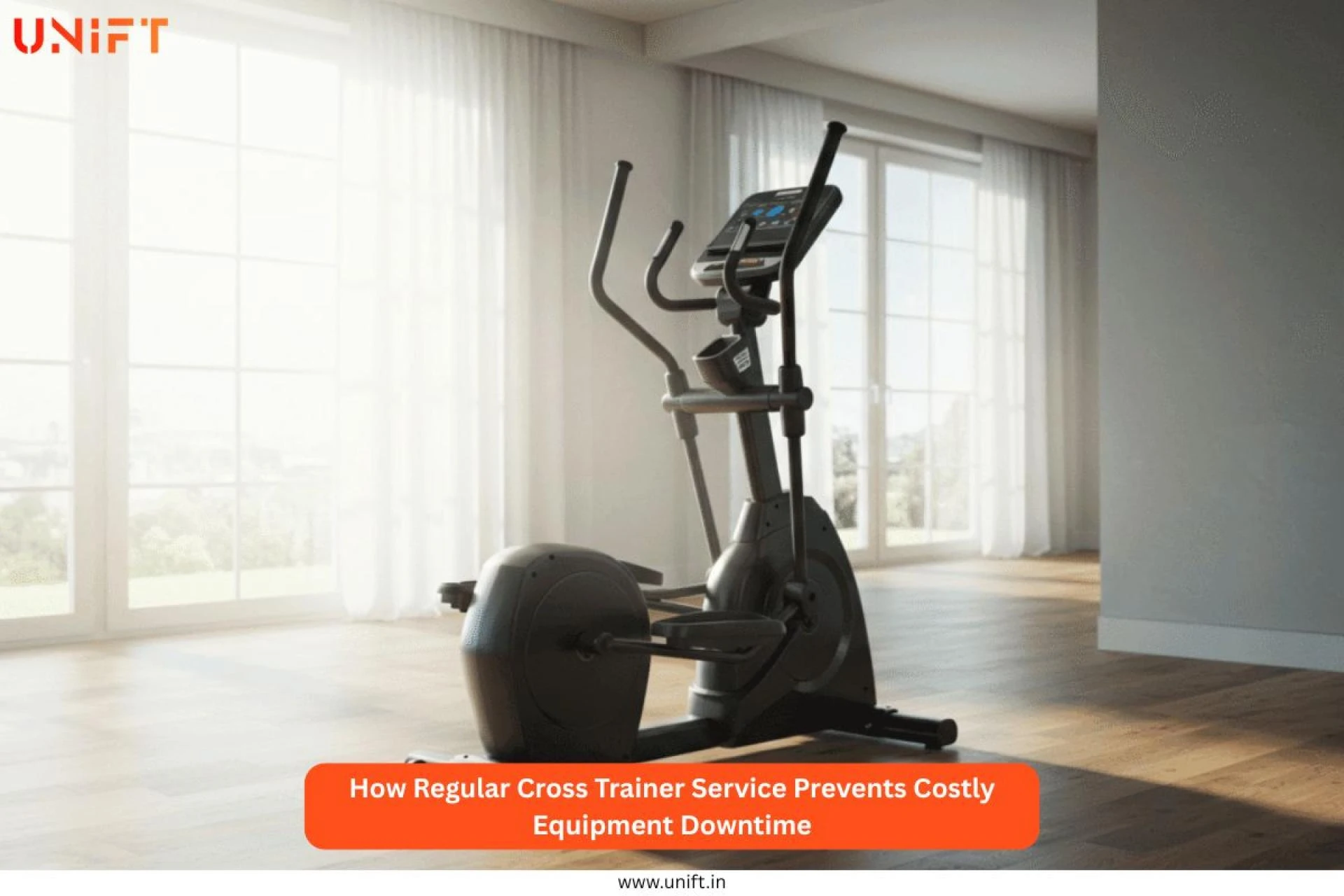

In the present fitness industry which experiences intense competition, equipment downtime creates negative effects that extend beyond its impact on workouts to decrease revenue and member satisfaction and damage brand reputation. Cross trainers rank as the most commonly utilized machines which users prefer in both commercial gyms and premium home equipment setups. UNIFT maintains that regular cross trainer maintenance functions as the primary method for preventing expensive equipment failures and guaranteeing constant equipment operation.
Why Cross Trainers Require Routine Servicing
Cross trainers combine moving arms, pedals, flywheels, resistance systems, and electronic consoles. Popular brands such as Precor and Life Fitness and NordicTrack develop advanced machines which maintain their durability through standard equipment maintenance procedures.
Continuous usage leads to:
- The bearings and belts experience wear and tear
- The bolts and joints undergo loosening activities.
- Electrical or console malfunctions
- Resistance system inconsistencies
- Noise and vibration issues
Without timely cross trainer service, minor issues escalate into major repairs, causing unexpected downtime.
The Real Cost of Equipment Downtime
When a cross trainer goes out of service, the impact is immediate:
- Members face inconvenience
- Gym traffic shifts to other machines, increasing wear
- Negative reviews or dissatisfaction may arise
- Emergency repair costs are higher than preventive maintenance
For commercial facilities, even a single non-functional machine can affect the overall workout experience.
How Regular Cross Trainer Service Prevents Breakdowns
At UNIFT, our preventive maintenance approach includes:
1. Mechanical Inspection
The inspection process involves testing moving components and lubrication systems and belt tension and alignment systems to find optimal solutions which will decrease friction and material damage.
2. Electrical & Console Testing
The testing process confirms that display panels and sensors and resistance controls operate according to their design specifications.
3. Safety & Stability Checks
The procedure involves tightening hardware components while testing frame stability to create an environment which prevents accidents.
4. Performance Calibration
The process establishes maximum resistance limits and stride movement patterns which enable users to perform their exercises.
Regular equipment maintenance helps detect minor problems at an early stage which enables technicians to resolve issues before they escalate into major equipment breakdowns or costly component replacements.
Routine servicing identifies small faults early—before they turn into expensive part replacements or complete system failures.
Benefits of Preventive Cross Trainer Service
- Extended equipment lifespan
- Reduced emergency repair costs
- Improved workout performance
- Enhanced member satisfaction
- Better return on investment
The implementation of a maintenance plan establishes predictable equipment downtime which stays within defined limits instead of generating unexpected interruptions.
Why Choose Professional Service?
DIY cleaning is helpful, but professional servicing ensures deep inspection and technical precision. Certified technicians understand brand-specific components and manufacturer guidelines, which help them protect warranties while maintaining performance standards.
At UNIFT, our goal is simple: keep your fitness equipment running safely, smoothly, and efficiently.
Frequently Asked Questions (FAQ)
Q1. How often should a cross trainer be serviced?
The recommended servicing schedule for commercial gyms requires maintenance every 3 to 4 months. Home users can schedule maintenance every 6 months, depending on usage.
Q2. What are early signs that a cross trainer needs service?
The need for equipment inspection arises when a device produces unusual sounds and experiences jerky movement as well as loose pedals and shows incorrect resistance and console errors.
Q3. Is preventive maintenance really cost-effective?
Yes. Preventive service costs much less than the expense of major repairs and required part replacements which result from equipment neglect.
Q4. Can regular service extend equipment life?
Absolutely. Proper lubrication, alignment, and timely part adjustments can add years to a machine’s lifespan.
Q5. Does professional servicing protect warranty coverage?
In many cases, yes. Following manufacturer-recommended maintenance schedules helps maintain warranty validity.
By investing in regular cross trainer service, you’re not just maintaining a machine—you’re protecting your fitness business and ensuring consistent workout experiences for every user.

























Sign in to leave a comment.