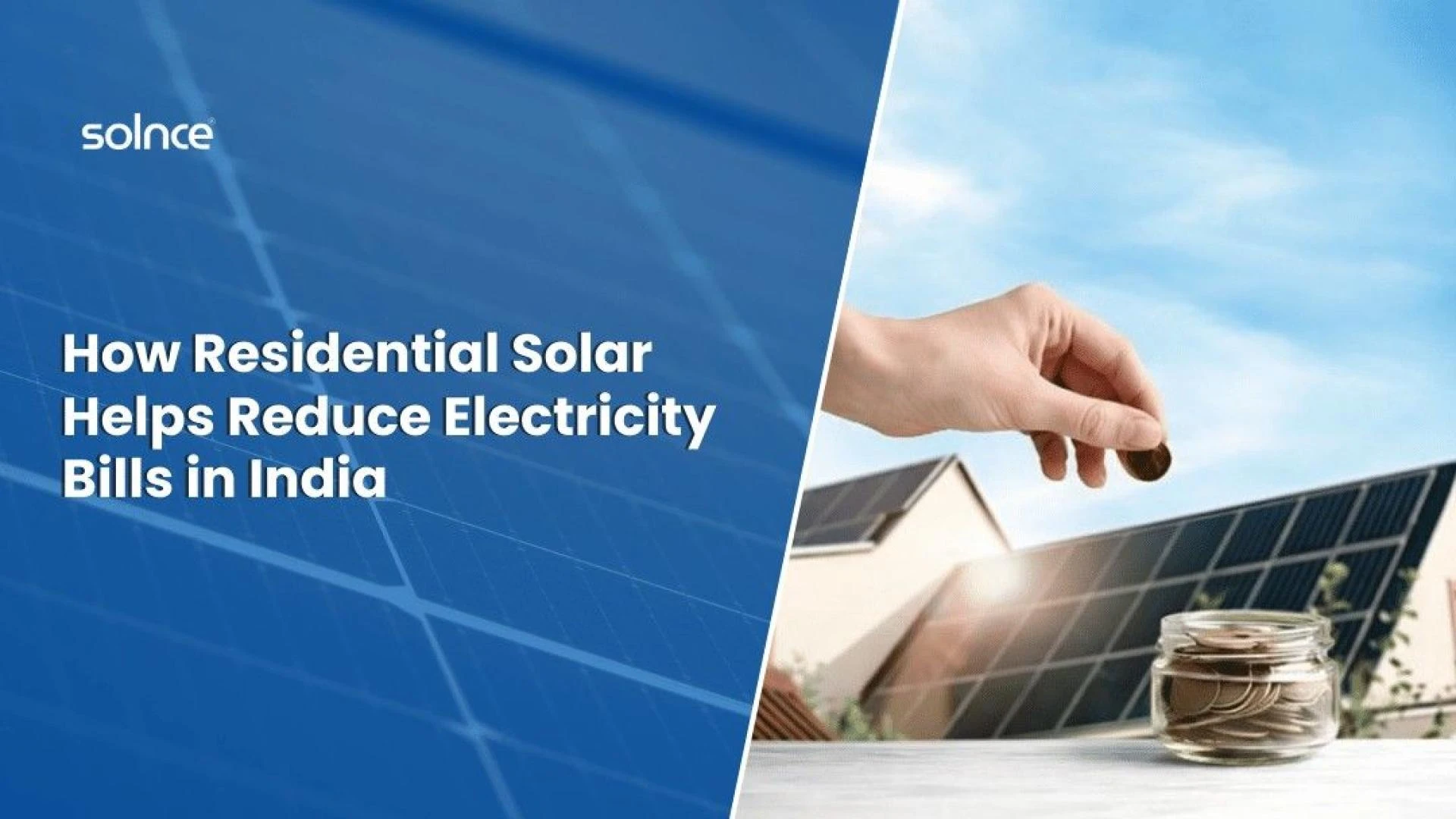

For most Indian households, managing electricity bills feels like a constant struggle. People switch off lights, limit air-conditioner usage, delay appliance upgrades, and still find their monthly bill refusing to come down in any meaningful way.
The problem is not careless usage. The real issue lies in how electricity is priced and consumed in India.
This is where residential solar panel has started changing the equation. Not by asking homeowners to compromise on comfort—but by giving them control over how their power is generated and used.
Why Electricity Bills in India Keep Increasing
Electricity pricing in India is not fixed. It depends on multiple factors that homeowners have no control over.
Most state electricity boards follow a slab-based tariff structure. This means the more units you consume, the higher the cost per unit becomes. Even a small increase in usage can push a household into a higher slab, resulting in a much bigger bill.
Seasonal demand plays another major role. During summers, refrigerators, air-conditioners, coolers, and fans run longer and harder. Unfortunately, this happens at the same time when electricity demand peaks and tariffs are already high.
On top of this, power tariffs are revised regularly. Even if your monthly consumption stays the same, your bill still increases year after year. For homeowners, this creates a never-ending cycle of rising costs with no real solution in sight.
What Residential Solar Is and How It Works
Residential solar involves installing solar panels on your rooftop to generate electricity using sunlight. These panels convert sunlight into usable power for your home.
During the daytime, your house first uses the electricity produced by the solar system. If the system generates more power than your home needs, the excess electricity is sent back to the grid through net metering.
At night or during low sunlight hours, your home automatically draws electricity from the grid, just like it always has.
The entire process is seamless and automatic. There is no need to change daily routines or sacrifice comfort. The system works quietly in the background, reducing your dependence on grid power.
How Residential Solar Cuts Electricity Bills Significantly
The biggest advantage of residential solar is reduced reliance on grid electricity. When your home generates its own power, the number of units you draw from the electricity board drops sharply.
Fewer units consumed means a lower bill.
Net metering amplifies these savings. Any surplus electricity your system exports to the grid is credited against your bill. These credits help balance out higher usage months, especially during summer.
In many Indian households, electricity bills reduce by 70 to 90 percent after installing solar. In some cases, homeowners only pay fixed charges, with energy charges becoming almost negligible.
Solar Performs Best When Bills Are Highest
An interesting advantage of residential solar is that it performs best during the same months when electricity bills hurt the most.
Summer months have longer days and stronger sunlight. Solar panels generate maximum power during this period, exactly when households use more electricity for cooling.
This natural alignment makes solar especially effective in Indian climatic conditions. As electricity consumption increases, solar generation increases as well—softening the impact on monthly bills.
Is Residential Solar Worth the Cost?
While residential solar does require an upfront investment, it should be viewed as a long-term financial asset rather than an expense.
Most residential solar systems in India recover their cost within four to six years. Solar panels typically last 25 years or more, allowing homeowners to enjoy decades of low or near-zero electricity bills after the payback period.
Government subsidies for rooftop solar further reduce the initial investment, depending on eligibility and system size. With EMI options and consistent monthly savings, solar has become accessible to a wide range of Indian households.
Perhaps the biggest financial benefit is protection against future tariff hikes. Once your solar system is installed, the cost of generating electricity remains largely fixed, even as grid electricity becomes more expensive over time.
Benefits Beyond Savings
Residential solar offers more than just financial relief.
It increases property value, reduces dependence on fossil fuel-based power, and lowers your home’s carbon footprint. For environmentally conscious homeowners, this adds an important layer of responsibility to the investment.
With optional battery or hybrid systems, solar can also provide backup power during outages—an important advantage in areas with frequent power cuts.
Why Homeowners Choose Solnce Energy
At Solnce Energy, the focus is on simplicity and reliability. Homeowners don’t want complexity—they want clear savings and dependable performance.
Solnce Energy helps homeowners select the right system size based on real consumption, manages net metering and subsidy processes, and delivers end-to-end installation and support.
Through a dedicated solar monitoring app, homeowners can track energy generation, savings, and system performance in real time.
The goal is not just to install solar panels, but to help households become more independent, informed, and confident about their energy usage.
Final Thoughts
Rising electricity bills in India are not a short-term problem—they are a long-term reality. Cutting usage alone rarely delivers meaningful savings.
Residential solar changes the equation by allowing homeowners to produce their own power, reduce dependence on the grid, and protect themselves from future price increases.
For Indian homes looking for lasting relief from rising electricity costs, residential solar is no longer just an option. It is a practical, future-ready solution—and one that continues to pay back year after year.
























Sign in to leave a comment.