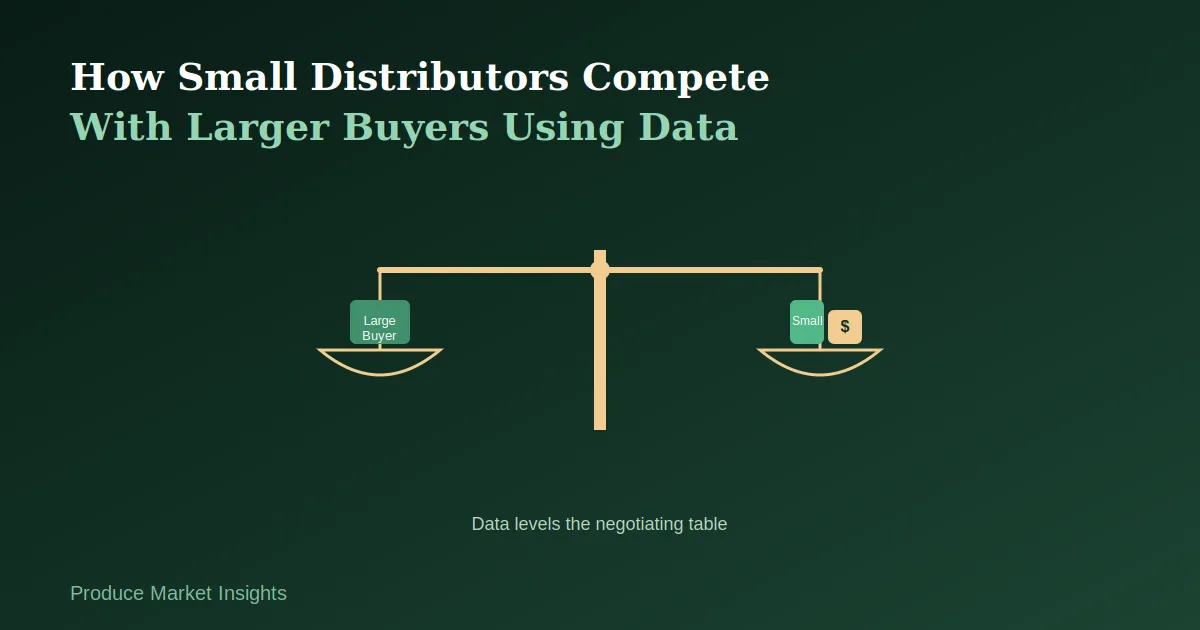

The Size Gap Feels Bigger Than It Actually Is
Small produce distributors often assume they're at a permanent disadvantage against larger buyers who have dedicated procurement teams, established relationships, and the negotiating leverage that comes with buying in bulk. In a lot of ways, that size gap is real. Larger buyers do get some advantages purely from scale.
But the gap isn't nearly as wide as it used to be, particularly when it comes to one specific area: access to market information. This is one of the few places where a small distributor can genuinely operate on close to equal footing with a much larger competitor.
Where the Playing Field Has Actually Leveled
A decade or two ago, large buyers had a real informational advantage. They could afford dedicated analysts, subscriptions to expensive data services, and staff whose entire job was tracking market conditions. Small distributors simply didn't have access to that level of insight, and it showed in their negotiating position.
That gap has narrowed considerably. Pricing platforms that were once priced for enterprise buyers have become far more accessible, meaning a small distributor working with a handful of employees can now access essentially the same current and historical pricing data that a much larger competitor uses.
Turning Data Into Actual Leverage
Having access to data is one thing. Using it effectively is another. Small distributors who make the most of this access tend to do a few specific things well.
They check pricing before every significant negotiation, not just occasionally. This consistency matters more than people expect. A large buyer's advantage often comes from having this information as a matter of routine, built into how they operate by default. Small distributors who build the same routine close that gap almost entirely.
They also use historical trends to anticipate price movements rather than just reacting to current numbers. This lets a smaller operation time purchases more strategically, buying ahead of anticipated price increases rather than always reacting after the fact.
Relationships Still Matter, Maybe More
One area where smaller distributors sometimes have a genuine edge over larger buyers is relationship depth. A small distributor working closely with a handful of key suppliers over years can build trust and flexibility that a large buyer, working through more transactional, high-volume relationships, doesn't always have access to.
Pairing that relationship depth with solid market data creates a real combination. The data gives you a fair, informed starting point. The relationship gives you room to negotiate terms that a larger, more transactional buyer might not be offered.
Where the Data Actually Comes From
For smaller distributors building this kind of data-informed approach, having a reliable, consistently updated source matters more than having the most sophisticated tool available. Simplicity and consistency tend to matter more than complexity for smaller operations without dedicated data teams.
Platforms like AgPlus, which track both current and historical produce pricing, give smaller distributors a straightforward way to build this habit without needing specialized training or a large budget to get started.
A Realistic Look at What Data Can and Can't Fix
It's worth being honest that data alone doesn't erase every disadvantage that comes with being smaller. Larger buyers will still sometimes get better bulk pricing purely because of volume, and that's simply a structural reality of the produce trade that data can't fully offset.
What data does is close the informational gap specifically, which turns out to be one of the more significant disadvantages small distributors used to face. Closing that particular gap doesn't make a small distributor as large as their bigger competitors, but it does mean they're negotiating from a position of genuine knowledge rather than guesswork.
Building the Habit Early
Distributors who build strong data habits early in their growth tend to carry that discipline forward as the business scales. It becomes part of how the operation works, rather than something bolted on later once the business is already large enough to justify a dedicated analyst.
The Real Advantage
The distributors who compete most effectively against larger buyers usually aren't trying to out-scale them. They're combining the relationship strength that comes naturally with being smaller and more attentive, with the same quality of market information that used to be exclusive to much bigger operations. That combination, more than size alone, is what actually determines how competitive a distributor can be over the long run.
























Sign in to leave a comment.