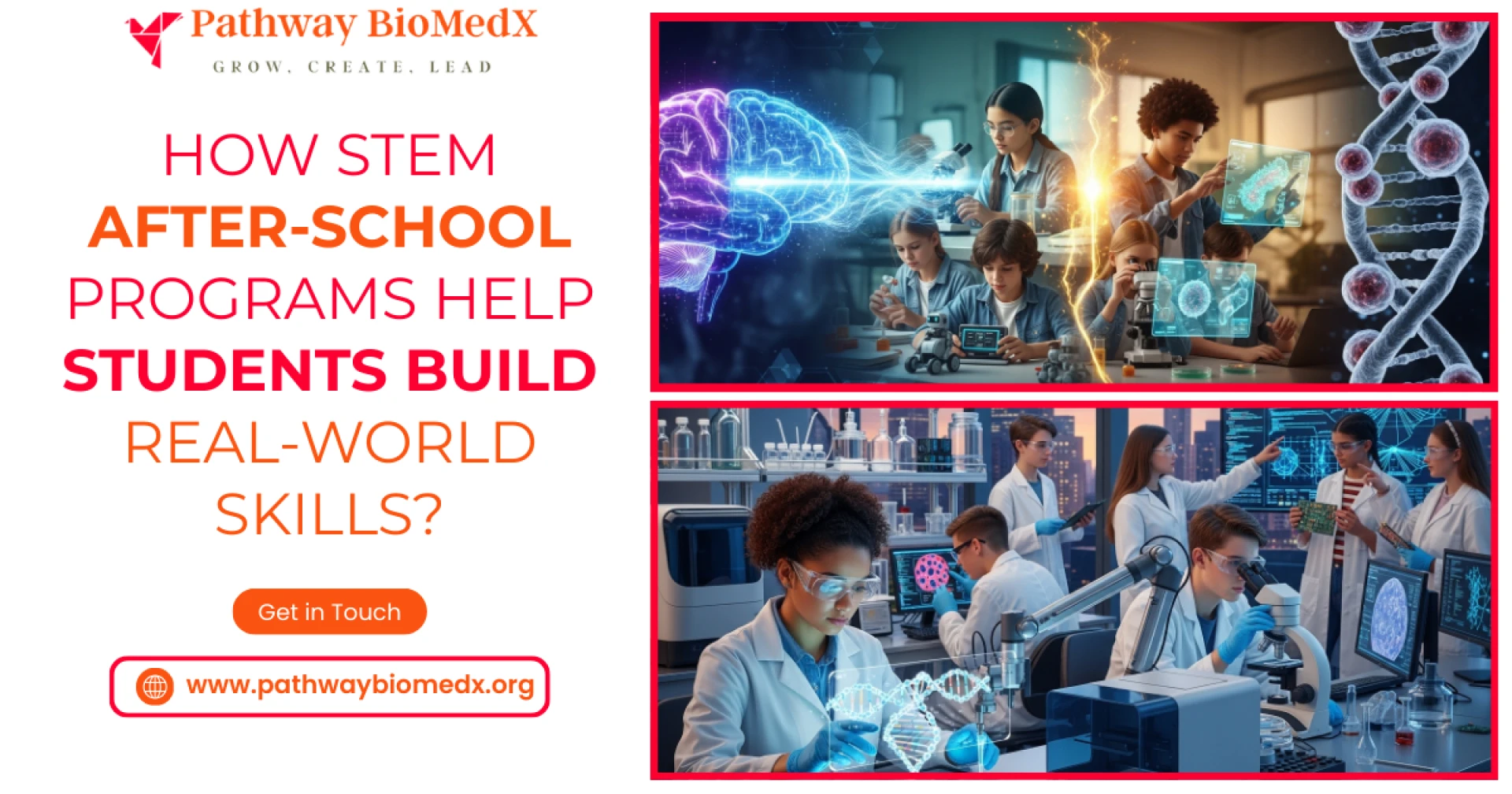

Children spend the majority of their time in desks, learning facts, and working with strict schedules. However, their brains do not simply switch off when the final bell sounds. As a matter of fact, those after-school hours are sometimes the only time that real interest can even breathe. It is natural that at that time parents would desire to do something fruitful, but the right balance between fun and developing the skill can be a big guessing game.
And that is why so many families are now resorting to a STEM after-school program to make a difference. These environments encourage kids to fiddle with things, fail, cooperate, and repeat themselves, rather than merely feeding them more papers to work. They borrow the concepts of abstract science and make them undoubtedly real so that students have a space to explore. This blog will explore the benefits of having students participate in after-school STEM programs so that they can acquire skills that are invaluable in the real world.
The Real Value of STEM After-School Programs
Let's be honest. Learning the periodic table by heart is a good thing, but it does not make a teenager know how to get out of a problem when he or she is in a hurry. Active learning does. Studies have repeatedly identified out-of-school activities in the field of science and technology as one of the most effective ways of expanding the capacity of a student in addressing problems that are not anticipated.
When kids build a robot or test a water filtration model, things will inevitably go wrong. A gear slips. A line of code breaks. A chemical reaction falls flat. That exact moment of failure is where the magic happens. They have to pause, communicate with their team, and pivot. That sort of dynamic is hardly common in an average, grades-oriented classroom, so it is no wonder that STEM after-school programs have become so essential in developing students over time.
Practical Skills That Transfer Anywhere
What exactly are they learning while messing around with wires, codes, and test tubes? It goes way beyond just learning how to program a computer or build a bridge.
- Resilience and grit- They learn that a failed experiment isn't a bad grade. It is just necessary data for the next attempt.
- Clear communication- You can have the brightest idea in the room, but if you cannot explain how your prototype works to your peers, it won't go far. Group projects force kids to verbalize their thought process.
- Collaborative problem-solving- In a hands-on lab environment, tasks are usually so complex that teamwork is physically required to cross the finish line.
- Career mapping- Suddenly, the math they hated in third period makes sense because it is the exact math needed to launch their model rocket.
Navigating STEM Education in Boston
Location is more important than you may think. To those families residing in or near the city, access to STEM education in Boston would represent an entirely new world of opportunity. Think about it. It is a huge center with the best hospitals in the world, the finest universities, as well as bustling biotech companies.
Thanks to this vibrant local ecosystem, students don't just learn in a vacuum. They are physically surrounded by the exact industries they are studying. Organizations like Pathway BioMedX lean heavily into this geographic advantage. They focus on giving aspiring future physicians, bioengineers, and scientists a space to experience hands-on mentoring right in their own backyard.
It is one thing to read about medical technology in a textbook. It is entirely another to be guided by mentors who actually work in the field and understand the local industry.
Checklist- Choosing the Right After-School Programs Near Me
So, you are ready to enroll your child. But how do you weed out the mediocre options? If you find yourself scrolling online for after-school programs near me, don't just pick the one with the shortest drive time.
Use this step-by-step checklist to vet your options properly-
- Check the curriculum style- Is it mostly hands-on doing, or just more listening? If it is lecture-heavy, walk away.
- Look for peer collaboration- Ensure the activities naturally require students to work in teams rather than just sitting at isolated computer screens.
- Ask about the mentors- Are the instructors purely supervisors, or do they have an actual background in science, tech, or engineering?
- Assess the "failure" culture- Ask the program director how they handle projects that don't work. The answer should focus on iteration, patience, and trying again.
- Track long-term engagement- Look for setups that build skills over weeks or months, rather than isolated, one-off daily activities that kids forget by tomorrow.
It is important to remember that the best STEM after-school programs will always feel a little messy and chaotic in the best way possible.
Exploring AI & Bioengineering After-School Programs
We are way past the era of building baking soda volcanoes. The landscape is shifting rapidly toward highly interdisciplinary fields. That is exactly why AI and bioengineering after-school programs are starting to pop up on the radar for forward-thinking parents and educators.
These are the unique spaces where biology meets data, and where engineering meets healthcare. Pathway BioMedX is actively building out this kind of specialized environment, aiming to prep students for careers that might not even fully exist yet.
Getting kids comfortable with artificial intelligence or bio-tools now means they won't be intimidated by them when they hit college. They learn to view technology as a tool to solve human problems, rather than just magic happening inside a screen.
Final Words
Ultimately, the goal is not to turn every single child into a Silicon Valley programmer or a lab researcher. It is about equipping them with the mental flexibility to thrive wherever they eventually decide to go. High-quality STEM after-school programs provide the perfect sandbox for building resilience, teamwork, and critical thinking.
If you want to give your child a genuine head start in a supportive, future-focused environment, explore what Pathway BioMedX has to offer. Check out their website and get more information today!
FAQs
What age is best to start STEM activities?
Kids can start basic STEM concepts as early as preschool with simple building blocks and nature observation. However, structured, project-based after-school programs usually become highly beneficial around late elementary and middle school when kids can handle complex teamwork.
Are these programs only for kids who excel at math?
Absolutely not. These environments are designed for curiosity, not perfection. Many students who struggle with traditional textbook math actually thrive in hands-on programs because they can physically see how the numbers apply to a real-world project.
What is the difference between school science and after-school STEM?
School science often focuses on standardized testing and memorizing established facts. After-school STEM is heavily project-based, focusing on trial, error, design, and discovering solutions without the pressure of a strict grading rubric.
How do these programs help with college applications?
Universities love seeing long-term commitment to extracurriculars that build hard skills. Participating in an advanced program shows admissions officers that a student is proactive, capable of teamwork, and deeply interested in their chosen field.
Does Pathway BioMedX offer mentorship?
Yes. Pathway BioMedX focuses strongly on connecting students with experienced mentors, helping guide aspiring bioengineers, scientists, and healthcare professionals through experiential learning and real-world advice.







Sign in to leave a comment.