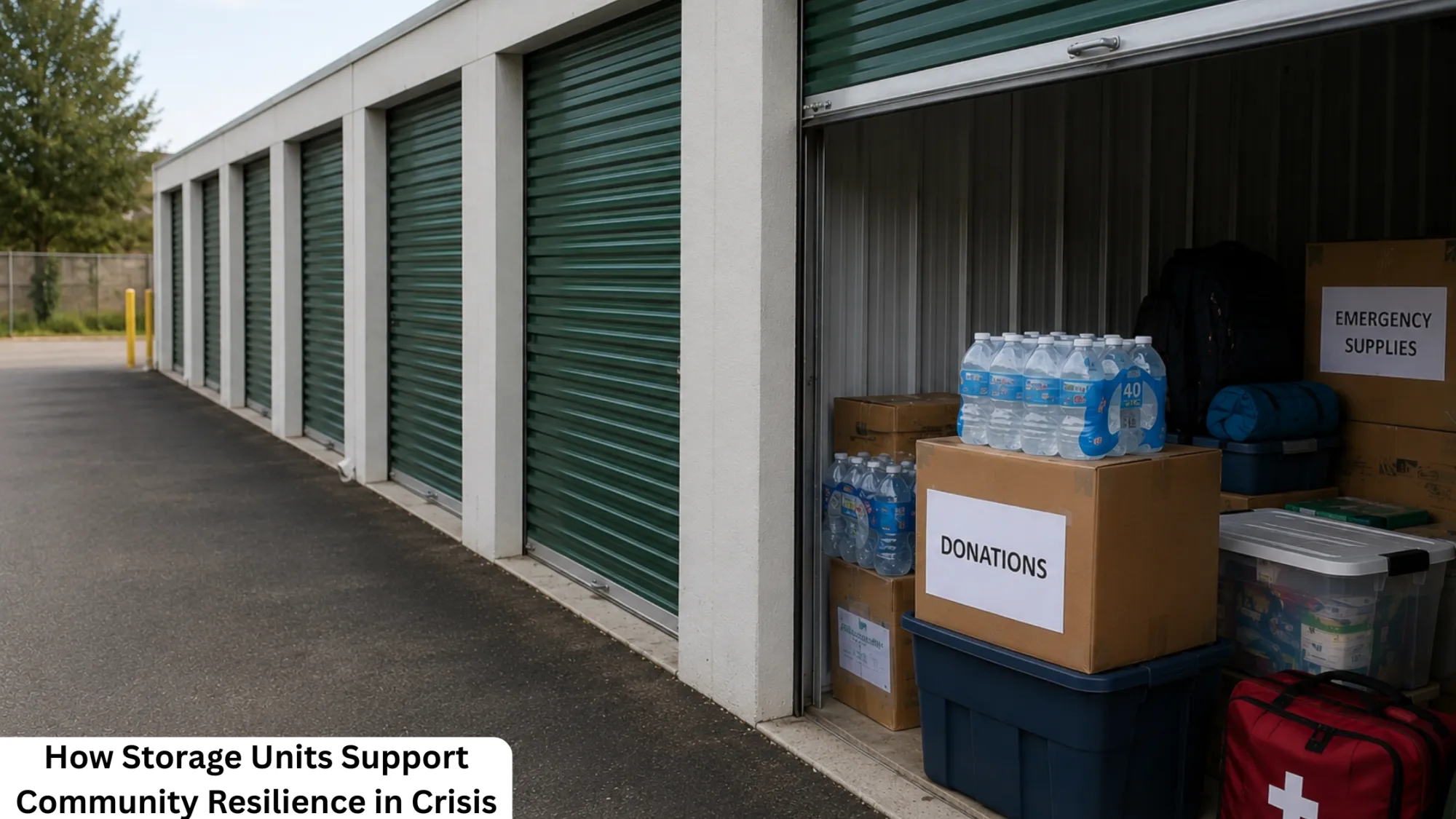

After a natural disaster, public concern is focused on emergency responders and available relief funding. However, an enormous, largely unseen obstacle remains for all recovery efforts: logistics. Where can we store thousands of cases of water, medical supplies, and rescue tools when municipal buildings are flooded or lack power?
How can local businesses safeguard their supplies? How do families protect their important belongings when they are ordered to evacuate?
Even before natural disasters strike, the proactive leaders of the community, such as city leaders, business owners, and families, have a different perspective on community infrastructure. Where a neighborhood storage facility is thought of as an option for personal logistics, like moving and downsizing, these spaces serve a bigger civic purpose in a time of need.
In highly severe weather coastal regions, safely storing your belongings can mean the difference in preservation for both you and the community. Finding reliable, cheap storage units in Corpus Christi makes what would be an ordinary business in the community an extraordinary resource for the survival of the community.
In the face of emergencies, storage units become decentralized logistical hubs that protect critical community resources, stabilize the local economy, and greatly enhance the speed of recovery for the community.
Establishing the Logistical High Ground
The situation after a severe weather event like a storm, flood, or tornado is usually very hectic and disorganized. If government buildings or community centers suffer from structural damage, some grassroots relief efforts may be suspended. In this situation, having a self storage unit in a strategic location is incredibly valuable for first responders and relief efforts.
Modern self-storage facilities are built to withstand the elements using heavy-duty masonry construction and wind-rated steel doors. Their design features like drive-up accessibility provide a perfect staging area for disaster relief logistics. Instead of blocking patient transfer routes to the emergency department or obstructing access lanes to the hospital, self-storage units in a central location allow nonprofits to collect, organize, and distribute donated relief items like blankets, food, and water.
Also, local search and rescue teams often use storage units outside the impacted area to store equipment like gear, chainsaws, and safety equipment. This provides an organized, dry, and easily accessible, ready-to-use transportation solution for tools stored in an impacted area.
Decentralizing the Supply Chain: Storing Emergency Supplies Offsite
Centralization of emergency storage plans is a major flaw in most city emergency response policies. For example, if a city stores all of its backup emergency equipment like generators and stretchers in one downtown warehouse, then a localized disruption of a main access route or collapse of the warehouse will completely disrupt the city's emergency response operations. True community resilience needs to diversify and reduce risk by storing emergency supplies in multiple secure locations.
The Proactive Prep Strategy
Keeping a backup unit active is an insurance policy for neighborhood association leaders and community volunteers. Protected bulk supply items are emergency-prepared supplies that go in an offsite storage unit. Self-storage allows families to keep emergency supplies like rations, water purification systems, communication devices, and emergency blankets that are away from the hazardous zones of the home.
When homes are damaged or threatened by the elements (flooding, falling trees, etc.), an offsite storage unit can protect these essential items.
Why Climate Control Matters
When protecting vital supplies, the temperature can be just as damaging as a breached unit. For the protection of vital supplies, the use of climate-controlled storage is essential. Basic medical supplies, electronic communication equipment, clothing, and backup solar batteries all sensitive supplies can be ruined by extreme heat and stagnant humidity.
It is essential to keep these items in a climate-controlled environment to guarantee operation and functionality when needed most.
Protecting Local Economies: Safeguarding Business Assets
Small businesses stock the core of a community’s recovery. Losing the baseline stock of a community supply store, pharmacy, or hardware store greatly damages the physical and economic recovery of the community. Without the local lumber yard, roofs cannot be repaired. Without the local pharmacy, health crises cannot be addressed.
After a disaster, loss of business assets has an ongoing negative impact on the local economy. One of the steps business owners can take to avoid this outcome is to relocate core business assets to a secure building on higher land before an expected severe storm impacts the area.
Those core business assets include the business computer servers, financial records, paper files that have business history, and inventory. Before the impacted area has been fully rehabilitated, the secured business assets can serve as a temporary base camp for tradespeople who are critical to the rehabilitation efforts. During storm aftermaths, tradespeople like electricians and plumbers need a secure area to store their supplies.
While businesses use this strategy during an emergency, they also use it during an ordinary activity like a home renovation. Renovating a house property can be done simultaneously with the use of self-storage to keep household items and assets secure, clean, and easily accessible.
Storage Facilities and Disaster Preparedness
Not every storage facility is the same. For community organizers, small business owners, and families searching for self-storage during a local disaster recovery, it is important to check out the top security features to look for in a self-storage facility before signing a lease agreement.
Some facilities may not be able to withstand a disaster and can actually pose risks. When evaluating facilities for disaster preparedness, these key features should be present.
High-Elevation Zoning: The location of the facility should be completely outside of areas prone to flooding. A high-elevation location means the facility will not have water seeping under the roll-up door.
24/7 Accessible Storage Units: Emergencies happen at any time throughout the day and night. When the power goes out in your town, you should be able to get to your storage. Look for facilities with access controlled by a solar array or a commercial generator.
Disaster-Resistant Storage Facilities: Facilities with steel-reinforced concrete construction withstand the elements better than wooden alternatives. Choose those for your safety.
Self-Contained Security Loops: Look for facilities with advanced digital video monitoring systems, alarms, and independent battery backup systems for security during power failure.
Building a More Resilient Tomorrow
Active community participation and emergency resilience require multi-layered planning and logistics. Rather than considering community storage networks as simple real estate conveniences, consider them as community safes or lifelines.
Our homes and community storage networks are the first defense against public infrastructures that have been compromised. When you book storage with tight security, you preserve the livelihood of those in your community.
If you want to strengthen your family or business against the unknown, protect your assets by reserving storage rental units now to ensure you are prepared.






















Sign in to leave a comment.