

Selecting industrial material handling equipment is not simply a one-time purchasing decision. Manufacturing facilities depend on hoppers, carts, containers, funnels, and other equipment for repeated material movement, scrap collection, and production support. The equipment needs to remain reliable throughout its service life, which makes supplier support an important part of the overall investment.
A reliable chip hopper supplier can provide more than a product catalogue and a purchase transaction. Technical guidance, equipment information, customization support, replacement components, and responsive communication can all influence how effectively material handling equipment performs over time.
When businesses evaluate suppliers, they should consider both the quality of the equipment and the level of support available before and after the sale.
Helping Businesses Select the Right Equipment
One of the most important roles of a supplier is helping customers select equipment that matches their application. Industrial facilities can have very different requirements depending on the type, weight, and volume of materials they handle.
A machine shop generating large quantities of metal chips may need high-capacity equipment with durable construction, while a smaller operation may prioritize compact dimensions and easy mobility.
An experienced chip hopper supplier can help businesses understand specifications such as load capacity, dimensions, construction, mobility, dumping mechanisms, and drainage capabilities. Selecting equipment based on actual operating requirements can reduce the risk of purchasing a product that is unsuitable for the application.
Understanding Application-Specific Requirements
Industrial material handling equipment often operates within a larger production workflow. A hopper may need to fit beneath a machine, move through a particular aisle, work with a forklift, or discharge material into another collection system.
Understanding these requirements before purchase can help ensure better equipment integration. Suppliers that take time to understand the customer's application can provide more useful recommendations.
This type of support is particularly valuable when standard equipment does not perfectly match the facility's layout or material handling process.
Supporting Equipment Customization
Manufacturing facilities sometimes require equipment with specific dimensions, capacities, finishes, or handling features. Customization can help businesses adapt material handling equipment to their existing production environment.
A supplier with experience in industrial fabrication may be able to discuss available modifications and determine which options are practical for the intended application.
Customization should focus on solving genuine operational challenges. The objective is to create equipment that fits the workflow while maintaining durability and ease of use.
Providing Technical Information
Clear technical information helps businesses make informed purchasing decisions. Specifications such as dimensions, load ratings, material construction, wheel configuration, lifting capabilities, and finish options can influence how equipment performs.
A knowledgeable supplier should be able to explain these specifications and clarify how they relate to the intended application.
Access to accurate product information also becomes useful when equipment is being integrated with forklifts, conveyors, CNC machines, recycling systems, or other industrial material handling equipment.
Reducing Installation and Integration Challenges
Industrial equipment may need to work alongside existing machinery and processes. If the equipment is poorly matched to the facility, employees may need to develop inefficient workarounds.
Supplier guidance can help businesses understand how equipment should be positioned, transported, loaded, and unloaded. This can make integration smoother and reduce unnecessary adjustments after purchase.
When collection equipment fits naturally into the existing workflow, employees can use it more effectively and businesses can obtain greater value from the investment.
Supporting Maintenance Over the Equipment's Life
Even durable industrial equipment requires routine inspection and maintenance. Components exposed to heavy loads, repeated movement, impact, moisture, or abrasive materials may eventually require attention.
Supplier support can make it easier to identify replacement components and understand maintenance requirements. Clear documentation can also help facility teams establish appropriate inspection routines.
Working with a dependable chip hopper supplier can therefore provide value well beyond the original purchase by helping businesses maintain equipment throughout its expected service life.
Improving Equipment Reliability
Equipment reliability directly affects production efficiency. If a collection container frequently requires repairs or becomes unavailable, employees may need to use temporary alternatives that disrupt normal workflows.
Reliable construction is the first consideration, but supplier support can also contribute to reliability by helping businesses select equipment correctly and address issues promptly.
A supplier that understands industrial applications can provide guidance when operating requirements change or when equipment needs to be adapted for new processes.
Supporting Future Expansion
Manufacturing facilities rarely remain unchanged. Production volumes can increase, new machines may be added, and layouts can evolve as businesses grow.
Supplier relationships can become particularly valuable during these changes. A supplier familiar with a customer's equipment requirements may be able to help identify additional units or configurations that complement existing systems.
This can simplify expansion while maintaining consistency across the production floor.
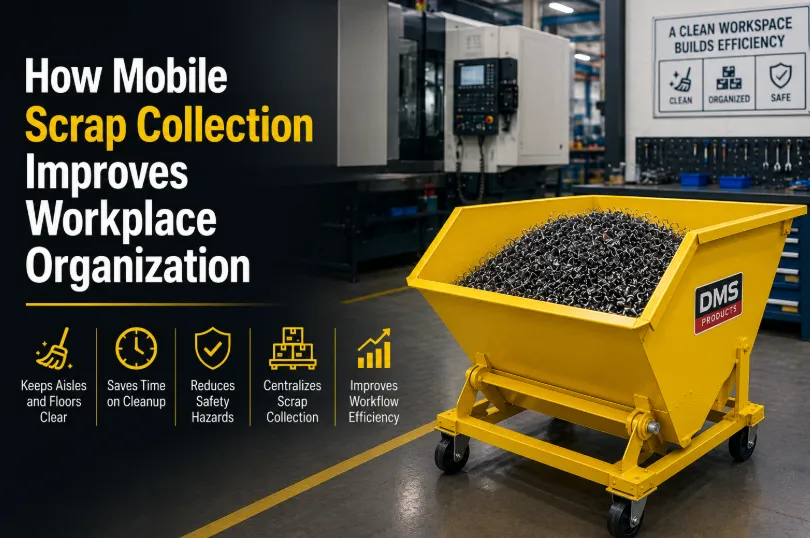
DMS Products provides industrial material handling solutions designed to support manufacturing, machining, scrap collection, and material movement applications.
Considering Total Cost of Ownership
The initial purchase price is only one component of equipment value. Businesses should also consider maintenance, repairs, replacement requirements, labour, downtime, and expected service life.
Equipment that costs slightly more initially may provide better long-term value if it lasts longer, requires less maintenance, and integrates efficiently into existing workflows.
Supplier support can influence these factors by helping businesses make appropriate equipment selections and maintain products effectively.
Evaluating Supplier Responsiveness
Communication is especially important when purchasing industrial equipment. Businesses may have questions about specifications, delivery, customization, replacement parts, or operating requirements.
A responsive supplier can help resolve these questions efficiently and reduce delays. Clear communication also helps establish realistic expectations about equipment capabilities and support.
When evaluating a chip hopper supplier, businesses should consider how effectively the supplier communicates throughout the purchasing process rather than focusing solely on product pricing.
Building a Long-Term Equipment Relationship
The relationship between a manufacturer and supplier can influence the long-term success of an equipment investment. A supplier that provides consistent technical information, application guidance, customization assistance, and ongoing support can become a valuable resource as operational requirements evolve.
This is particularly important for businesses that use material handling equipment continuously and depend on reliable scrap collection and transportation.
Making Supplier Support Part of the Purchasing Decision
Choosing industrial equipment based only on price can overlook important factors that influence long-term performance. Supplier expertise, responsiveness, technical support, maintenance assistance, and customization capabilities can all contribute to the total value of the equipment.
A dependable chip hopper supplier can help businesses select suitable equipment, integrate it into existing workflows, and maintain its performance over time.
For manufacturers, investing in a strong supplier relationship can ultimately support better equipment utilization, reduced operational interruptions, and more predictable maintenance. By considering supplier support alongside product quality and specifications, businesses can make more confident purchasing decisions and gain greater long-term value from their material handling equipment.























Sign in to leave a comment.