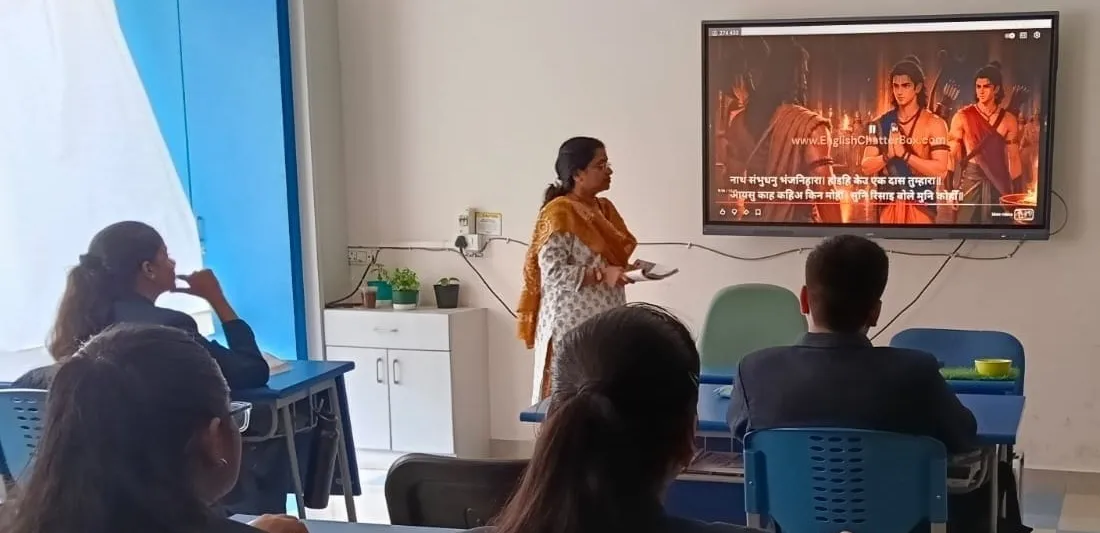


Technology is changing the way students learn, explore ideas and communicate what they understand. But effective technology-enabled education is not simply about putting more devices into classrooms.
The real value of technology comes from how thoughtfully it is integrated into teaching and learning.
Digital resources can make difficult concepts easier to understand, provide additional opportunities for practice and research, and encourage students to create, collaborate and communicate. When combined with teacher guidance and meaningful classroom activities, technology can become a useful support for student learning.
How Does Technology Improve Learning?
Technology can support learning by making lessons more interactive and giving students access to different ways of exploring a topic.
Instead of depending only on textbooks, students may use visual resources, presentations, educational videos, digital research materials and interactive activities to develop a deeper understanding of concepts.
Technology-supported learning can also help students develop skills such as:
- Digital literacy
- Creativity
- Critical thinking
- Communication
- Collaboration
- Research
- Presentation
- Independent learning
However, technology itself does not automatically improve learning. Its effectiveness depends on whether it is connected to clear learning objectives and used appropriately.
Making Classroom Learning More Interactive
Some concepts can be difficult to understand through written explanations alone.
Visual demonstrations, animations, educational videos and interactive resources can help students visualise ideas that may otherwise seem abstract.
For example, concepts in Science and Mathematics can sometimes be supported through visual explanations and demonstrations. Geography can benefit from digital maps and multimedia resources, while presentations and digital activities can help students engage with different subjects in varied ways.
This does not mean every lesson needs a digital component.
Technology is most useful when it adds something meaningful to the learning experience.
The goal should not be to use technology more often, but to use it more effectively.
Supporting Experiential and Activity-Based Learning
Learning becomes more meaningful when students have opportunities to explore ideas and apply what they have learned.
Technology can extend learning beyond the textbook by giving students opportunities to research a topic, collect information, analyse resources, prepare presentations and communicate their findings.
For example, students working on a classroom project might research a topic using appropriate digital resources, organise their findings and present their conclusions to their classmates.
Such activities can encourage students to ask questions, examine different perspectives and connect classroom concepts with practical situations.
Technology therefore works best when it supports active participation rather than passive consumption.
Can Technology Support Different Learning Needs?
Students do not all learn at the same pace or in exactly the same way.
Digital resources can provide opportunities for additional practice, revision and exploration. A student who needs more reinforcement can revisit learning material, while another student may be ready to explore additional resources related to the same topic.
This can create a more flexible learning experience.
However, technology cannot independently understand every student's needs. Teachers remain essential in identifying difficulties, explaining concepts, providing feedback and deciding which resources are appropriate.
The combination of technology and teacher guidance can therefore provide students with additional ways to engage with learning.
Developing Digital Literacy
Digital literacy is becoming an important part of modern education.
Students need to learn more than how to operate digital devices. They also need to understand how to find information, evaluate sources, communicate appropriately and use technology responsibly.
Technology-supported academic activities can give students opportunities to:
- Research academic topics
- Find relevant information
- Evaluate digital resources
- Prepare presentations
- Communicate ideas
- Use learning platforms appropriately
- Practise responsible technology use
These experiences can help students become more confident and thoughtful users of digital tools.
Digital literacy is particularly important because students are surrounded by large amounts of information. Knowing how to evaluate and use information is just as important as knowing how to access it.
How Can Technology Encourage Collaboration?
Technology can also support collaborative learning.
Students can work together on projects, presentations, research activities and classroom assignments. Digital tools can make it easier to share information, organise ideas and contribute to a common task.
Collaborative activities can encourage students to:
- Listen to different perspectives
- Divide responsibilities
- Communicate ideas
- Solve problems together
- Work towards a shared outcome
The educational value of technology increases when students use it to create, collaborate and communicate, rather than simply consume digital content.
What Skills Can Students Develop Through Technology-Based Learning?
Technology-supported activities can contribute to several academic and personal skills.
Digital Literacy
Students learn how to use digital resources appropriately for learning, research and communication.
Creativity
Digital tools can provide different ways for students to present ideas through presentations, projects and multimedia activities.
Critical Thinking
Research activities can encourage students to compare information, ask questions and develop informed conclusions.
Communication
Presentations and project work give students opportunities to explain their ideas clearly.
Collaboration
Group activities can strengthen teamwork, cooperation and shared responsibility.
Research Skills
Digital resources allow students to explore subjects beyond the basic information available in textbooks.
Confidence
Presenting projects and explaining their understanding can help students become more confident communicators.
Independent Learning
Access to varied learning resources can encourage students to take greater ownership of their learning.
How Does Technology Support CBSE Learning?
Technology can complement classroom learning by supporting conceptual understanding, research, projects, communication and experiential activities.
A digital resource becomes meaningful when it helps students:
- Understand a concept
- Apply knowledge
- Investigate a question
- Solve a task
- Communicate an idea
Technology should therefore be viewed as one part of a wider educational approach involving teachers, classroom activities, projects and student participation.
For CBSE students in particular, the focus should remain on understanding concepts and developing competencies rather than simply consuming digital content.
Does Technology Replace Teachers?
No.
Technology is a supporting educational tool. Teachers remain central to the learning process.
A teacher explains concepts, asks meaningful questions, observes student progress, provides feedback, identifies learning difficulties and guides students according to their needs.
Technology can provide additional resources and learning opportunities, but it cannot replace the human relationship between teachers and students.
The most effective learning environments use technology to enhance teaching rather than replace teachers.
Technology and Holistic Student Development
Education needs to prepare students for more than examinations.
Students also need communication skills, creativity, collaboration, confidence, digital literacy and the ability to learn independently.
Technology can provide opportunities to practise these skills through meaningful academic activities.
Consider a project in which a student researches a topic, organises information, creates a presentation and explains it to classmates.
One activity can involve:
- Research
- Critical thinking
- Digital literacy
- Communication
- Creativity
- Confidence
This illustrates how technology can contribute to broader student development when it is integrated thoughtfully into the learning process.
Why Should Parents Consider Technology-Enabled Learning?
Parents evaluating schools often want to understand not only what children learn, but how they learn.
A purposeful technology-enabled learning environment can provide opportunities for students to:
- Understand difficult concepts through visual resources
- Explore subjects beyond textbooks
- Develop digital literacy
- Conduct research
- Work collaboratively
- Present ideas confidently
- Develop creativity
- Practise independent learning
- Understand responsible technology use
At the same time, technology needs to remain balanced with reading, writing, physical activity, creative experiences, face-to-face interaction and real-world learning.
A good learning environment is not defined by how much technology it uses.
It is defined by how effectively technology supports learning.
Safe and Responsible Use of Technology
Digital learning also comes with responsibilities.
Students need guidance on appropriate technology use, online safety, privacy and responsible communication.
Schools and educators can help students understand that being digitally capable also means being responsible.
Children should learn to think carefully about the information they access, the content they share and the way they communicate online.
The objective should be to develop students who are not only confident technology users but also thoughtful and responsible digital citizens.
What Should Parents Look for in Technology-Enabled Learning?
Instead of asking only whether a school uses technology, parents can consider a few more meaningful questions.
Is technology connected to the curriculum?
Digital tools should support learning objectives rather than being used simply because they are available.
Do students actively participate?
Technology is more valuable when students research, create, discuss, solve problems and present ideas.
Is teacher guidance still central?
Teachers should remain actively involved in planning, instruction, assessment and student support.
Is technology balanced with other forms of learning?
Reading, writing, physical activity, creative work, social interaction and practical experiences remain important.
Are students taught responsible digital behaviour?
Children should understand appropriate, safe and responsible use of digital resources.
These questions can help parents look beyond the presence of technology and understand the quality of the learning approach behind it.
The Future of Learning
Technology will continue to influence education as digital resources, interactive tools and learning platforms develop.
However, the fundamental purpose of education remains the same: helping students understand, think, explore, communicate and grow.
The future of education is unlikely to be about choosing between teachers and technology.
Instead, it is about finding meaningful ways for teachers, students, learning resources and technology to work together.
Technology should support curiosity rather than replace it, and it should strengthen learning rather than become a distraction from it.
Final Thought
Technology can support better learning when it is purposeful, balanced and guided by teachers.
The more useful question is not simply:
Does a school use technology?
A better question is:
How does the school use technology to help students learn better?
When used thoughtfully, technology can give students additional ways to understand concepts, explore ideas, collaborate, create and communicate.
Ultimately, technology is only a tool. Its educational value depends on the people, purpose and learning experiences surrounding it.
This article reflects the educational approach of BRS Global School – Sarjapur Road, where technology is considered as one of several resources that can support classroom learning and student development.



















Sign in to leave a comment.