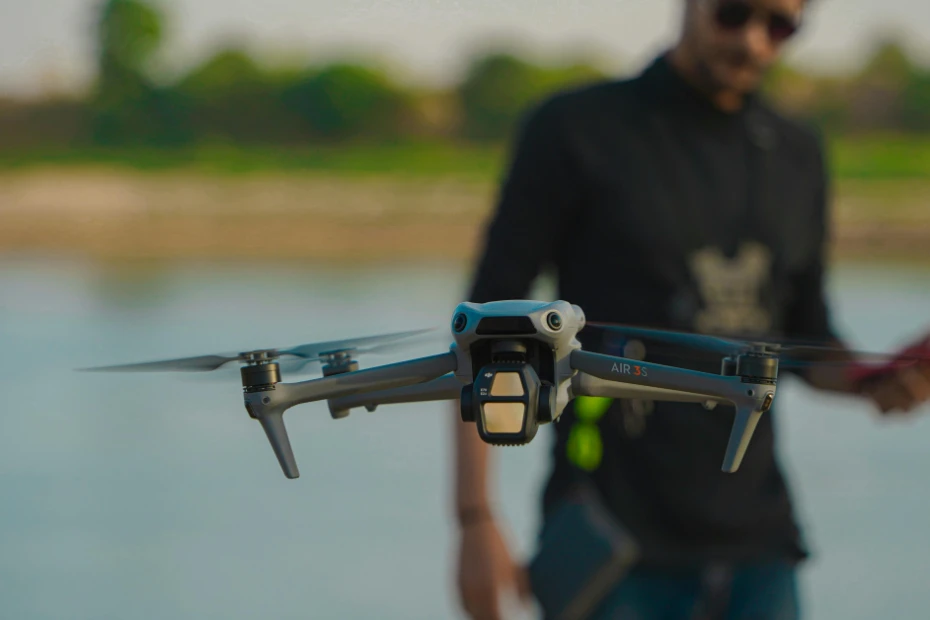

Flying a drone for fun in the backyard is one thing. Flying one commercially, getting paid for aerial photography, surveying farmland, or inspecting power lines, is something else entirely. South Africa has strict regulations around drone use, and anyone who wants to operate a drone for work purposes needs to be properly trained and licensed. The South African Civil Aviation Authority (SACAA) regulates all remotely piloted aircraft systems (RPAS), and operating without the right credentials can result in fines, confiscation of equipment, and even criminal charges.
Why You Need a Licence
South Africa was one of the first countries in the world to regulate drone operations. The RPAS regulations, which fall under Part 101 of the Civil Aviation Regulations, set out clear rules about who can fly drones, where they can fly, and under what conditions.
For recreational flying, the rules are less strict but still apply. Drones must stay below 120 metres (400 feet) above ground level, must not fly within 10 kilometres of an airport or aerodrome, must remain in the pilot’s line of sight at all times, and must not fly over people or public events.
For commercial operations, the requirements tighten significantly. The pilot needs a Remote Pilot Licence (RPL), the drone must be registered with SACAA, and the operator (which can be an individual or a company) needs a Remote Operator Certificate (ROC). Getting the RPL starts with completing an approved drone pilot training programme.
Without these credentials, offering drone services for payment is illegal. This applies to everything from wedding photography and real estate videography to agricultural mapping and construction site surveys. The fact that many people still fly commercially without a licence does not make it legal. Insurance companies will not cover unlicensed operations, and clients who know the regulations increasingly ask for proof of licensing before hiring a drone operator.
What a Drone Training Course Covers
A good drone course prepares students for both the SACAA written exam and the practical flight assessment. The syllabus covers theory, practical flying, and the regulatory framework.
Aviation theory. This might surprise people who think flying a drone is nothing like flying a plane, but SACAA treats drone pilots as aviators. The theory modules cover meteorology (understanding weather and how it affects flight), air law and regulations, principles of flight (how a multirotor or fixed-wing drone generates lift and stays stable), navigation, and human performance (how fatigue, stress, and visual limitations affect a pilot’s ability to operate safely).
RPAS-specific regulations. Understanding Part 101 of the Civil Aviation Regulations in detail. This covers airspace classifications, no-fly zones, altitude limits, visual line of sight requirements, and the procedures for requesting permission to fly in controlled airspace or restricted areas.
Practical flight training. Hands-on flying with an instructor. Students learn takeoff and landing, hovering, orientation exercises, flight patterns, emergency procedures (such as what to do if a motor fails or communication with the drone is lost), and precision manoeuvres. The practical training builds the skills needed to pass the SACAA flight assessment and to operate safely in real-world conditions.
Mission planning. Before any commercial flight, the pilot needs to plan the mission. This includes checking weather conditions, identifying airspace restrictions, assessing the site for hazards (power lines, trees, people, animals), selecting the right equipment for the task, and preparing a flight plan. Training covers all of these steps.
Emergency procedures. What happens when things go wrong. Battery failures, GPS signal loss, flyaways (where the drone stops responding to commands and flies off on its own), and unexpected obstacles all need to be handled calmly and correctly. The training builds muscle memory for these situations so that the pilot’s response is automatic rather than panicked.
The Licensing Process Step by Step
The path from beginner to licensed commercial drone pilot follows a clear sequence.
Step 1: Complete an approved training programme. This is where a drone flight course at a SACAA-approved training organisation comes in. The course covers all the theory and practical modules needed for the licence.
Step 2: Pass the SACAA written exam. This is an invigilated exam that tests knowledge of aviation theory, air law, meteorology, and RPAS-specific regulations. The pass mark is typically 75%. Students who have completed a good training course are well prepared for this.
Step 3: Pass the practical flight assessment. A SACAA-designated examiner assesses the student’s ability to fly the drone safely and accurately. This includes pre-flight checks, takeoff, in-flight manoeuvres, emergency procedures, and landing.
Step 4: Apply for the Remote Pilot Licence. Once both the written and practical assessments are passed, the student applies to SACAA for the RPL. The licence is issued for a specific category of drone (multirotor, fixed-wing, or both) and may include endorsements for specific weight classes.
Step 5: Register the drone. Every drone used for commercial purposes must be registered with SACAA and carry a registration number.
Step 6: Obtain a Remote Operator Certificate (if operating commercially). The ROC is the business licence. It covers the operational procedures, safety management system, and insurance requirements for a drone operation. An individual pilot can hold both an RPL and an ROC if they are operating as a sole proprietor.
How Long Training Takes
UAV drone pilot training programmes in South Africa typically run between five days and four weeks for the core RPL preparation. Intensive courses that run full-time over one to two weeks are popular with students who want to qualify quickly. Longer programmes that include additional modules like aerial photography, thermal imaging, LiDAR operation, or agricultural spraying take more time.
The SACAA exam and practical assessment can be completed shortly after the course, though booking the exam sometimes involves a waiting period. From start to finish, a motivated student can go from zero experience to holding an RPL within two to three months.
What It Costs
The drone pilot course price in South Africa varies depending on the training provider, the course format, and whether the student is training on their own drone or using the school’s equipment.
Entry-level RPL training courses typically cost between R15,000 and R35,000. This usually includes the theory instruction, practical flight time, course materials, and preparation for the SACAA exam. The SACAA exam fee and the flight assessment fee are sometimes included, sometimes charged separately.
Additional costs include the SACAA licence application fee (currently around R1,500 to R2,000), medical certificate (a Class 4 aviation medical is required, costing R1,000 to R2,000), and the ROC application if the pilot plans to operate commercially (R5,000 to R10,000 depending on the complexity of the operation).
The drone itself is a separate investment. A capable commercial drone from a major manufacturer costs between R15,000 and R80,000 depending on the camera system, flight time, and features. Professional survey-grade drones with RTK GPS and multispectral cameras can cost R150,000 or more.
All in, the total investment to become a licensed commercial drone pilot with decent equipment ranges from R50,000 to R150,000. That sounds like a lot, but a single commercial contract for aerial surveying or inspection work can earn R5,000 to R25,000 per day, so the return on investment can be fast for pilots who market themselves well and build a client base.
Where Drone Pilots Find Work
The list of industries using drone services in South Africa has grown significantly over the past few years.
Agriculture. Crop health monitoring, irrigation assessment, livestock counting, and precision spraying. Farmers are using drones to cover large areas of land quickly and to gather data that was previously only available through expensive manned aircraft surveys.
Mining. Stockpile volumetric surveys, pit mapping, blast planning, and safety inspections. The mining sector was an early adopter of drone technology in South Africa and remains one of the largest sources of commercial drone work.
Construction and engineering. Progress monitoring, site surveys, as-built comparisons, and structural inspections. Drones can survey a construction site in minutes, producing ortho-mosaic maps and 3D models that would take a ground crew days to produce.
Real estate and property. Aerial photography and video for property listings, development marketing, and estate agent presentations. The visual impact of drone footage on a property listing is significant, and agents are willing to pay for quality aerial content.
Film and media. Aerial cinematography for films, documentaries, commercials, and events. South Africa’s film industry is active, and drone operators with good flying skills and cinematic sensibility are in demand.
Environmental monitoring. Wildlife tracking, anti-poaching surveillance, coastal erosion mapping, and water quality assessment. Conservation organisations and government agencies are using drones to monitor large areas of terrain that are difficult to access on foot.
Infrastructure inspection. Power lines, wind turbines, cell towers, bridges, and pipelines. Sending a drone up to inspect a structure is safer and faster than sending a person up a ladder or into a confined space.
Getting Started
The first step is enrolling in a SACAA-approved training programme. Look for a provider that has experienced instructors, a solid track record of graduates passing the SACAA exams, and access to suitable training facilities and equipment.
Ask about the pass rate. A training provider with a high first-time pass rate on the SACAA written exam and practical assessment is a good indicator of teaching quality. Ask about post-course support too. Some providers offer mentoring, job placement assistance, or help with the ROC application process.
Drone piloting is one of the few technical fields where a relatively small investment in training and equipment can lead to a self-sustaining business within months. The regulations are there for good reason, and the pilots who take the time to train properly and operate legally are the ones building long-term, reputable operations.


Sign in to leave a comment.