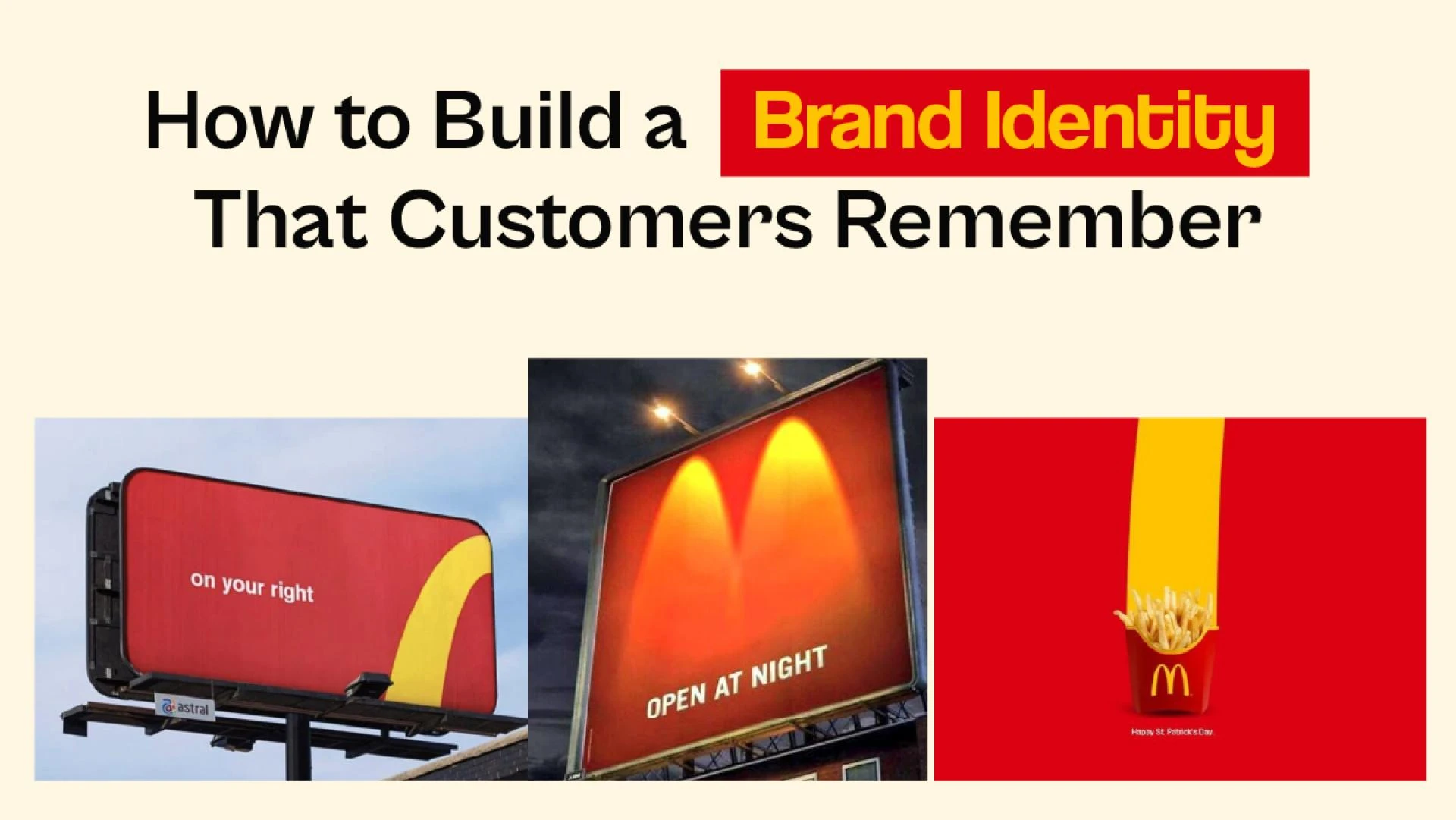

Think "Red Bull." What comes to mind? Adventure? Adrenaline? Extreme sports? The energy drink itself probably comes second. Now, think of Apple. You likely picture sleek design, innovation, and creativity before you even think of a laptop or a phone.
That is the power of a strong brand identity. It’s an invisible, emotional contract that associates your business with a feeling, a value, or an idea—not just a product.
Building an identity that customers remember doesn't happen by accident. It’s a deliberate, strategic process that goes far beyond just a logo. This guide provides a comprehensive, 7-step process for how to build a brand identity from scratch, one that builds loyalty and wins customers.
What Is a Brand Identity? (And What It's Not)
Before we build, we must define our terms. People often confuse "brand," "branding," and "brand identity."
- Your Brand: This is the intangible perception or "gut feeling" people have about your company. You can't control it directly.
- Branding: This is the active process of shaping that perception. It's the set of actions you take.
- Your Brand Identity: This is the collection of all tangible elements you create to portray the right image. It's your "personality" made visible.
Your brand identity is your toolkit for your branding efforts. It includes your logo, colors, messaging, typography, and values. A strong identity helps you stand out from the competition, build trust, and create a loyal customer base that feels connected to you.
How to Build a Brand Identity in 7 Steps
Follow these seven steps to create a strategic, memorable, and effective brand identity.
Step 1: Define Your Brand Purpose & Foundation
Before you pick a single color or font, you must look inward. Your brand's foundation is its "why." If you don't know what you stand for, your customers won't either. This is the core of your strategy.
Ask yourself these critical questions:
- Why does my company exist? (Your Mission) This isn't "to make money." This is your purpose. Example: (Patagonia) "We're in business to save our home planet."
- What problem do we solve for customers? (Your Value Proposition) Be specific. Are you saving them time? Money? Making them feel safer? More confident?
- What values do we stand for? (Your Core Principles) Pick 3-5 core beliefs that will never change. These guide your company's behavior, from product design to customer service.
- How do we want to be perceived? (Your Market Positioning) Are you the most affordable option? The most luxurious? The most innovative? The most eco-friendly?
Your answers become the strategic blueprint for every other decision you make.
Step 2: Research Your Audience & Competitors
Your brand doesn't exist in a vacuum. You must deeply understand the two groups that will define its success: your customers and your competitors.
- Target Audience Research: You need to create an ideal buyer persona. Go beyond simple demographics (age, location) and dig into psychographics (values, beliefs, interests, pain points).
- How to research: Conduct surveys, interview existing customers, analyze your social media followers, and look at your website analytics. What do they value? What language do they use? What do they need? An identity for a 20-year-old gamer is radically different from one for a 65-year-old financial planner.
- Competitor Research: Analyze your main competitors. Look at their logo, their colors, their website, and their social media.
- What to look for: What is their brand personality? What do they do well? More importantly, where are the gaps? Is everyone in your industry using the color blue to look "trustworthy"? Maybe this is your chance to stand out with a warm, energetic color. Your brand identity must differentiate you, not make you blend in.
Step 3: Define Your Brand Personality & Archetype
If your brand were a person, who would it be? Giving your brand human traits makes it relatable and guides its behavior.
A great way to do this is by using Brand Archetypes, a concept based on 12 classic personalities. Choosing one helps you stay consistent.
- The Hero: Ambitious, brave, and wants to save the day (e.g., Nike, Red Bull).
- The Sage: Wise, knowledgeable, and seeks to share the truth (e.g., Google, BBC).
- The Jester: Playful, funny, and lives in the moment (e.g., Old Spice, M&Ms).
- The Caregiver: Nurturing, compassionate, and protective (e.g., Johnson & Johnson, Dove).
- The Ruler: Dominant, in control, and associated with luxury (e.g., Mercedes-Benz, Rolex).
Your personality informs everything. A "Sage" brand will have a knowledgeable, authoritative voice. A "Jester" brand will use bright colors and witty, "sassy" language.
Step 4: Develop Your Visual Identity
This is where your abstract personality becomes tangible. Your visual identity is the collection of all graphical elements that customers will see and interact with.
- Logo: This is the primary symbol of your brand. It should be unique, memorable, and scalable (it must look good on a billboard and as a tiny app icon).
- Color Palette: Colors evoke powerful emotions. Blue often conveys trust and security, while Red signals energy and passion. Green relates to nature or finance. Choose a primary, secondary, and accent color palette that reflects your personality.
- Typography: These are the fonts you use.
- Serif fonts (like Times New Roman) have small "feet" and feel traditional, reliable, and established.
- Sans-serif fonts (like Arial or Helvetica) are clean and modern, feeling simple and progressive.
- Script fonts (handwriting) feel personal, while Display fonts are bold and best for headlines.
- Imagery & Icons: Define the style of photos, illustrations, and icons you will use. Are your photos bright and candid, or dark and cinematic? Are your icons simple outlines or colorful illustrations?
Step 5: Craft Your Verbal Identity (Voice & Tone)
Your verbal identity is what you say and how you say it. It ensures your brand communicates with one consistent voice, whether it's on a blog post, a social media reply, or a customer service email.
It's crucial to distinguish between Voice and Tone:
- Brand Voice: This is your core personality. It is permanent. Are you professional? Witty? Inspirational? Casual?
- Brand Tone: This is the emotional inflection you use in a specific situation. Your voice doesn't change, but your tone adapts.
- Example: A "Playful" brand voice (like Wendy's) is still playful when launching a new product. But if a customer complains about food poisoning, its tone will immediately become serious, empathetic, and helpful.
Define your voice and create brand messaging pillars—the 3-5 key ideas you want to communicate in everything you do.
Step 6: Test Your Brand Identity
Before you invest thousands in printing new packaging or launching a new website, test your identity. Don't launch into the void.
Show your logo, colors, and key messages to a small group that represents your target audience. Don't just ask "Do you like it?" That's a useless question. Instead, ask open-ended questions:
- "What feeling does this give you?"
- "What do you think this brand does or sells?"
- "Who do you think this brand is for?"
- "Which of these three words would you use to describe this brand: Modern, Traditional, or Playful?"
Their feedback is invaluable. If you were aiming for "reliable and professional" but everyone says you look "old and boring," you have a problem.
Step 7: Create Brand Guidelines & Implement Consistently
Your identity is built. Now, you must protect it.
Create a brand style guide (or "brand book"). This document is the single source of truth that defines all your brand rules for your team, your marketers, and any external agency you hire. It must include:
- Correct logo usage (and what not to do, like stretch or recolor it)
- Your exact color codes (HEX, RGB, CMYK)
- Your official typography (primary and secondary fonts, sizes, weights)
- Rules for your brand voice and tone
- Guidelines for imagery, icons, and data visualization
Once you have this guide, apply your new identity consistently everywhere. This is the most important part. Research shows that maintaining brand consistency can increase revenue by 10-20% because it's the key to building recognition and trust.
Why a Strong Brand Identity Matters
Building a brand identity is not just a design exercise; it's a strategic imperative. It's how you move from being a product to being the brand.
A strong, strategic identity builds instant recognition, fosters customer loyalty, creates a consistent experience, and ultimately allows you to command a price premium. By following these steps, you can build a powerful brand that connects with your audience and stands the test of time.
Frequently Asked Questions (FAQs)
1. What are the benefits of a strong brand identity? A strong identity helps you stand out from the competition, build customer loyalty, improve brand recognition, and communicate more effectively. It also guides your marketing strategy and can even help attract and retain top talent.
2. What's the difference between brand, branding, and brand identity? Your brand is the overall perception people have of you. Branding is the set of actions you take to influence that perception. Your brand identity is the tangible toolkit (logo, colors, voice) you use to do it.
3. How often can I change my brand identity? A full rebrand (changing your core identity) is costly and should be done sparingly, perhaps every 5-10 years or only if your business mission or audience fundamentally changes. However, a brand refresh (a minor update to your logo or colors to keep it modern) can be done more frequently to avoid looking dated.





























Sign in to leave a comment.