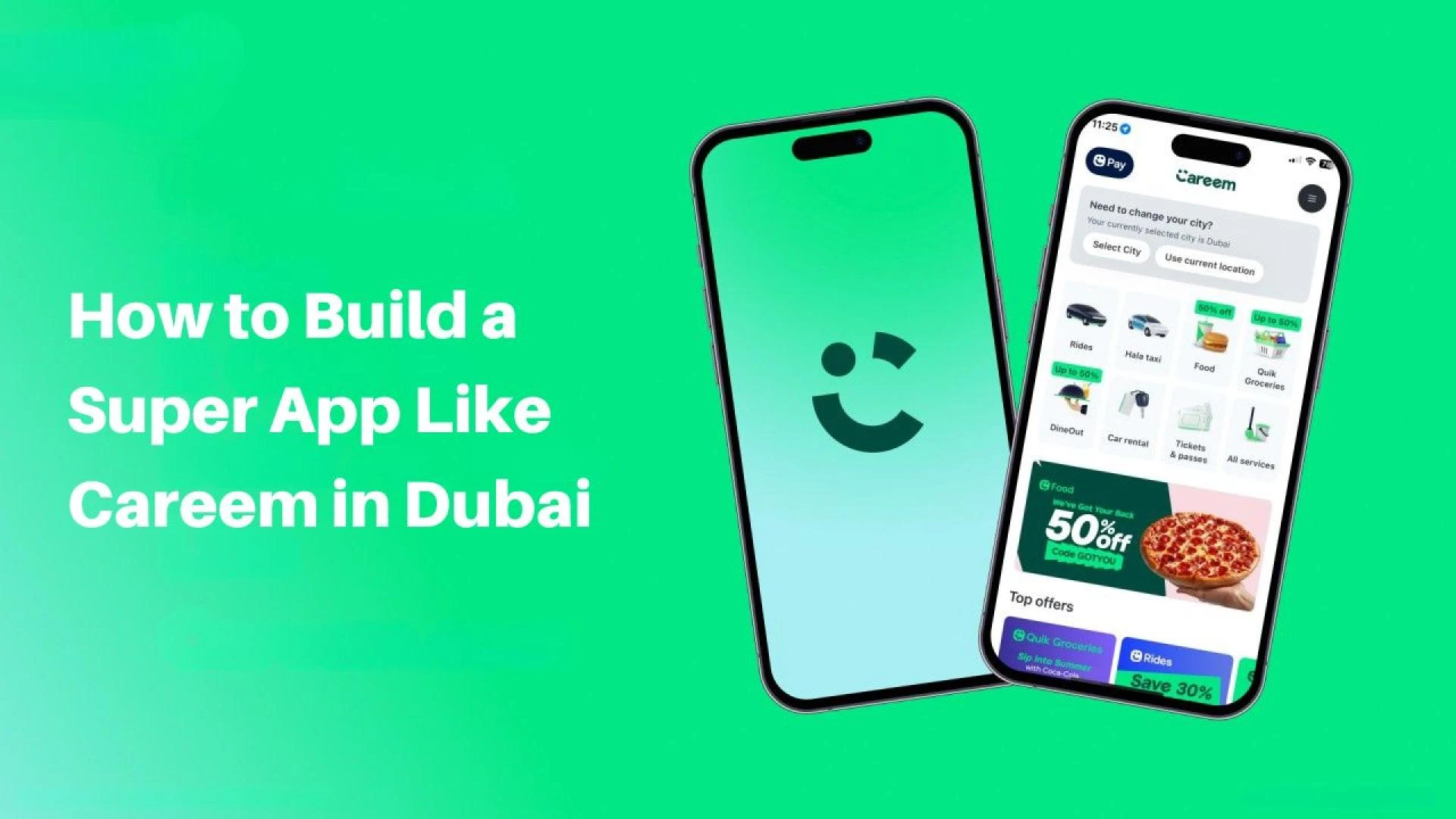

The concept of super apps has rapidly gained popularity across global markets, especially in regions where users prefer accessing multiple services through a single mobile platform. A super app integrates various everyday services—such as ride-hailing, food delivery, digital payments, and grocery shopping—into one unified application. One of the most successful examples in the Middle East is Careem, which transformed from a ride-hailing platform into a multi-service ecosystem used by millions of users.
In fast-growing technology hubs like Dubai, businesses are increasingly investing in super apps to offer seamless digital experiences and capture a broader customer base. Many startups and enterprises are now looking to build a mobile app in Dubai that can integrate multiple services and create a powerful digital ecosystem similar to Careem. With high smartphone penetration, strong digital infrastructure, and a thriving startup ecosystem, Dubai provides an ideal environment for launching a multi-service mobile platform.
What Is a Super App?
A super app is a mobile application that provides multiple services within a single platform. Instead of downloading separate apps for transportation, food delivery, shopping, and payments, users can access all services through one unified interface.
Super apps are designed to create a digital ecosystem where users can perform various daily tasks without switching between different applications. These platforms often integrate third-party services and mini-apps, allowing businesses to expand their service offerings over time.
Popular global examples include:
- Careem
- Grab
These platforms demonstrate how a single mobile app can evolve into a powerful ecosystem connecting users, service providers, and businesses.
Why Super Apps Are Growing in Dubai
Dubai has become one of the most advanced digital economies in the Middle East. Several factors make the city an ideal location for launching a super app platform.
High Smartphone Penetration
The majority of residents in Dubai rely on smartphones for everyday services such as transportation, payments, shopping, and food delivery. This creates a large user base for multi-service mobile platforms.
Government Support for Innovation
Initiatives such as the Dubai Smart City Initiative encourage businesses to adopt advanced digital solutions and build innovative technology platforms.
Growing On-Demand Economy
Services like ride-hailing, delivery, and home services are in high demand across the UAE. Super apps allow businesses to combine these services into a single platform.
Strong Startup Ecosystem
Dubai attracts global entrepreneurs and investors, making it easier for startups to secure funding and expand their digital platforms.
Key Features of a Super App Like Careem
To build a successful super app, it is important to include features that provide convenience and seamless user experiences.
Multi-Service Integration: A super app should support multiple services within one platform, such as:
- Ride-hailing
- Food delivery
- Grocery delivery
- Digital payments
- Home services
- Travel bookings
Unified User Account: Users should be able to access all services using a single account with centralized profile management.
Secure Digital Wallet: A built-in wallet enables users to make quick payments for different services within the app.
Real-Time Tracking: GPS-based tracking allows users to monitor rides, deliveries, and service providers in real time.
Smart Recommendations: AI-powered recommendation systems suggest services, restaurants, or products based on user preferences.
Push Notifications: Notifications keep users informed about order updates, promotions, and service availability.
Ratings and Reviews: Users can provide feedback for drivers, delivery partners, or service providers, improving overall service quality.
Step-by-Step Process to Build a Super App
Developing a super app requires careful planning, strong technical architecture, and scalable infrastructure. Businesses looking to launch a multi-service platform must focus on user experience, seamless integrations, and high performance. Partnering with experts in mobile app development can help ensure that the application is secure, scalable, and capable of supporting multiple services within a single ecosystem.
Step 1: Conduct Market Research
Before building the app, analyze the target market in Dubai. Identify user needs, competitor platforms, and service gaps in the existing ecosystem. Understanding customer behavior and service demand will help businesses determine which features and services should be prioritized.
Market research also helps define the target audience, pricing models, and potential revenue streams. Studying successful platforms like Careem can provide valuable insights into what works in the regional market.
Step 2: Define Core Services
Start with one or two primary services—such as ride-hailing or food delivery—and gradually expand into additional services. Launching with a focused set of services allows businesses to test the market and gather valuable user feedback.
Once the initial services gain traction, additional services such as grocery delivery, digital payments, and home services can be integrated into the platform to create a complete super app ecosystem.
Step 3: Design the App Architecture
A super app requires a modular architecture that supports multiple services without affecting performance. Microservices architecture is commonly used because it allows different services to operate independently within the same application.
This architecture also makes it easier to scale the platform as new services and users are added. Proper system design ensures stability, faster performance, and seamless integration of new modules.
Step 4: Develop the Mobile Application
Develop native or cross-platform mobile applications for both Android and iOS devices. The development phase includes building the user interface, integrating APIs, and implementing core features for each service module.
During this stage, developers focus on creating an intuitive user experience, smooth navigation, and fast loading speeds to ensure the app remains user-friendly despite offering multiple services.
Step 5: Integrate Third-Party Services
Integrate payment gateways, maps, logistics systems, and communication tools to enhance functionality. Third-party integrations allow the app to support services such as real-time tracking, secure payments, and instant notifications.
These integrations help improve efficiency and enable businesses to deliver advanced features without building every system from scratch.
Step 6: Test the Platform
Conduct thorough testing to ensure the app functions smoothly across different devices and service modules. Testing helps identify bugs, security vulnerabilities, and performance issues before the app goes live.
Quality assurance teams typically perform functional testing, usability testing, and performance testing to guarantee that the app delivers a seamless experience to users.
Step 7: Launch and Scale
After launching the app, continuously improve the platform by adding new services, optimizing performance, and gathering user feedback. Monitoring user activity and app performance helps businesses identify areas for improvement.
As the user base grows, the platform can scale by introducing new features, expanding service categories, and partnering with additional service providers to strengthen the super app ecosystem.
Technology Stack for Super App Development
Choosing the right technology stack is crucial for building a scalable super app.
Frontend Technologies
- Flutter
- React Native
- Swift (iOS)
- Kotlin (Android)
Backend Technologies
- Node.js
- Python
- Java
- .NET
Database
- MongoDB
- PostgreSQL
- MySQL
Cloud Infrastructure
- Amazon Web Services
- Google Cloud
- Microsoft Azure
Other Integrations
- GPS and map APIs
- Payment gateways
- AI and analytics tools
Cost to Build a Super App Like Careem
The cost of building a super app depends on the number of services, feature complexity, and technology used. A basic super app with core features like ride-hailing and food delivery can range from $40,000 to $80,000.
A mid-level app with additional services such as grocery delivery, digital wallet integration, and real-time tracking may cost around $80,000 to $150,000.
For a fully-featured enterprise super app similar to Careem, including AI recommendations, advanced analytics, and multi-service integration, costs can go beyond $150,000, depending on scalability, security, and third-party integrations.
Factors that affect development cost include:
- Number of services integrated
- Advanced features like AI and analytics
- Third-party integrations
- UI/UX design complexity
- Maintenance and updates
Conclusion
Building a super app like Careem requires a strategic approach that combines market research, scalable architecture, and innovative technology. By integrating multiple services into a single platform, businesses can create a powerful digital ecosystem that improves convenience for users and generates new revenue streams.
Cities like Dubai offer the ideal environment for launching super apps due to their strong digital infrastructure, tech-savvy population, and supportive innovation policies. With the right mobile app development company and technology partner, businesses can successfully build and scale a super app that meets the evolving needs of modern consumers.










Sign in to leave a comment.