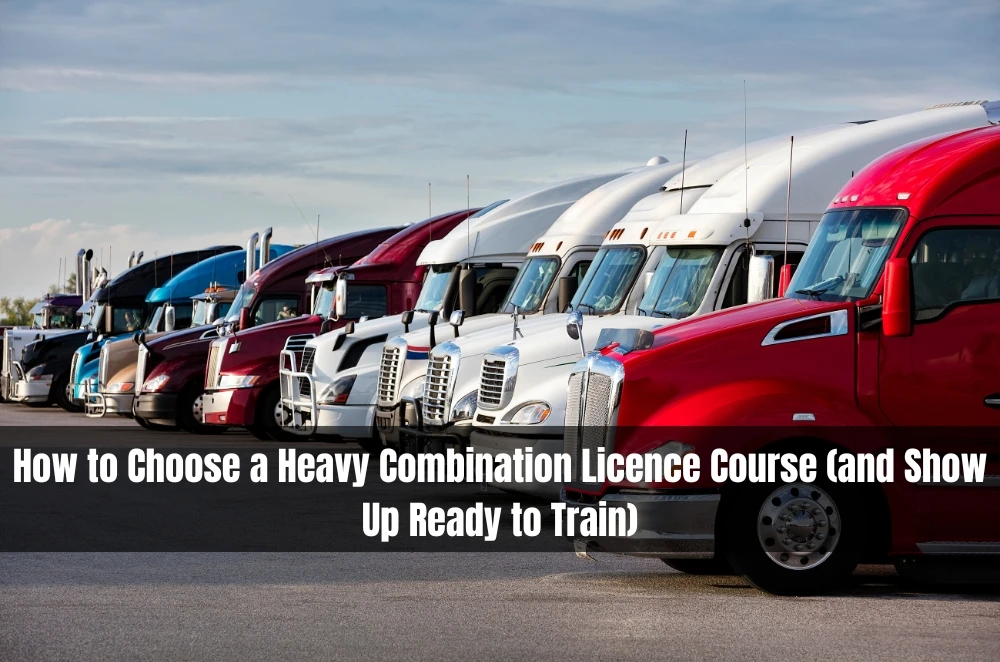

Getting a Heavy Combination (HC) licence is less about “learning a bigger truck” and more about proving consistent control, judgement, and safe habits under pressure.
A good course won’t just help with the assessment tasks; it should build the fundamentals that make those tasks repeatable on different vehicles and in different conditions.
If you’re weighing up options in Sydney, the goal is to pick truck driving lessons that match your experience level and give you a realistic plan to arrive prepared, not overwhelmed.
What HC training is really preparing you for
HC training is about operating a combination vehicle smoothly and safely, with enough confidence that you can focus on what’s happening around you rather than what your hands and feet are doing.
You’re learning to manage space, weight transfer, speed control, and braking in a way that is calmer and more deliberate than most learners expect.
The best outcomes come when training emphasises habit-building: mirror checks, positioning, planning your approach early, and staying predictable for other road users.
Common mistakes that make HC training harder than it needs to be
One common mistake is turning up with an “assessment-only” mindset and skipping the basics, which often shows up as rushed setups, late braking, and messy steering inputs.
Another is treating reversing as a trick to memorise rather than a slow process you control with tiny corrections and frequent resets.
A lot of learners also underestimate how tiring focused low-speed control can be, especially when you’re concentrating on mirrors, gears, and cues at the same time.
Some people try to compensate for nerves by going faster, but speed usually reduces your options and makes small errors harder to recover from.
Finally, many learners don’t ask what “good” looks like in that course’s vehicle, then waste time unlearning habits that don’t fit the truck they’re training in.
Decision factors: how to compare courses and trainers without guessing
Start by checking whether the course structure matches your current comfort level: a confident MR holder stepping up will need different pacing than someone who has driven rarely since getting their licence.
Ask what the training day actually includes in plain terms—pre-drive checks, coupling concepts if relevant to the vehicle used, low-speed manoeuvres, reversing practice, and coached road driving—and how time is split between them.
A strong provider can explain how they build control before they add complexity, rather than throwing every task at you in the first hour.
Pay attention to how feedback is delivered, because “do it again” isn’t coaching, while clear cues like “slow the setup, then hold the wheel” helps you repeat the skill independently.
If it helps, use the Core Truck Driving School course overview as a quick reference for what’s typically included and what to confirm before you book.
Also confirm practical details that affect learning: vehicle type and transmission, how many students share the truck, where training occurs, and whether there’s time allocated to the parts you personally find hardest.
Practical Opinions
Choose the course that teaches fundamentals before “test routes,” even if it feels slower at the start.
If you’re anxious, prioritise coaching quality and repetition over squeezing everything into one rushed session.
If two options look similar, pick the one that sets clearer expectations about preparation and day structure.
What a good training day usually includes
Most good sessions begin with safety and setup: seating position, mirror adjustment, and the “why” behind pre-start checks, because confidence comes from knowing what you’re looking for.
Low-speed work matters because it’s where you build steering discipline, smooth braking, and patience, which are the same skills that make road driving feel controlled.
Reversing practice should be structured and calm, with a focus on aligning early, watching consistent reference points, and resetting without panic when it starts to drift.
On-road time should feel like coached decision-making: scanning, gap selection, lane positioning, and keeping the vehicle stable and predictable through turns and stops.
A good trainer will also call out fatigue and cognitive load, because quality drops quickly once you’re mentally spent.
Operator Experience Moment
One thing that surprises many learners is how quickly things feel manageable once the basics are slowed down and made repeatable.
When mirror routine and speed control settle in, the whole drive becomes less “reactive,” and errors are easier to correct early.
That’s usually the turning point: you stop fighting the vehicle and start planning two moves ahead.
A simple 7–14 day plan to show up ready
In the next two weeks, the aim is not to “self-teach HC driving,” but to reduce avoidable friction so training time is spent building skill rather than fixing preventable issues.
Days 1–2: Clarify requirements and logistics.
Confirm eligibility, required documents, what to wear, start time, and the training location so you don’t arrive rushed and distracted.
Days 3–5: Refresh the fundamentals you already control.
If you currently drive regularly, focus on smoother stops, earlier scanning, and staying calm at low speeds, because those habits transfer directly.
Days 6–8: Reversing mindset and mirror routine.
Practise the idea of “small input, long look” in your everyday driving: slow down, check mirrors deliberately, and avoid last-second corrections.
Days 9–11: Fatigue and focus planning.
Plan sleep, meals, and hydration for training day, and avoid stacking heavy physical work before a long session because mental bandwidth matters.
Days 12–14: Questions list and confidence prep.
Write down the top three things you want coached (for example: tight turns, braking smoothness, reversing), so you can ask for targeted repetition early.
Local SMB mini-walkthrough: a Sydney example
A small construction supplier in Western Sydney decides to upskill an experienced yard worker to cover local deliveries.
They map typical routes that include industrial estates, tighter turns, and mixed traffic near major arterials.
They choose training times that avoid peak congestion so the learner can focus on vehicle control first.
They set a simple standard for the first month: slow setups, consistent mirror checks, and conservative space margins.
They add a quick pre-start checklist in the yard so the routine becomes automatic before a busy day begins.
They treat the licence as the start of structured supervision, not the end of learning.
Key Takeaways
- Choose a course that prioritises fundamentals and repeatable habits, not shortcuts.
- Compare training based on structure, coaching quality, and realistic time on key skills.
- Arrive prepared by reducing logistics stress, refreshing basics, and planning for fatigue.
- Reversing improves fastest when you go slower, use reference points, and reset calmly.
Common questions we hear from Australian businesses
Q1) How long does it usually take to feel confident in HC training?
Usually it improves in stages: control first, then consistency, then confidence. A practical next step is to ask the provider how they structure progression across the session and what “ready for assessment” looks like. In Sydney, traffic and training location can change how quickly learners settle in, so clarify where the driving component happens.
Q2) Do we need to choose training based on the exact truck type we’ll use at work?
It depends on the gap between the training vehicle and your workplace vehicle, and how adaptable the learner is. A practical next step is to confirm vehicle type, transmission, and typical manoeuvres practised, then compare that to your job tasks (tight sites, loading docks, suburban runs). In most cases around Sydney, mixed conditions mean fundamentals matter more than perfect vehicle matching.
Q3) What should a learner bring or do on the day to avoid wasting training time?
In most cases the biggest wins are arriving early, being rested, wearing appropriate PPE/clothing, and coming with a short list of skill priorities. A practical next step is to confirm documents, start location, and any safety gear requirements the day before. Usually Sydney travel time and parking can add stress, so plan the route and buffer time like it’s part of the training.
Q4) Can we treat the licence as “job-ready” for a new driver straight away?
It depends on the role risk profile, the routes, and whether the person has supervised seat time after licensing. A practical next step is to set a two-to-four week ramp plan with easier runs first, clear safety expectations, and check-ins on fatigue and judgement. In most cases for Sydney operations, the mix of traffic and delivery constraints makes structured supervision a sensible default.





























Sign in to leave a comment.