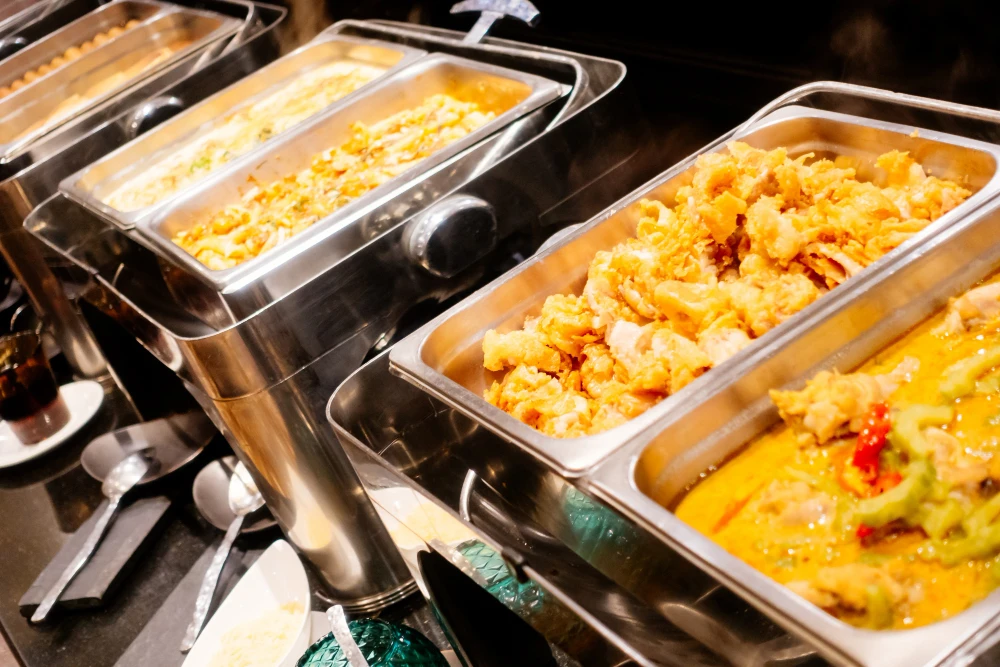
Chafing dishes are a staple for keeping food hot during buffets, catering events, parties, and gatherings. The main decision comes down to the heat source: traditional fuel-based (using canned fuel like Sterno gel or wick cans) versus electric (plug-in heating elements with temperature controls). Both keep food safely above 140°F (60°C), but they differ in portability, safety, cost, control, and ideal use cases.
Key Comparison: Fuel vs. Electric
| Factor | Fuel-Based (Canned Fuel like Sterno) | Electric |
|---|---|---|
| Power Source | No electricity needed (portable flame from gel/wick cans) | Requires electrical outlet |
| Portability | High – ideal for outdoors, no-power venues, camping, events | Limited – needs power access, less flexible |
| Temperature Control | Low – manual (adjust by number of cans or flame size); can have hot spots | High – precise thermostat/dial, often digital display; even heating |
| Safety | Open flame risks (fire hazard, especially indoors or windy); ventilation needed | Safer – no flame, lower fire risk; better for indoor venues and regulations |
| Upfront Cost | Lower – simpler design, cheaper to buy | Higher – includes heating elements and controls |
| Ongoing Cost | Higher – buy fuel cans repeatedly (e.g., $1–2 per can, 2–6 hr burn) | Lower – just electricity; no consumables |
| Setup & Maintenance | Simple but requires lighting/extinguishing fuel; water pan needed | Plug in and set temp; easier monitoring |
| Heat Consistency | Good with proper setup; may vary with wind/fuel levels | Excellent – consistent, no evaporation issues |
| Best For | Outdoor weddings, picnics, mobile catering, one-off events | Indoor buffets, restaurants, hotels, frequent use |
| Environmental | Fuel cans create waste; some eco-friendly gel options | More eco-friendly (no disposable cans) |
| Aesthetics/Design | Classic, elegant frames; various styles | Modern, sleek; often with clear lids |
Pros and Cons Breakdown
Fuel-Based Chafing Dishes
Pros:
- Extremely portable—no cords or outlets required.
- Affordable initial purchase.
- Works anywhere (outdoors, remote locations).
- Traditional look with versatile designs.
Cons:
- Open flame poses safety risks (not ideal indoors or in windy conditions).
- Less precise temperature control—can overheat or cool unevenly.
- Ongoing fuel costs add up for frequent use.
- Smell from some fuels; requires monitoring water and fuel levels.
Electric Chafing Dishes
Pros:
- Precise, adjustable temperature for consistent results.
- Safer with no open flame—preferred for indoor venues and fire codes.
- Lower long-term costs (no fuel purchases).
- Easier to use and monitor; often with digital controls.
Cons:
- Requires reliable power source—limits outdoor or remote use.
- Higher upfront cost.
- Less portable due to cords and size.
- Potential for electrical issues in high-volume settings.
How to Decide: Which One Is Right for You?
- Choose fuel-based if:
- You're hosting outdoor events, weddings, picnics, or locations without power.
- Portability and flexibility are priorities.
- It's a one-time or occasional use (e.g., parties).
- Budget is a big concern upfront.
- Choose electric if:
- Events are mostly indoors (hotels, restaurants, home buffets).
- You need reliable, even heat and precise control for food quality.
- Safety and venue regulations are key (no open flames allowed).
- You'll use it frequently—saves money over time.
Many caterers keep both types on hand for different scenarios. For hybrid needs, consider induction warmers as a modern alternative (even heat, no flame, but still needs power).
Ultimately, assess your typical event type, venue restrictions, budget (short-term vs. long-term), and how important precise temperature control is for your menu. Either way, proper setup and monitoring ensure safe, hot food every time!























Sign in to leave a comment.