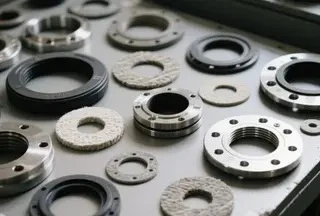

In the industrial sector, choosing the right valve gasket is vital for ensuring equipment safety and achieving reliable sealing. A well-chosen gasket prevents leaks and guarantees smooth operation throughout the production process. But how can we select the most suitable gasket based on specific working conditions? This article explains the key factors and steps involved in gasket selection, helping you make informed decisions in real-world applications.
Key Factors in Gasket Selection
Selecting an appropriate gasket requires a comprehensive evaluation of several interrelated factors—temperature, medium, pressure, flanges, and bolts. Each factor influences gasket performance and suitability under operating conditions.
1. Temperature
Temperature is the foremost factor in gasket selection. Each gasket material performs optimally within a specific temperature range. When the system’s temperature approaches the material’s upper limit, a higher-grade material should be chosen. Between 200°F (95°C) and 1000°F (540°C), the number of viable gasket materials narrows considerably. If the temperature exceeds the tolerance range, sealing failure is likely. Therefore, the gasket material must always correspond to the actual system temperature.
2. Medium
The medium—the fluid passing through the system—varies in chemical composition and reactivity. Its corrosive, oxidative, or permeating nature directly affects material compatibility. For example:
- EPDM (Ethylene Propylene Rubber) resists strong acids, bases, and salts but is unsuitable for oils, solvents, or hydrocarbons.
- PTFE (Polytetrafluoroethylene) resists most chemicals but is not compatible with free fluorine or alkali metals.
- Choosing a gasket material that aligns with the medium’s chemical characteristics prevents premature degradation and leakage.
3. Pressure
System pressure significantly impacts gasket selection. Every gasket type has a maximum pressure rating—exceeding it can cause extrusion, deformation, or rupture. Moreover, pressure tolerance decreases as temperature rises, since materials lose strength at elevated temperatures. Hence, the material must withstand the combined effects of both temperature and pressure under working conditions.
4. Flanges and Bolts
Flange and bolt configurations determine how sealing pressure is distributed. The number, size, and grade of bolts influence the effective load, while the gasket contact dimensions determine the clamping area. The effective sealing pressure is derived from the bolt load and contact surface area—critical parameters for selecting the right gasket material and type.
5. Additional Considerations
Other aspects, such as flange surface finish, bolt thread engagement, flange rotation, bolt tightening method, and additives in the medium, can affect gasket performance. These factors should also be considered to ensure reliable and durable sealing.
Steps for Gasket Selection
Once the influencing factors are understood, gasket selection can follow a systematic process involving six key steps:
1. Determine the Applicable Standard
Gasket standards should match flange standards. Common standards include:
- GB (Chinese National Standard)
- JB/T (Machinery Industry Standard)
- HG (Chemical Industry Standard)
- ISO (International Standard)
2. Identify Nominal Diameter and Pressure
The gasket’s nominal diameter and pressure rating must match those of the flange (e.g., DN50–PN16).
3. Select the Gasket Category
Based on nominal pressure and medium temperature, choose from common types such as:
- Flexible graphite gaskets
- PTFE gaskets
- Rubber gaskets
- Non-asbestos fiber gaskets
- Spiral wound gaskets
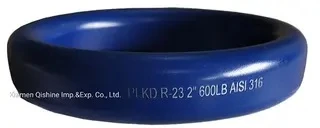
- Corrugated or metal gaskets (oval, octagonal, etc.)
- Asbestos gaskets are no longer recommended due to health and environmental concerns.
4. Choose the Gasket Form
Gaskets are generally categorized as:
- Non-metallic soft gaskets
- Spiral wound gaskets
- Metal composite gaskets
- Solid metal gaskets
- The selection should align with the flange design and manufacturer’s specifications.
5. Determine Material and Model
The gasket material must match the system’s temperature, pressure, and corrosion characteristics. The model is typically defined by form, material, nominal diameter, nominal pressure, standard number, and manufacturer.
Common Gasket Materials and Their Properties
Metallic Gaskets
Hastelloy C-276
- Composition: 16–18% Mo, 13–17.5% Cr, 3.7–5.3% W, 4.5–7% Fe, remainder Ni.
- Max. Working Temperature: 1093°C.
- Features: Exceptional corrosion resistance to nitric, hydrochloric, and sulfuric acids; excellent stress corrosion resistance.
- Brinell Hardness: ~210.
Inconel 600
- Composition: 77% Ni, 15% Cr, 7% Fe.
- Max. Working Temperature: 1093°C.
- Features: High strength at elevated temperatures; excellent low-temperature machinability; good stress corrosion resistance.
- Brinell Hardness: ~150.
Monel 400
- Composition: 70% Ni, 30% Cu.
- Max. Working Temperature: 815°C.
- Features: Excellent resistance to acids and alkalis except strong oxidizing acids; not suitable for hydrofluoric acid or mercury media.
- Brinell Hardness: ~120.
Non-Metallic Gaskets
EPDM (Ethylene Propylene Rubber)
- Temperature Range: -57°C to 176°C.
- Features: Excellent resistance to strong acids, bases, and salts; not suitable for oils or hydrocarbons.
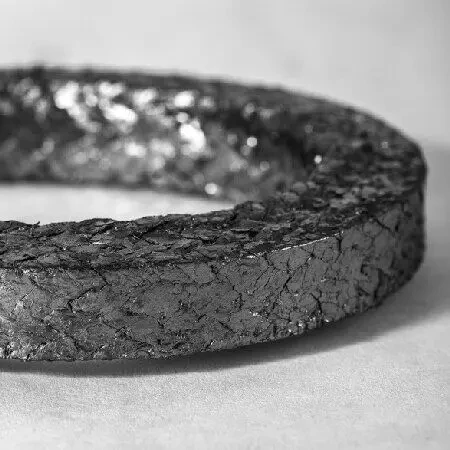
Graphite
- Features: Excellent corrosion resistance to most acids, bases, and salts; sublimation point above 3316°C; not recommended for strong oxidizing media.
- Applications: Gaskets, packings, and non-metallic winding tapes.
Ceramic Fiber
- Features: High-temperature capability (up to 1093°C); suitable for low-pressure and lightweight flange systems.
- Applications: Non-metallic winding tapes and high-temperature sealing.
PTFE (Polytetrafluoroethylene)
- Temperature Range: -95°C to 232°C.
- Features: Excellent chemical resistance to most caustics, acids, and solvents; avoid use with alkali metals and free fluorine.
- Note: Glass-filled PTFE reduces cold flow and creep.
Conclusion
Selecting the right valve gasket is a comprehensive process that involves evaluating temperature, medium, pressure, flange design, and bolt configuration. By following a structured selection approach—choosing the appropriate standard, nominal size, pressure rating, gasket category, form, material, and model—you can ensure optimal sealing performance and long-term reliability. Proper gasket selection not only prevents leaks but also ensures the safe, efficient, and stable operation of industrial equipment.It's important to know about Google SEO to help your website rank higher in search results.



























Sign in to leave a comment.