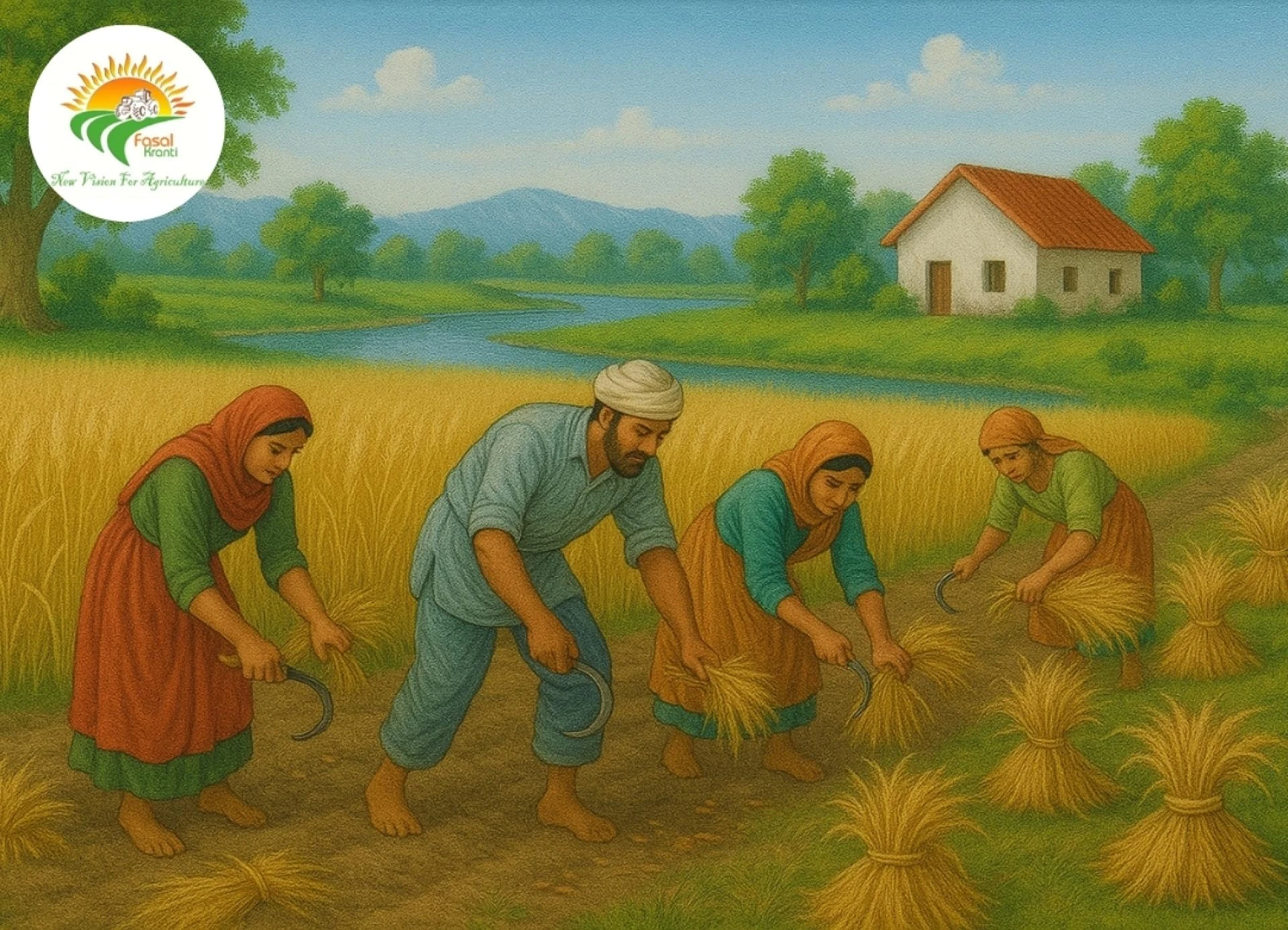

Wheat, commonly known as Gehu, is one of the most important food crops in India. The practice of Gehu Ki Kheti is not only central to Indian agriculture but also to food security and rural livelihoods. India is the second-largest producer of wheat in the world, and millions of farmers depend on it for income. The demand for wheat remains high in both domestic and international markets, making it a reliable and profitable crop for farmers.
Wheat cultivation has been practiced in India for centuries, yet modern science and technology have introduced better varieties, improved irrigation methods, and smarter management practices that allow farmers to maximize their yields. To understand how to start wheat farming successfully, one needs to know when to sow the crop, what kind of soil and climate it requires, and the right methods of farming that ensure good productivity.
When is wheat (Gehu) sown?
Wheat is a Rabi crop, which means it is sown in winter and harvested in summer. The right sowing time is critical for ensuring healthy crop growth and maximum yields. Generally, wheat is sown between mid-October and late December, depending on the region and weather conditions. In states like Punjab, Haryana, Uttar Pradesh, and Madhya Pradesh, sowing begins soon after the paddy harvest in October and November. If farmers sow too early, the crop may be affected by higher temperatures, and if they sow too late, it may reduce yield potential. Harvesting usually takes place from March to April, when the temperature rises and the grains mature. This natural cycle of sowing and harvesting has been perfected over generations and continues to guide farmers in planning their agricultural activities.
Climate and Soil Conditions for Wheat Farming (Gehu ki Kheti)
1. Wheat grows best in a cool climate, needing 10–15°C for germination and 20–25°C for maturity. Dry and warm weather at harvest ensures good grain quality.
2. Excess rainfall or humidity during maturity can damage the crop, cause fungal diseases, and lower the overall grain quality.
3. Wheat needs fertile, well-drained soil; alluvial and loamy soils are most suitable as they balance water retention with good aeration.
4. Soil pH between 6.5–7.5 is ideal, as it keeps nutrients available to plants and ensures better root development and crop growth.
5. Farmers should test their soil before sowing and add organic manures or fertilizers to improve fertility and nutrient balance.
How to Start Wheat Farming (Gehu ki Kheti)?
To cultivate wheat successfully, farmers need to follow a systematic approach, starting with land preparation and ending with proper harvesting and storage.
1. Land Preparation: The land must be ploughed deeply after the monsoon to break soil clods and allow better aeration. Once ploughed, farmers level the field and remove weeds to prepare a fine seedbed. This helps in uniform seed distribution and efficient use of water during irrigation.
2. Seed Selection: Selecting the right seed is crucial for Gehu Ki Kheti. Farmers should always choose certified and disease-resistant varieties that suit their region. Popular varieties like HD-2967, PBW-343, and WH-1105 are known for their high yield and resistance to common diseases. Good quality seed ensures better germination, stronger plants, and ultimately higher productivity.
3. Sowing Methods: Sowing is usually done through different methods such as drilling, broadcasting, or zero-tillage. While traditional broadcasting is still common, modern farmers are increasingly adopting zero-till sowing, which reduces cost, saves time, and protects soil fertility. The seed rate usually ranges between 100–125 kilograms per hectare, depending on sowing time and seed size.
4. Nutrient Management: Nutrient management is another important part of wheat cultivation. Wheat requires a balanced supply of nitrogen, phosphorus, and potassium. On average, 120 kilograms of nitrogen, 60 kilograms of phosphorus, and 40 kilograms of potash per hectare are recommended, though exact quantities depend on soil testing. Nitrogen is best applied in split doses to ensure better uptake by the crop. Organic manures can also be used to maintain long-term soil fertility.
5. Irrigation: Irrigation plays a key role in wheat farming, as the crop needs regular watering during its life cycle. On average, wheat requires four to six irrigations, but the most critical stages are crown root initiation, tillering, booting, and grain filling. Missing irrigation at these stages can drastically reduce yield. At the same time, over-irrigation can cause waterlogging, which damages roots. Farmers who adopt modern irrigation systems like sprinklers or drip irrigation can save water and increase efficiency.
6. Weed and Pest Management: Weed and pest management is also necessary for successful Gehu Ki Kheti. Weeds compete with wheat for nutrients and sunlight, so farmers use herbicides or manual weeding to control them. Common pests like termites and diseases such as rust or smut can damage crops severely. Choosing resistant varieties, using crop rotation, and following integrated pest management practices can minimize these risks.
7. Harvesting and Storage: When the crop reaches maturity, it is time for harvesting. Wheat is harvested when the grains are hard and golden, with a moisture content of about 20 percent. Harvesting too early can reduce grain quality, while late harvesting can lead to shattering and losses. In large fields, combine harvesters are used for efficiency, while in smaller farms, sickles may still be used. After harvesting, proper drying and storage are essential to prevent fungal attacks or spoilage. Farmers usually store wheat in gunny bags or silos, ensuring it remains dry and safe until it is sold or consumed.
Benefits of Wheat Farming (Gehu Ki Kheti)
1. High Market Demand: For Indian farmers, Gehu Ki Kheti provides multiple benefits. The first and most important advantage is the high and consistent market demand. Wheat is consumed daily in the form of chapatis, bread, biscuits, and countless other products, so farmers are assured of a market for their produce.
2. Government Support through MSP: The Food Corporation of India (FCI) and state agencies procure wheat at fixed Minimum Support Price (MSP), protecting farmers from sudden market fluctuations and giving them financial security.
3. Employment Generation: Wheat farming provides large-scale employment—from field laborers during sowing and harvesting to workers in mills and bakeries—supporting millions of rural livelihoods.
4. Multiple Uses: Apart from food, wheat is used in animal feed, starch industries, and brewing. Even wheat straw adds value by serving as fodder for cattle, similar to how cottonseed oil benefits farmers.
5. Export Potential: Indian wheat is exported to Asia, Africa, and the Middle East. Despite fluctuations in global markets, exports provide farmers with long-term profitability opportunities.
Ways to Improve Productivity of Wheat (Gehu)
1. Timely Sowing: Planting wheat at the right time, usually October–November, ensures proper germination and helps the crop avoid temperature stress.
2. Use of High-Yield Varieties: Farmers should select region-specific, certified, and disease-resistant varieties that give better yields and adapt well to local conditions.
3. Balanced Fertilization: Applying the right proportion of nitrogen, phosphorus, and potassium based on soil testing improves crop growth and maintains soil fertility.
4. Efficient Irrigation: Irrigating at critical stages such as crown root initiation, tillering, booting, and grain filling boosts productivity. Sprinkler or drip irrigation saves water.
5. Weed and Pest Control: Managing weeds through herbicides or manual removal and protecting crops from pests and diseases ensures healthy wheat plants.
6. Crop Rotation: Growing wheat in rotation with pulses or oilseeds enhances soil fertility, reduces pest buildup, and maintains long-term productivity.
7. Adopting Modern Techniques: Practices like zero-tillage, precision farming, and mechanized harvesting save time, reduce costs, and increase efficiency.
Final Thought
Gehu Ki Kheti (Wheat Farming) remains one of the most rewarding and stable farming options for Indian farmers. With the right climate, proper soil preparation, good seed selection, and effective management practices, wheat cultivation can bring high returns and food security. From sowing in October to harvesting in April, every step plays an important role in determining the success of the crop. Farmers who adopt improved practices and take advantage of government support can not only secure their livelihoods but also contribute to India’s growing agricultural economy.




























Sign in to leave a comment.