
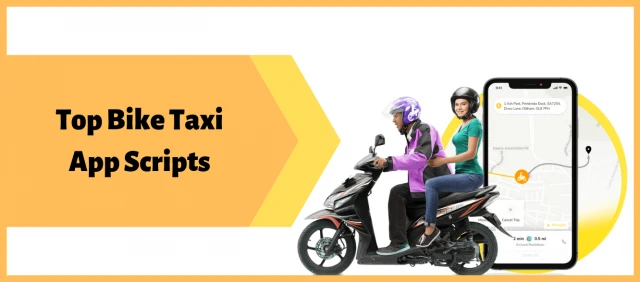
Developing a successful bike taxi app involves several key steps. Here is a roadmap that outlines the process:
Define your goals and objectives: Determine the purpose of your bike taxi app. Identify your target market, understand their needs, and define your unique selling proposition.
Conduct market research: Analyze the bike taxi industry in your target location. Identify competitors, their strengths and weaknesses, pricing models, and customer preferences. Use this information to differentiate your app and provide value-added services.
Create a feature set: Based on your research and target audience needs, define the core features of your bike taxi app. These may include registration, booking, real-time tracking, payment integration, ratings and reviews, customer support, and more.
Develop a prototype: Create a visual representation of your app's user interface (UI) and user experience (UX). Use wireframing tools or engage a design agency to help you develop a prototype that demonstrates the flow and functionality of your app.
Build the backend infrastructure: Set up the necessary server infrastructure, databases, and APIs to support your app's functionality. Ensure scalability, security, and seamless integration with third-party services.
Develop the mobile app: Use a mobile app development framework such as React Native or Flutter to build your bike taxi app for both iOS and Android platforms. Focus on creating a smooth, intuitive, and user-friendly interface.
Implement essential features: Integrate features like user registration, booking, driver matching, real-time tracking, in-app payments, and notifications. Ensure a seamless user experience throughout the app.
Test rigorously: Conduct thorough testing of your app to identify and fix any bugs, usability issues, or performance bottlenecks. Test different scenarios, devices, and network conditions to ensure optimal functionality.
Launch and market your app: Submit your app to the respective app stores and ensure it complies with their guidelines. Develop a comprehensive marketing strategy to generate awareness and attract users. Utilize digital marketing, social media, partnerships, and promotions to drive app downloads.
Monitor and optimize: Track key performance indicators (KPIs) such as app downloads, user engagement, customer feedback, and revenue. Analyze data to identify areas for improvement and optimize your app's performance and user experience.
Provide excellent customer support: Set up a support system to address user queries, issues, and feedback promptly. Offer multiple channels for communication, such as in-app chat, email, or phone support, to ensure a positive user experience.
Continuously update and enhance: Stay updated with the latest market trends, user feedback, and technological advancements. Release regular updates to introduce new features, improve functionality, and address user needs.
Remember, the success of your bike taxi app depends on continuous improvement, adapting to user feedback, and providing exceptional service. Stay agile and responsive to changes in the market to ensure your app remains competitive and delivers a superior user experience.






Sign in to leave a comment.