
A day on the water doesn't always go as planned. Whether it's a collision at the dock, storm damage during storage, or an unexpected accident on the lake, discovering damage to your boat can be frustrating. While repairs are important, what you do immediately after the incident can have a significant impact on your insurance claim.
One of the most effective ways to help streamline the claims process is proper documentation. Clear records and accurate information can make it easier for your insurance company to assess the damage and process your claim efficiently.
For boat owners in Michigan, understanding how to document damage correctly can save time, reduce stress, and help avoid unnecessary delays.
Why Documentation Matters
Insurance companies rely on evidence to determine what happened, the extent of the damage, and the cost of repairs. When information is incomplete or unclear, claims may take longer to review.
Good documentation helps establish:
- When the damage occurred
- How the incident happened
- The extent of the damage
- Any contributing factors
- The condition of the boat before repairs begin
The more organized your records are, the easier it becomes to support your claim.
Prioritize Safety First
Before taking photographs or gathering information, make sure everyone is safe.
If an accident occurs on the water:
- Check for injuries.
- Move passengers to a safe location if possible.
- Contact emergency services if needed.
- Follow any reporting requirements that may apply to the incident.
Once safety concerns have been addressed, you can begin documenting the damage.
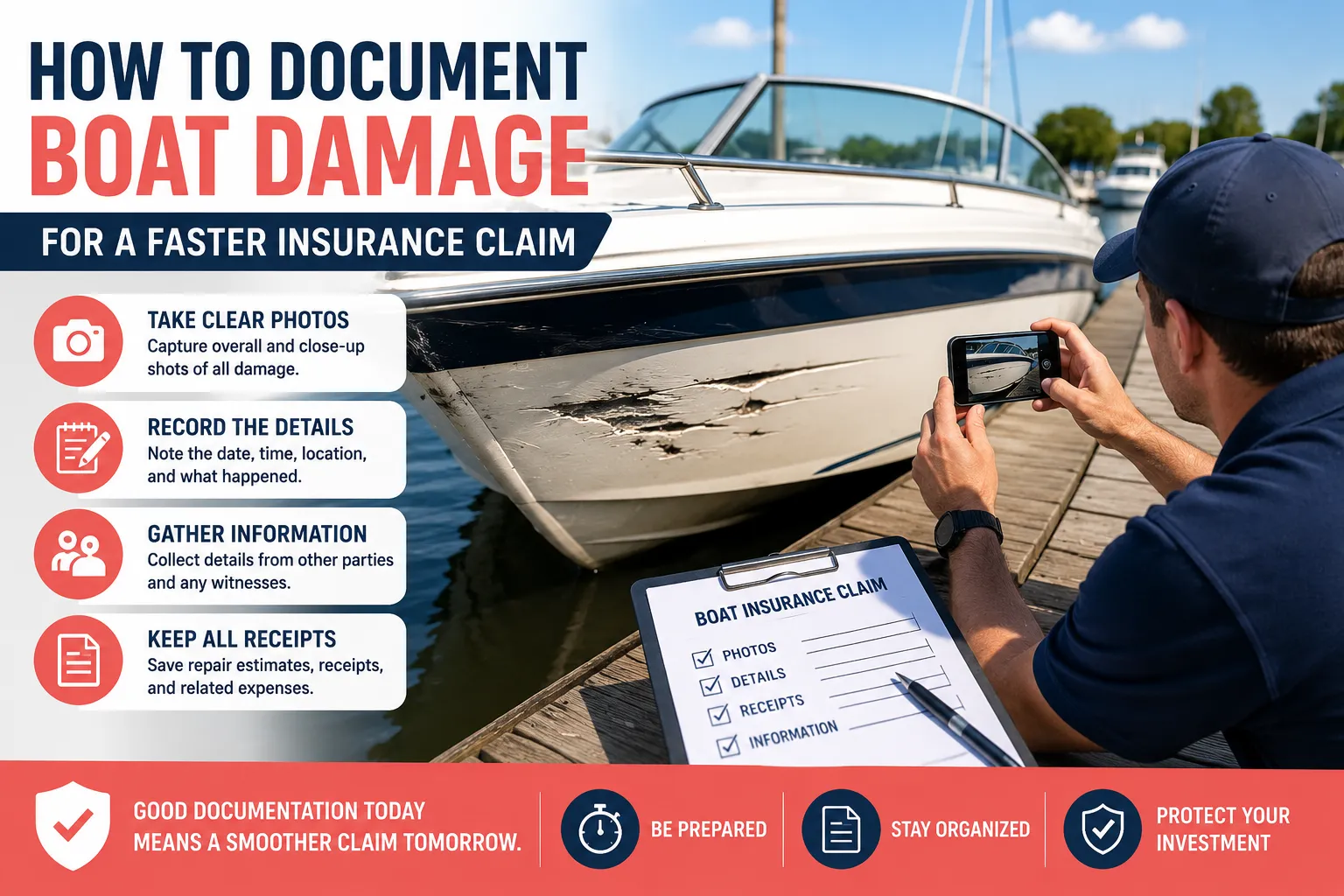
Take Photos Immediately
Photographs are often the most valuable pieces of evidence in a boat insurance claim.
Try to take pictures as soon as it is safe to do so. Waiting too long can make it difficult to show the original condition of the damage.
Capture multiple angles of:
- The entire boat
- Damaged areas
- Hull damage
- Scratches, dents, or cracks
- Engine damage
- Propeller damage
- Electronics and accessories
- Any damage to nearby property
Wide-angle shots provide context, while close-up images show specific details.
If weather conditions contributed to the incident, photograph the surrounding environment whenever possible.
Record the Date, Time, and Location
Details matter when filing a claim.
Make a note of:
- The date of the incident
- The approximate time
- The exact location
- Weather conditions
- Water conditions
- Visibility at the time of the event
This information can help create a clear timeline and provide important context for your insurance company.
Write Down What Happened
Memories fade quickly, especially after a stressful event.
As soon as possible, write a brief summary describing:
- What occurred
- What you were doing before the incident
- Any actions taken afterward
- Names of individuals involved
- Witness information if available
Keep the description factual and avoid speculation. Focus on what you observed rather than assigning blame.
Gather Information from Other Parties
If another boat or individual was involved, collect relevant information, including:
- Names and contact information
- Boat registration numbers
- Insurance details
- Photographs of all vessels involved
Having complete information from the beginning can help prevent delays later in the claims process.
Don't Throw Away Damaged Property
Many boat owners make the mistake of immediately replacing damaged equipment.
Before disposing of anything, check with your insurance provider.
Items such as:
- Navigation equipment
- Fishing gear
- Safety equipment
- Electronics
- Damaged accessories
may need to be inspected as part of the claim review process.
Keep All Repair Estimates and Receipts
If emergency repairs are necessary to prevent additional damage, save every receipt.
Examples may include:
- Temporary repairs
- Towing services
- Storage fees
- Haul-out costs
- Emergency labor charges
Documentation of these expenses can be important when discussing claim reimbursement.
Report the Claim Promptly
Most insurance providers encourage policyholders to report damage as soon as possible.
Prompt reporting allows the claims process to begin sooner and helps prevent complications that can arise when incidents are reported weeks or months later.
When contacting your insurance company, be prepared to provide:
- Policy information
- Photos
- Incident details
- Repair estimates
- Contact information for involved parties
Having these documents organized ahead of time can make the conversation much smoother.
Michigan Boat Owners Face Unique Risks
Michigan's boating season offers incredible opportunities, but local conditions can also create challenges.
Sudden storms on the Great Lakes, floating debris, changing water levels, and crowded marinas can all contribute to accidents and damage. Even boats stored during the winter may experience losses caused by weather, vandalism, or falling objects.
That's one reason many local boat owners invest in specialized coverage rather than relying on limited protection elsewhere.
Those exploring Boat Insurance in Southfield often look for policies that address the real-world risks associated with boating throughout Michigan. Similarly, comprehensive Watercraft Insurance in Southfield, MI can help provide protection for a wide range of vessels, from fishing boats and pontoons to personal watercraft and larger recreational boats.
Preparing Before Damage Happens
The best time to prepare for a claim is before you ever need one.
Consider creating a digital record that includes:
- Photos of your boat in good condition
- Purchase receipts
- Maintenance records
- Equipment inventories
- Registration documents
Having these records readily available can simplify the claims process if an accident occurs in the future.
Final Thoughts
No boat owner wants to deal with damage, but knowing how to document an incident properly can make a significant difference when filing an insurance claim.
Clear photographs, accurate notes, timely reporting, and organized records can help support your claim and reduce unnecessary delays. Taking a few extra minutes to gather the right information today can save hours of frustration later.
For boat owners throughout Michigan, having the right coverage and understanding the claims process go hand in hand. Whether you're navigating inland lakes or spending weekends on the Great Lakes, preparation is one of the best tools for protecting your investment and getting back on the water as quickly as possible.























Sign in to leave a comment.