Introduction
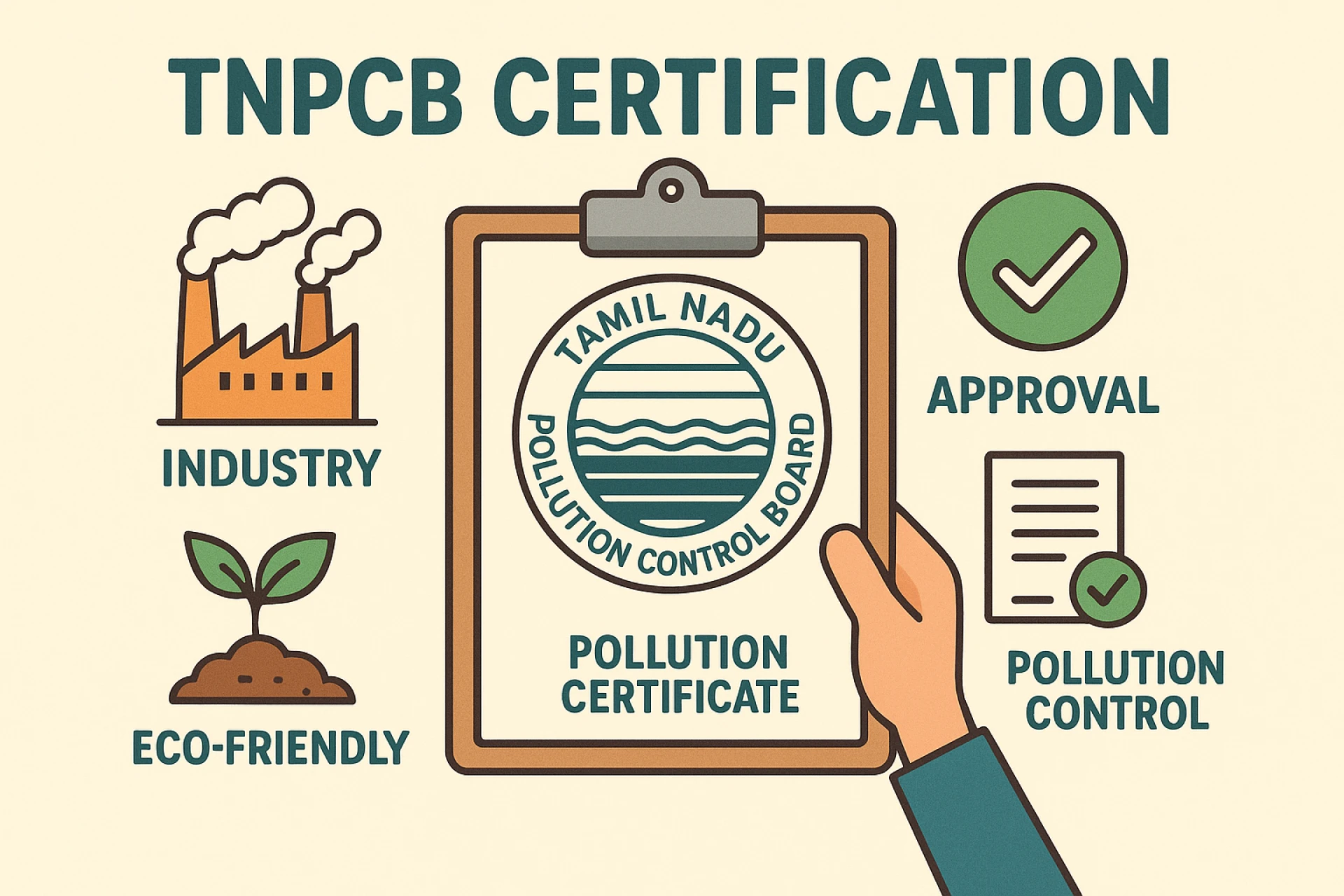
Businesses planning to set up in Tamil Nadu are required to get approval from TNPCB. TNPCB stands for ‘Tamil Nadu Pollution Control Board’. This approval confirms that the business follows pollution control standards. To legally start their activity, industries must get a pollution certificate from the respective state board. TNPCB issues pollution certificates to industries, and ensures that business industries comply with environmental standards.
What Is TNPCB Certification?
The Tamil Nadu Pollution Control Board is the legal authority that protects the environmental health across the state. It provides TNPCB certification to industries that are planning to set up in Tamil Nadu. The board monitors the emissions from industries, and checks the level of soil, air and water pollution in the state. The TN Pollution Control Board also encourages businesses to adopt eco-friendly tools and technologies and adhere to environmental norms.
Obtaining a TNPCB NOC ensures that your industry uses proper waste management systems and complies with the Air and Water Acts. Without this certificate, industries cannot start their operations and may face penalties or even closure.
Types of Consent under TNPCB
The TNPCB certification is done on the basis of the business type and the amount of
pollution it produces. The following are the two main types:
1.Consent to Establish (CTE): CTE is an initial regulatory approval that businesses require before starting any new project. Obtaining a CTE is mandatory for businesses planning to set up an industry legally. The CTE ensures that industry complies with the
Pollution control standards.
2.Consent to Operate (CTO): CTO is a second step of regulatory approval. It is required
after the construction is completed and businesses are ready to start its activity. It ensures industries must meet the set environmental standards.
Who Needs TNPCB NOC?
The following businesses require TNPCB NOC certification CTO approval:
∙Manufacturing or chemical processing
∙Waste management or recycling
∙Food processing or packaging
∙Construction and infrastructure projects
∙Textile or dyeing units
∙Hospitals and healthcare facilities
∙Hotels, stone crushers, or automobile workshops
Ultimately, any business that generates waste, noise, or emissions, it is mandatory to secure a pollution control approval.
Importance of TNPCB Certification
Getting TNPCB certification and CTO approval provides multiple benefits, and operating without TNPCB NOC can lead to shutdown notices, fines, or even criminal action under pollution laws. The following are some benefits:
∙Legal compliance: Having a valid environmental approval helps avoid fines and ensures your business runs smoothly and within environmental norms.
∙Better brand image: It also reflects your company’s commitment towards sustainable and eco-friendly practices.
∙Smooth operations: It helps in avoiding delays due to government restrictions or public complaints.
Investor confidence: Obtaining a TNPCB certification helps attract funding or business partnerships since you operate under legal standards.
How to Get Pollution Certificate from TNPCB
The following is simple step-by-step process to get your pollution certificate and Consent to Operate (CTO) online:
Step 1: Visit the TNPCB Online Portal: Visit the official TNPCB Online Consent Management System on the official website. Create a user account by entering your company details, contact information, and address.
Step 2: Select the Type of Consent: Choose whether you are applying for CTE or CTO based on your stage of operation. For new projects, select CTE. For running industries, choose CTO.
Step 3: Fill Out the Application Form: Fill in the details carefully, such as mentioning project details, location, and the type of industrial operation you will be carrying out.
Step 4: Upload the Required Documents: Collect all the required documents to avoid delay. Upload the required ones, such as:
∙Land ownership or lease proof
∙Site plan and layout
∙Details of machinery and treatment plants
∙Previous consent copies (if applicable)
∙Environmental clearance (for large projects)
∙Authorized signatory documents
Step 5: Pay the Application Fee Online: There is no fixed fee, it depends on the industry category and investment value.
Step 6: Application Review and Issuance: After thoroughly reviewing and verifying the reports, the Tamil Nadu Pollution Control Board grants the Consent certificate. After getting the approval, you can start your operations following the environmental standards. You can download it from the online portal and keep it for your records.
Common Mistakes to Avoid
Many businesses face rejection because of small errors in their application. Avoid the following mistakes:
∙Submitting incomplete documents
∙Providing wrong industry category
∙Ignoring renewal dates
∙Not maintaining pollution control systems
∙Failing to submit compliance reports
Conclusion
Obtaining a TNPCB NOC certificate or TNPCB registration is not just a formality, it is mandatory for businesses to carry on activity without any interruptions. The Tamil Nadu Pollution Control Board plays a key role in keeping the state’s environment clean, safe, and balanced, while supporting responsible economic growth. Having a proper certifications mitigates the chances of heavy fines or permanent business shutdowns. Whether you’re setting up a new unit or running an existing one, ensure that your CTE and CTO are valid and updated.


























Sign in to leave a comment.