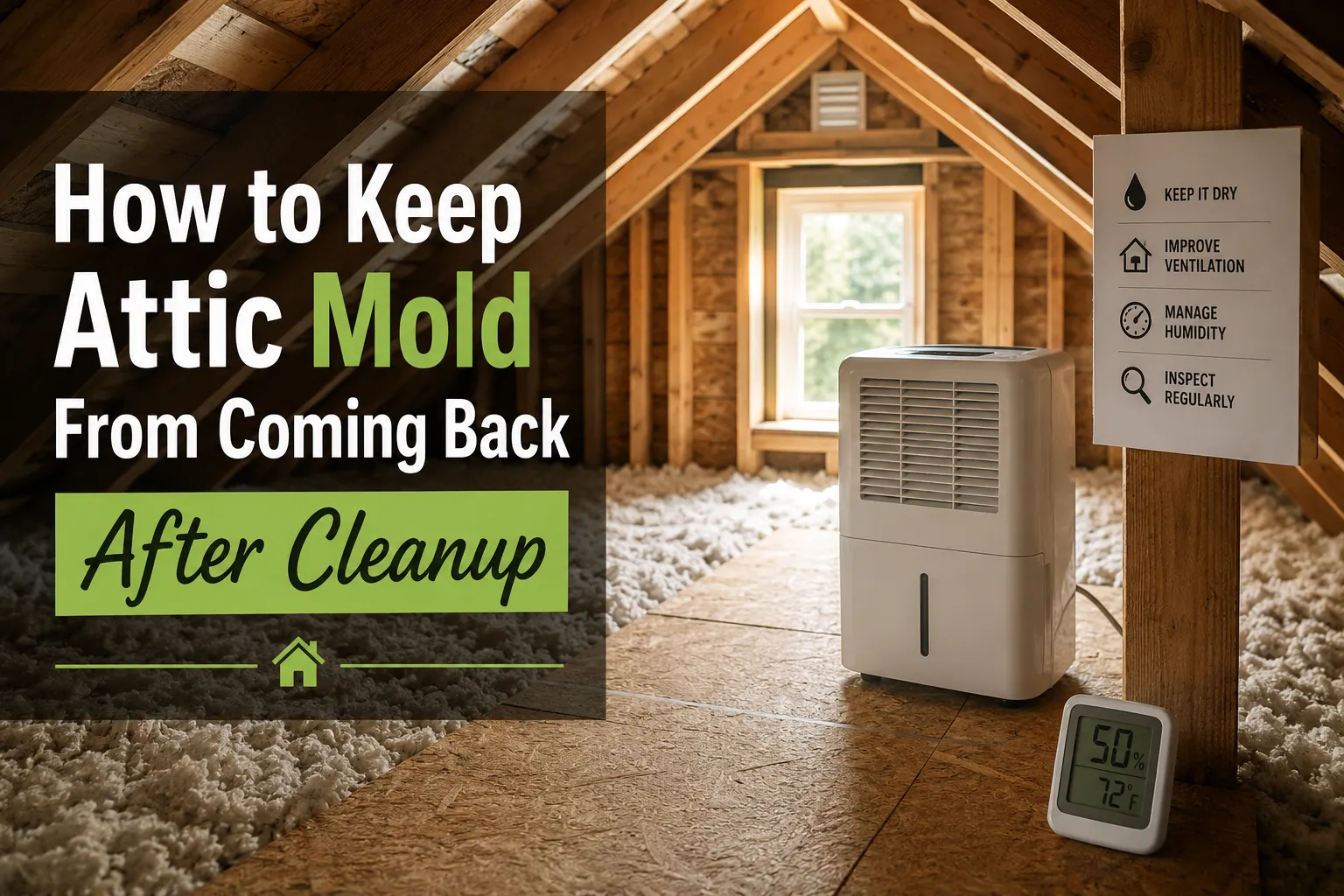

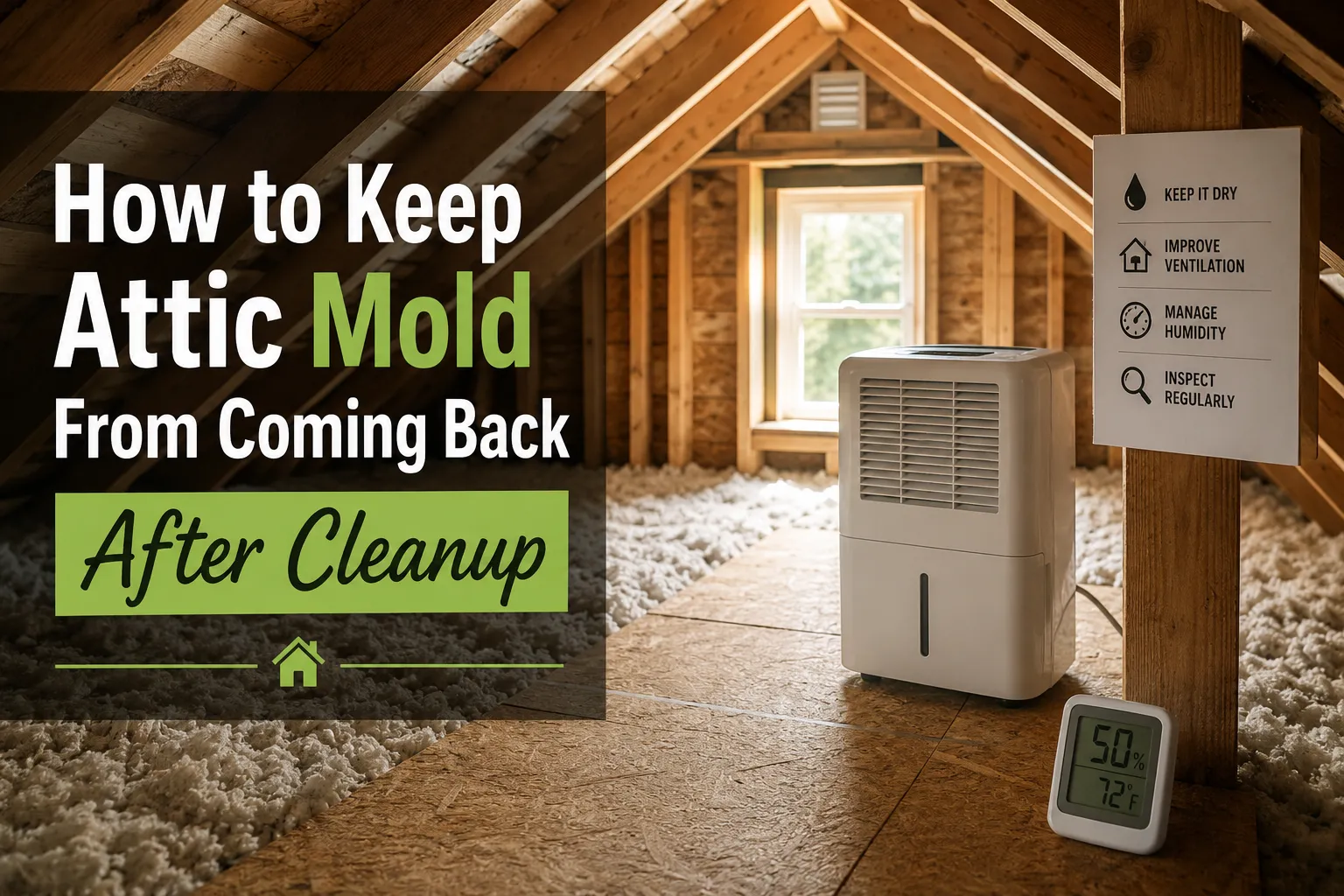
Getting mold removed from your attic is only half the job. If the conditions that caused it in the first place don't change, you're likely to be back where you started within a year or two. This guide covers how to keep your attic dry and mold-free for good, once cleanup is behind you.
Why Mold Comes Back After Cleanup
Mold needs three things to grow: moisture, a food source (wood, insulation, dust, all common in attics), and the right temperature range. Cleanup removes the mold, but if the moisture problem isn't fixed, all three conditions are still in place. It's just a matter of time before it returns.
This is the number one reason people end up paying for mold remediation Weston more than once the cleanup was done right, but the root cause never got addressed.
Common Moisture Sources in Attics
Before you can prevent regrowth, it helps to know where the moisture is actually coming from:
- Roof leaks — missing shingles, cracked flashing, or worn seals around vents and chimneys
- Poor ventilation — blocked soffit vents or insufficient airflow trap warm, moist air
- Bathroom or kitchen fans venting into the attic instead of outside the home
- Ice dams in colder months, forcing melted snow under shingles
- Warm, humid household air leaking upward through gaps around light fixtures, the attic hatch, or plumbing stacks
- Condensation where warm indoor air meets a cold roof deck in winter
Prevention Checklist
1. Improve Ventilation
Attics need a balanced intake and exhaust system, soffit vents pulling in air at the bottom, ridge or roof vents letting it out at the top. If your attic feels noticeably hot and stuffy in summer or damp in winter, ventilation is likely part of the problem.
2. Seal Air Leaks From Living Spaces
Gaps around recessed lighting, the attic hatch, and plumbing or wiring penetrations let warm, moist household air rise into the attic. Sealing these with proper weather stripping and insulation gaskets cuts down significantly on the moisture reaching your attic space.
3. Vent Bathroom and Kitchen Fans Outside
This is a surprisingly common issue, fans that appear to vent outdoors sometimes just dump air into the attic instead. Check that your ductwork actually exits through the roof or wall, not into the attic cavity.
4. Inspect the Roof Annually
Catching a small leak before it becomes a soaked patch of insulation saves you from another round of attic mold cleanup. Look for missing or curling shingles, and check flashing around chimneys and vents.
5. Maintain Proper Insulation Levels
Too little insulation lets heat escape into the attic, contributing to condensation issues. Too much, packed against the roof deck without an air gap, can block ventilation. Getting the balance right matters more than just adding more.
6. Monitor Attic Humidity
A simple hygrometer left in the attic can tell you if humidity levels are creeping up before mold has a chance to start. Anything consistently above 60% relative humidity is worth investigating.
7. Clear Debris and Clutter
Stored boxes, old insulation, and general clutter block airflow and trap moisture against surfaces. Keeping the attic reasonably clear helps air circulate the way it's supposed to.
Seasonal Considerations
Humidity swings throughout the year affect attic conditions differently depending on the season. Summer heat combined with poor ventilation traps warm, moist air. Winter brings the risk of condensation where warm air meets a cold roof deck, plus the potential for ice dams. A once a year attic check, ideally before and after the more extreme season for your area, catches most problems early.
When Prevention Isn't Enough
Even with good maintenance, structural issues like a persistent roof leak or a ventilation system that's simply undersized for the attic can keep creating problems. If you've done the basics and mold keeps returning, it's worth having a professional take a closer look at the underlying setup rather than repeating the same cleanup cycle.
Frequently Asked Questions
How often should I check my attic for mold?
Twice a year is a reasonable baseline once before summer and once before winter, with an extra check after any major storm or roof work.
What humidity level in my attic is considered safe?
Generally, staying under 60% relative humidity keeps conditions unfavorable for mold growth. Consistently higher readings suggest a ventilation or moisture intrusion issue worth investigating.
Can better insulation alone prevent attic mold?
Insulation helps regulate temperature, which reduces condensation risk, but it's not a complete solution on its own. Ventilation and sealing air leaks from living spaces matter just as much.
Is it normal for an attic to feel humid in summer?
Some warmth is normal, but persistent, noticeable humidity usually points to inadequate ventilation rather than something to just live with.
Do attic fans help prevent mold?
Powered attic fans can help move air, but they need to be balanced with adequate intake ventilation, or they can actually pull conditioned air from your living space upward, adding to the moisture problem rather than solving it.
If I've had attic mold cleanup done once, does that mean my attic is now protected? Cleanup addresses the existing mold, not future risk. Ongoing prevention, ventilation, sealing, and regular checks is what keeps it from returning after a professional mold remediation job in Weston.
Staying ahead of moisture problems is a lot less work than dealing with another full cleanup. A little regular attention goes a long way toward keeping your attic dry and mold-free.


























Sign in to leave a comment.