
So, you’ve got a startup idea. It’s the one that keeps you up at night, the one you scribble notes about on napkins. You’ve heard the terms thrown around incubator, accelerator and you’re wondering if one of these programs is the rocket fuel your idea needs.
It’s an exciting thought. These programs offer funding, mentorship, and connections that can take years to build on your own. But are you ready? Knowing when to apply is just as important as the idea itself. Let’s break it down in plain, friendly terms.
First, What’s the Difference?
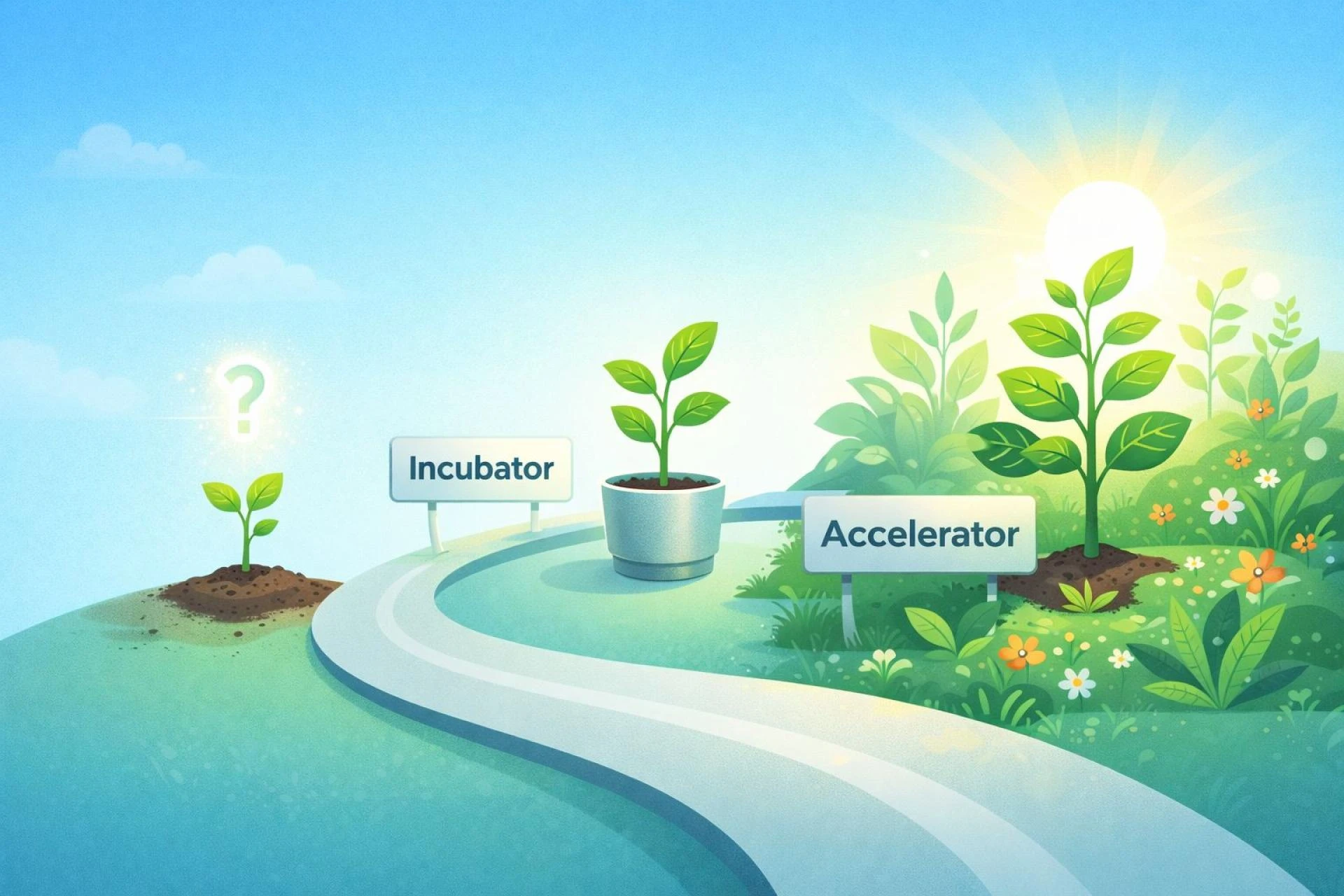
Think of an incubator as a nurturing environment for a seed. You might have a concept, but you need time, space, and guidance to figure out your product and market fit. Incubators are often less intense and more about foundational growth.
An accelerator, on the other hand, is like a high-intensity bootcamp for a young plant that’s already sprouted. You have a developed an MVP, or Minimum Viable Product and some early traction. Accelerators are time-bound (usually 3-4 months) and designed to rapidly scale your business.
So, where do you fit?
Signs You Might Be Ready
Whether you are leaning towards an incubator or an accelerator, here are a few key signs that you’re in a good place to apply,
1. You’ve Moved Beyond Just an Idea
For an incubator, this means you’ve done your homework. You can clearly articulate the problem you’re solving and for whom. For an accelerator, this is non-negotiable: you need a prototype or, better yet, an MVP. You don’t need a perfect, feature-rich product. But you need something tangible that a potential customer can interact with. This proves you can execute, not just ideate.
2. You Have (or Are) a Committed Founding Team
Programs invest in people, not just ideas. They look for founders who are passionate, coachable, and have a healthy dynamic. If you’re a solo founder, that’s okay, but be ready to show how you plan to build your team. If you have a co-founder, ensure you’ve worked together enough to know you complement each other, not clash at every turn.
3. You Have Some Traction (Even a Little)
Traction is proof that your idea has legs. For an incubator, this might be survey results, strong interest from potential users, or letters of intent from pilot customers. For an accelerator, they’ll want to see hard numbers. This could be a growing user base, paying customers, or impressive engagement metrics on your MVP. It shows the market is responding, even in a small way.
4. You’re Open to Learning and Pivoting
This is a big one. If you’re absolutely rigid about your idea and unwilling to hear critical feedback, a program will be a painful experience. Readiness means having a "growth mindset". You are eager to have experts poke holes in your plan so you can build something stronger.
5. You Know What You Need
Don’t apply to a program just for the money or the brand name. Are you ready for intense mentorship? Do you need help with sales strategy, fundraising, or technical architecture? Being clear on your gaps helps you choose the right program and shows self-awareness.
A Quick Readiness Checklist
Before you hit "submit" on that application, ask yourself:
- Can I explain my business model to a stranger in one minute?
- Do I have at least a basic version of my product (or a very detailed plan)?
- Can I show any evidence that people want what I’m building?
- Am I ready to dedicate almost all my time to this for the duration of the program?
- Am I open to completely changing my approach based on expert advice?
If you answered "yes" to most of these, you’re likely in a great position to start exploring programs. Remember, the goal is to enter a program ready to absorb everything it has to offer. You don’t need to be a finished product - you just need to be a solid foundation ready to be built upon.



























Sign in to leave a comment.